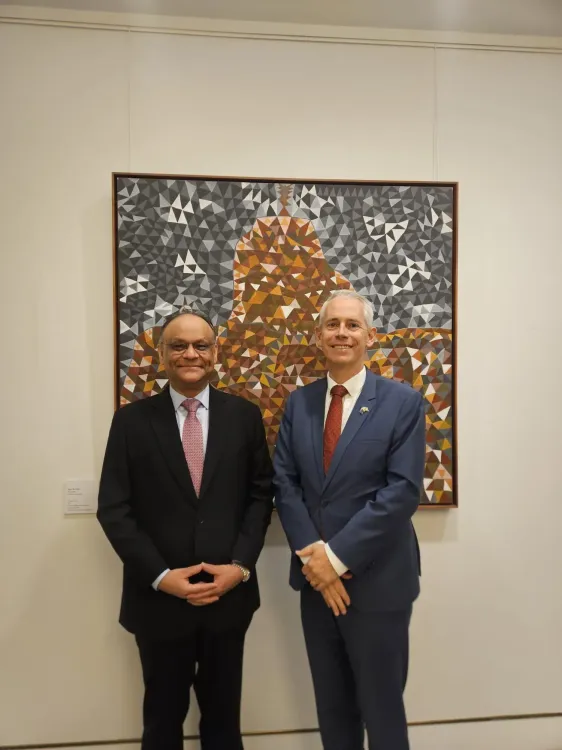
India-Australia skills cooperation: High Commissioner meets Minister Andrew Giles
Synopsis
India's High Commissioner in Canberra held back-to-back meetings with Australia's Skills Minister and Victoria's Premier on 15 June, signalling a push to convert diplomatic goodwill into concrete pathways for skilled Indian workers — including a Mutual Recognition of Qualifications mechanism and co-designed bridge courses ahead of Australia's infrastructure boom.
Key Takeaways
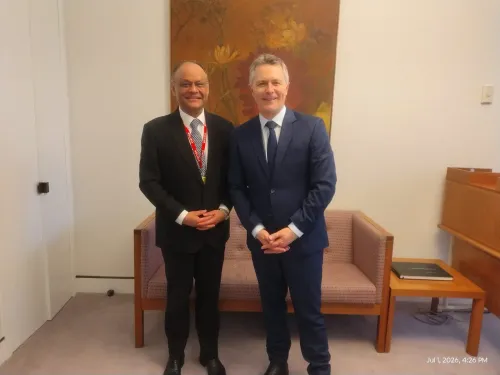
High Commissioner Nagesh Singh met Australian Skills Minister Andrew Giles in Canberra on 15 June to discuss bilateral skills cooperation.
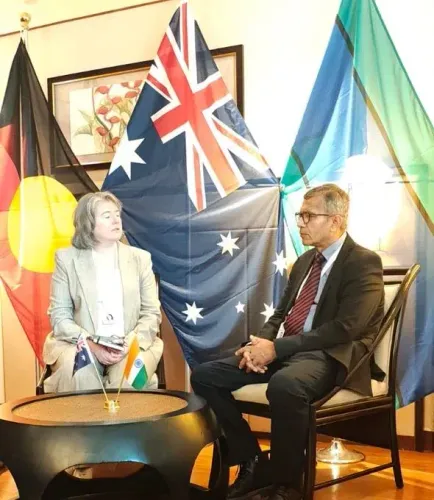
Singh also met Victoria Premier Jacinta Allan MP , focusing on trade, education, innovation, skills, culture , and diaspora engagement .
Both countries agreed at the 3rd AIESC Meeting in December to accelerate the Mutual Recognition of Qualifications (MRQ) mechanism.
Co-designed bridge courses are planned to align competencies and enable seamless mobility of skilled professionals.
Special emphasis was placed on advanced construction skills, tied to Australia's infrastructure expansion ahead of major sporting events.
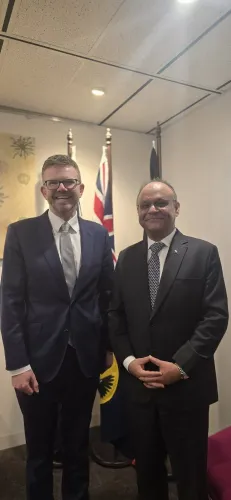
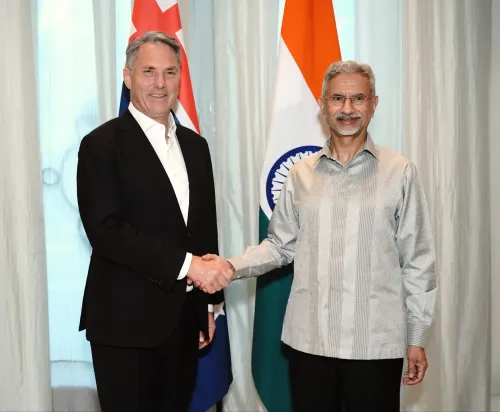
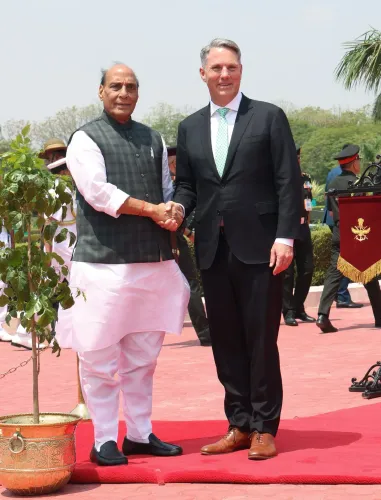
High Commissioner of India Nagesh Singh on Monday, 15 June met with Australian Minister for Skills and Training Andrew Giles in Canberra, with both sides discussing the ongoing bilateral skills cooperation framework that forms a key pillar of the India-Australia Comprehensive Strategic Partnership. The High Commission of India in Canberra confirmed the meeting, noting that discussions centred on ways to strengthen collaboration for the mutual benefit of both nations.
Key Developments from the Canberra Meetings
In addition to his meeting with Minister Giles, High Commissioner Singh also held a separate engagement earlier in the day with Jacinta Allan MP, Premier of Victoria. According to the High Commission, the discussions focused on deepening India-Victoria ties across trade, education, innovation, skills, culture, and diaspora engagement. The High Commission described the meeting as 'warm and productive', adding that India and Victoria share a 'vibrant partnership, anchored in a dynamic Indian diaspora and growing institutional linkages.'
Background: The AIESC Framework
The Monday meetings build on a substantive foundation laid in December, when India and Australia convened the 3rd Australia-India Education and Skills Council (AIESC) Meeting in New Delhi. That session was co-chaired by Minister of State (Independent Charge) for Skill Development and Entrepreneurship Jayant Chaudhary and Andrew Giles, covering skills development, workforce mobility, and the growing sports economy.
Mutual Recognition of Qualifications and Bridge Courses
A central outcome of the December AIESC dialogue was agreement to accelerate operationalisation of the Mutual Recognition of Qualifications (MRQ) mechanism. According to the Ministry of Skill Development and Entrepreneurship, both sides agreed to co-design bridge courses that align competencies and facilitate seamless mobility of skilled professionals. Particular emphasis was placed on preparing workers for global standards in advanced construction, given Australia's significant infrastructure expansion ahead of major sporting events.
What This Means for Skilled Indian Workers
The bilateral framework has direct implications for Indian professionals seeking to work in Australia. The MRQ mechanism, once fully operationalised, is expected to reduce barriers to qualification recognition — a long-standing friction point for skilled migrants. This comes amid growing demand in Australia's construction and infrastructure sectors, where Indian workers with relevant skills could find structured, formally recognised pathways. Notably, the deliberations acknowledged a 'strong upward trajectory' in overall India-Australia relations, signalling political will on both sides to convert diplomatic momentum into concrete mobility outcomes.
What Comes Next
The back-to-back engagements in Canberra suggest that skills and education cooperation is being elevated as a priority track within the broader India-Australia Comprehensive Strategic Partnership. Stakeholders will be watching for formal announcements on the MRQ timeline and the structure of co-designed bridge courses, both of which were flagged as near-term deliverables at the December AIESC meeting.
Point of View
But the underlying agenda is substantive: India and Australia are trying to build a structured pipeline for skilled labour at a moment when Australia's infrastructure sector is under pressure and India has a surplus of qualified workers seeking global mobility. The Mutual Recognition of Qualifications mechanism is the linchpin — without it, everything else remains aspirational. The December AIESC meeting set the direction; what is missing is a firm public timeline for MRQ operationalisation. Until that arrives, the 'strong upward trajectory' language risks becoming a diplomatic holding pattern rather than a genuine mobility breakthrough.
NationPress
15 Sept 2026
Frequently Asked Questions
What did India's High Commissioner discuss with Australia's Skills Minister?
High Commissioner Nagesh Singh met Australian Minister for Skills and Training Andrew Giles in Canberra on 15 June to discuss ongoing bilateral skills cooperation, which is a key pillar of the India-Australia Comprehensive Strategic Partnership. They also explored ways to further strengthen this collaboration for mutual benefit.
What is the India-Australia Comprehensive Strategic Partnership?
The India-Australia Comprehensive Strategic Partnership is a broad bilateral framework covering trade, defence, education, skills, and people-to-people ties. Skills and education cooperation is identified as one of its key pillars, operationalised through bodies such as the Australia-India Education and Skills Council (AIESC).
What is the Mutual Recognition of Qualifications (MRQ) mechanism?
The MRQ mechanism is a bilateral agreement framework under which India and Australia recognise each other's professional qualifications, reducing barriers for skilled workers seeking employment across borders. Both sides agreed at the December AIESC meeting to accelerate its operationalisation and co-design bridge courses to align competencies.
What was discussed at the 3rd AIESC Meeting in New Delhi?
The 3rd Australia-India Education and Skills Council Meeting, held in New Delhi in December, covered skills development, workforce mobility, and the sports economy. It was co-chaired by India's Minister of State for Skill Development Jayant Chaudhary and Australia's Andrew Giles, and produced agreement on the MRQ mechanism and bridge course co-design.
Why did India's High Commissioner meet Victoria's Premier?
High Commissioner Nagesh Singh met Victoria Premier Jacinta Allan MP on 15 June to discuss deepening India-Victoria ties across trade, education, innovation, skills, culture, and diaspora engagement. The High Commission noted that India and Victoria share a vibrant partnership anchored in a dynamic Indian diaspora and growing institutional linkages.