India, Bangladesh hold Sundarbans tiger talks at UNCCD COP17 in Mongolia
Synopsis
On the sidelines of the UNCCD COP17 in Ulaanbaatar, India and Bangladesh quietly advanced one of their most consequential shared obligations — protecting the Sundarbans. From transboundary Bengal tiger monitoring to MoU implementation on greening, the bilateral signals that ecological diplomacy between the two neighbours is gaining fresh momentum at the global stage.
Key Takeaways
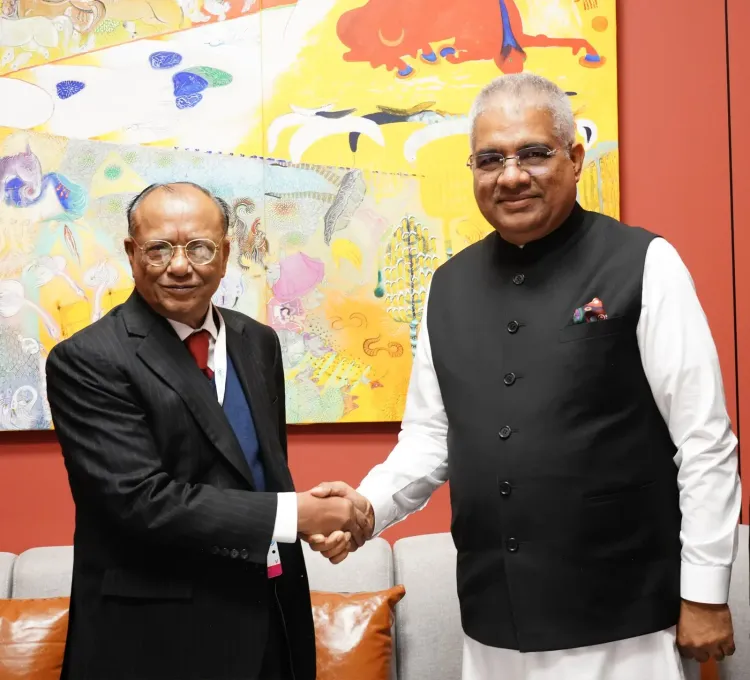
Bhupender Yadav and Bangladesh's Abdul Awal Mintoo met on the sidelines of UNCCD COP17 in Ulaanbaatar, Mongolia on 24 August .
Talks covered mangrove conservation , land erosion , and transboundary monitoring of Bengal tigers in the Sundarbans .
Existing MoUs on greening initiatives between India and Bangladesh were reviewed for effective implementation.
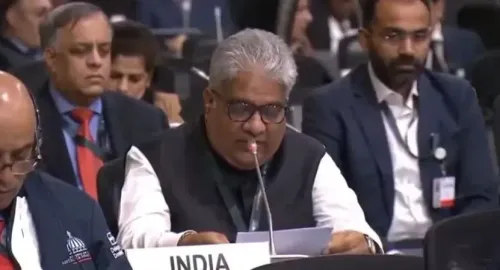
Yadav called for diversified, predictable international finance for land restoration at the COP17 plenary.
India's Green Credit Programme issues credits after 5 years of restoration and at least 40% canopy density .
India highlighted Sovereign Green Bonds and its blended green-finance framework as models for global land restoration funding.
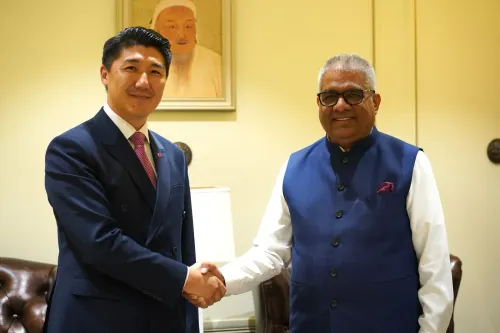
India and Bangladesh held high-level bilateral discussions on mangrove conservation, land erosion, and transboundary monitoring of Bengal tigers in the Sundarbans on the sidelines of the 17th Conference of the Parties (COP17) to the United Nations Convention to Combat Desertification (UNCCD) in Ulaanbaatar, Mongolia, on 24 August. The talks were held between Bhupender Yadav, India's Minister for Environment, Forest and Climate Change, and his Bangladeshi counterpart Abdul Awal Mintoo.
Key Discussions Between India and Bangladesh
The two ministers focused their bilateral exchange on shared ecological priorities, particularly the health of the Sundarbans — the world's largest mangrove delta, straddling the India-Bangladesh border. Transboundary monitoring of Bengal tigers, a critically important population for both nations, featured prominently in the agenda.
The ministers also reviewed existing Memoranda of Understanding (MoUs) between India and Bangladesh related to greening initiatives, and explored concrete pathways for their effective implementation going forward. Yadav confirmed the discussions in a post on X, calling for stronger bilateral cooperation on these fronts.
India's Push for Sustained Land Restoration Finance
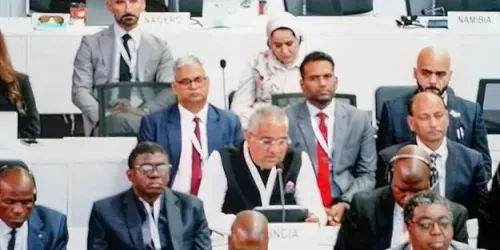
Earlier during the COP17 plenary, Yadav made a strong case for diversified, adequate, predictable, and sustained international finance for land restoration and drought resilience. 'Land restoration is not a cost, but an investment in food, water, biodiversity, livelihoods and long-term resilience,' he said.
He stressed that addressing desertification, land degradation, and drought at scale requires funding sources beyond public budgets, and called for stronger public-private partnerships. Yadav highlighted India's blended green-finance framework as a model, which enables financing for climate-change adaptation, sustainable land use, forestry, agriculture, afforestation, and biodiversity conservation.
India's Green Finance Instruments on the Global Stage
Yadav also drew international attention to Sovereign Green Bonds as a vehicle to mobilise capital for land restoration, drought resilience, and sustainable forestry. According to the Ministry of Environment, Forest and Climate Change, he presented these instruments as scalable avenues for aligning private capital with environmental priorities.
India's Green Credit Programme was another highlight of his address. The programme allows public and private entities to finance the restoration of degraded forest land, with credits issued after five years of restoration work and upon achieving at least 40 per cent canopy density. These credits may be used once for compensatory afforestation, statutory plantation, or CSR obligations.
India's Compensatory Conservation Framework
Yadav elaborated on India's compensatory conservation regime, which channels payments received for forest diversion towards compensatory afforestation and ecosystem restoration. Corporate funding, he noted, is integrated directly into the country's environmental regulatory processes — a model that has drawn interest from developing nations seeking to balance growth with ecological accountability.
With the UNCCD COP17 continuing in Ulaanbaatar, the India-Bangladesh bilateral signals a broader push to operationalise transboundary environmental commitments that have long remained on paper.
Point of View
But what India and Bangladesh need is a standing joint monitoring mechanism with verifiable data-sharing, not periodic sideline meetings. Yadav's green finance pitch at the plenary is well-framed, but India's own Green Credit Programme is still young and untested at scale. Presenting it internationally as a model before domestic outcomes are proven carries reputational risk.
NationPress
25 Aug 2026
Frequently Asked Questions
What did India and Bangladesh discuss at UNCCD COP17?
India and Bangladesh discussed mangrove conservation, land erosion, and transboundary monitoring of Bengal tigers in the Sundarbans at a bilateral meeting on 24 August during UNCCD COP17 in Ulaanbaatar, Mongolia. They also reviewed existing MoUs on greening initiatives and ways to implement them more effectively.
Who represented India and Bangladesh at the COP17 bilateral?
India was represented by Bhupender Yadav , Minister for Environment, Forest and Climate Change, and Bangladesh by Abdul Awal Mintoo , his counterpart in the same ministry. The meeting took place on the sidelines of the 17th session of the UNCCD Conference of the Parties.
What is India's Green Credit Programme?
India's Green Credit Programme allows public and private entities to finance the restoration of degraded forest land. Credits are issued after five years of verified restoration work, conditional on achieving at least 40 per cent canopy density, and may be used once for compensatory afforestation, statutory plantation, or CSR obligations.
Why is the Sundarbans significant for India-Bangladesh cooperation?
The Sundarbans is the world's largest mangrove delta and is shared between India and Bangladesh. It is home to a critical population of Bengal tigers, making transboundary monitoring essential for conservation. Mangrove loss and land erosion in the region also have direct consequences for coastal communities on both sides of the border.
What did India propose on international land restoration finance at COP17?
India called for diversified, adequate, predictable, and sustained international finance for land restoration and drought resilience. Yadav highlighted Sovereign Green Bonds and India's blended green-finance framework as instruments to mobilise private capital, and stressed the need for stronger public-private partnerships beyond public budget allocations.