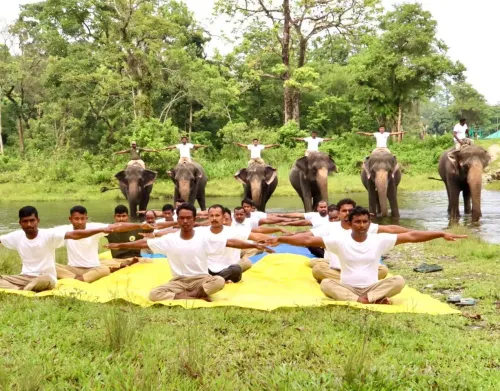
Yadav highlights Sundarbans yoga session uniting forest staff, fishermen

Synopsis
Union Environment Minister Bhupender Yadav marked International Day of Yoga 2026 by sharing a video of forest personnel and local fishermen from the Sundarbans joining a shared yoga session, calling it proof that caring for people and nature go hand in hand.
Key Takeaways
Union Environment Minister Bhupender Yadav posted on 20 June 2026 , a day before International Day of Yoga .
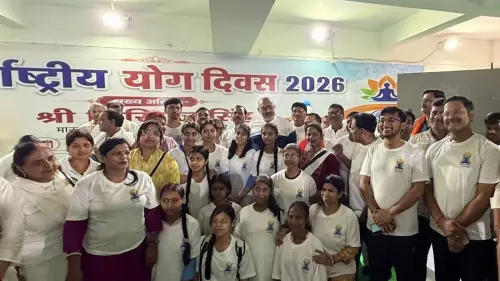
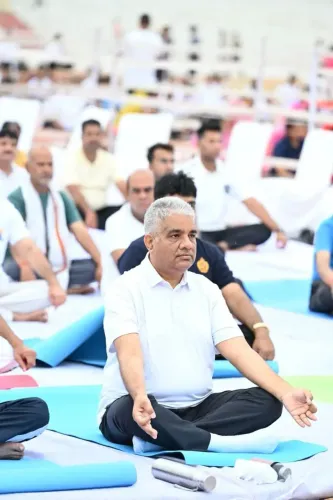
Forest personnel of the 24-Parganas (South) Division and local fishermen held a joint yoga session in the Sundarbans .
The Sundarbans is a UNESCO World Heritage Site and the world's largest mangrove forest, shared by India and Bangladesh.
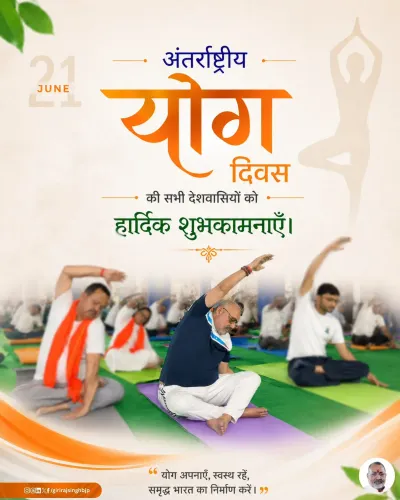
India secured UN recognition for International Day of Yoga in 2014 ; it is observed on 21 June every year.
The event reflects India's broader policy of linking community participation with protected-area conservation in climate-vulnerable coastal zones.
Union Environment Minister Bhupender Yadav on Saturday, 20 June 2026, shared a video of forest personnel from the 24-Parganas (South) Division and local fishermen joining hands for a shared yoga session deep in the Sundarbans, framing the event as a symbol of the inseparable link between human wellbeing and ecosystem health.
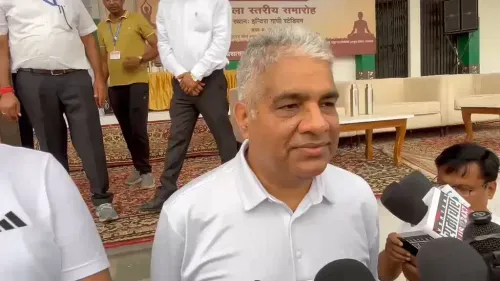
Posting on the eve of International Day of Yoga — observed annually on 21 June — Yadav wrote: 'In the heart of the Sundarbans, conservation extends beyond protecting forests — it strengthens communities.' He added that the participants were 'bound by a common commitment to healthy lives and a resilient ecosystem.'
Context
The Sundarbans is the world's largest mangrove forest, straddling West Bengal and Bangladesh, and is a UNESCO World Heritage Site and Biosphere Reserve. It is the primary habitat of the Royal Bengal tiger and home to millions of people — including fishing communities — whose livelihoods are directly tied to the health of its waterways and forests.
The 24-Parganas (South) Division administers the Indian portion of this ecologically sensitive zone and is responsible for coordinating both protection and community-engagement programmes within the reserve.
Policy Backdrop
India proposed and secured UN General Assembly recognition for the International Day of Yoga in 2014, establishing 21 June as an annual global observance. Since then, government departments — including forest and environment bodies — have used the occasion to promote wellness among field personnel and local communities.
Indian forest policy has increasingly leaned on Joint Forest Management and eco-development committees to draw local resource users into protected-area governance. The National Mission for a Green India, approved in 2014, explicitly frames community participation as central to expanding and sustaining forest cover in climate-vulnerable zones.
Stakeholders and Impact
Forest personnel working in the Sundarbans operate in one of India's most demanding conservation environments — facing cyclone risk, human-wildlife conflict, and the pressures of sea-level rise. Local fishermen, whose access to coastal waters depends on the health of the mangrove buffer, are among the most directly affected stakeholders in any conservation decision taken for the region.
The joint yoga session, as presented by the minister, is positioned as a trust-building measure — creating a shared social space between enforcement staff and resource-dependent communities who have historically occupied different sides of conservation boundaries.
What's Next
With International Day of Yoga 2026 falling on 21 June, similar events are expected across forest divisions and protected areas nationwide. The Ministry of Environment, Forest and Climate Change is likely to amplify community-conservation convergence as a theme in its Yoga Day communications. Observers will watch whether the West Bengal government and central agencies follow up with structured programmes that institutionalise community wellness initiatives within Sundarbans management plans.
Frequently Asked Questions
Why did Bhupender Yadav post about yoga in the Sundarbans?
Yadav posted on 20 June 2026, the eve of International Day of Yoga, to highlight a joint yoga session between forest personnel and local fishermen in the Sundarbans as an example of conservation and community wellness going hand in hand.
What is the 24-Parganas South Division?
The 24-Parganas (South) Division is the West Bengal forest division that administers the Indian portion of the Sundarbans and coordinates wildlife protection and community programmes in the region.
What is International Day of Yoga and who started it?
International Day of Yoga is observed every year on 21 June. It was established by the UN General Assembly in 2014 following a proposal by India to promote global wellness and mindfulness.
Why is the Sundarbans significant for conservation?
The Sundarbans is the world's largest mangrove forest, a UNESCO World Heritage Site, and the primary habitat of the Royal Bengal tiger. It is also highly vulnerable to sea-level rise and cyclones, making community-based conservation critical.
How does yoga relate to forest conservation in India?
Indian forest policy increasingly uses community wellness and trust-building activities, including yoga, to strengthen relationships between forest department staff and local resource-dependent communities in protected areas.