India's Frustration Over US's Lack of Focus on Pakistan-Linked Terrorism: A New Analysis
Synopsis
A recent report reveals India's discontent with the US's insufficient response to terrorism from Pakistan. It highlights the need for respectful dialogue on Kashmir and emphasizes the importance of rebuilding trust for stronger bilateral ties.
Key Takeaways
India is disappointed with US attention to terrorism from Pakistan.
The report emphasizes the need for US respect on Kashmir issues.
Strengthening cooperation in defense and technology is crucial.
Trust must be rebuilt to improve bilateral relations.
India's role in the Indo-Pacific is vital for regional balance.
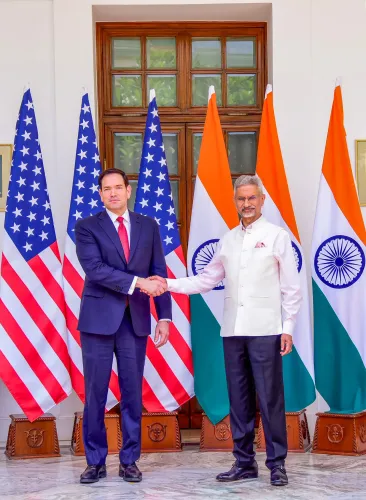
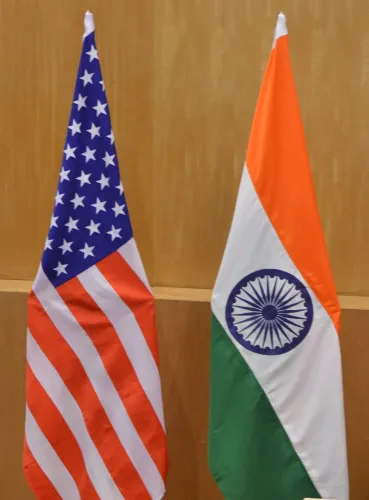
Washington, March 30 (NationPress) India expresses its disappointment regarding the “insufficient” attention the United States is directing towards terrorism that originates from Pakistan, as detailed in a recent report. The document also emphasizes the necessity for Washington to honor New Delhi's boundaries concerning Kashmir and to refrain from third-party mediation.
A policy paper released this week by the Center for a New American Security highlights that, despite ongoing collaboration in critical areas, a profound strategic mistrust continues to overshadow relations between Washington and New Delhi.
The report titled ‘Repairing the Breach: Getting US-India Ties Back on Track’ asserts that tensions ignited in 2025 have not yet fully dissipated and will require time to mend.
Authored by Lisa Curtis, Keerthi Martyn, and Sitara Gupta, the report mentions that the relationship “stumbled badly” in the latter half of 2025, pointing to disagreements over the ceasefire process between India and Pakistan and the imposition of significant US tariffs on Indian goods.
The February 2026 framework for an interim trade agreement presents “an opportunity for the two nations to reset their relationship,” but rebuilding trust will necessitate consistent efforts.
While the economic, defense, and technology connections have generally remained intact, the report underscores that differences regarding Pakistan and terrorism are still core issues.
New Delhi has voiced its dissatisfaction with what it perceives as the inadequate US response to terrorism stemming from Pakistan, even after Washington labeled The Resistance Front a terrorist organization.
The report reiterates India's persistent opposition to any external intervention in the Kashmir issue, cautioning that US comments hinting at mediation could further erode trust.
To mend bilateral ties, it suggests that Washington should “avoid discussing mediation regarding the India-Pakistan conflict over Kashmir” and instead concentrate on common interests.
Nevertheless, the report notes ongoing progress in defense cooperation, as India and the US renewed a 10-year defense framework last year that encompasses intelligence sharing, maritime security, and defense technology collaboration.
Economic engagement is also exhibiting signs of recovery. The interim trade agreement, announced earlier this year, lowers tariffs and includes commitments to enhance trade in essential sectors.
Priority areas for deeper cooperation include energy, critical minerals, pharmaceuticals, and advanced technologies such as artificial intelligence and semiconductors.
India's reforms in nuclear energy and investments in critical minerals position it as a potential ally in developing robust supply chains, particularly as both nations aim to lessen their reliance on China.
Simultaneously, US investments in India's digital infrastructure and data centers are seen as bolstering long-term technological interdependence.
However, the report warns that unless political mistrust is tackled, these advancements could be compromised.
It advocates for a renewed emphasis on counterterrorism collaboration, including initiatives to disrupt terror financing and enhance coordination within global forums.
In conclusion, the paper asserts that India will play a “crucial role” in shaping the Indo-Pacific, and the trajectory of US-India relations will be pivotal in determining the regional power balance.
The quality of this partnership will ultimately influence whether a balance of power is maintained in the region or if China emerges as the dominant force.
Point of View
It is important to recognize the complexities of US-India relations. While India expresses its concerns over US focus on terrorism from Pakistan, the broader geopolitical landscape requires a balanced approach, emphasizing respect for national boundaries and mutual cooperation.
NationPress
30 Sept 2026
Frequently Asked Questions
What is the main concern of India regarding US foreign policy?
India is concerned about the US's insufficient attention to terrorism originating from Pakistan and the need for the US to respect its stance on Kashmir.
What does the recent report suggest about US-India relations?
The report highlights deep-seated strategic mistrust and suggests that rebuilding trust will require sustained effort from both sides.
What areas of cooperation are emphasized in the report?
The report identifies energy, critical minerals, pharmaceuticals, and advanced technologies as priority areas for deeper US-India cooperation.
How has the defense cooperation between India and the US progressed?
Defense cooperation has continued to develop, with a renewed 10-year defense framework agreement focusing on intelligence sharing and maritime security.
What is India's stance on external mediation regarding Kashmir?
India opposes any external involvement in the Kashmir issue and warns that US statements suggesting mediation could harm trust.