India hands Jaffna University students LKR 7,500/month scholarships
Synopsis
India is quietly building a development moat in Sri Lanka's Tamil north. With LKR 7,500/month scholarships now reaching a second batch at Jaffna University, an RO water plant at Keerimalai temple, and books at the Jaffna Public Library — all in a single day — New Delhi's 'Neighbourhood First' is moving from rhetoric to recurring grants on the ground.
Key Takeaways
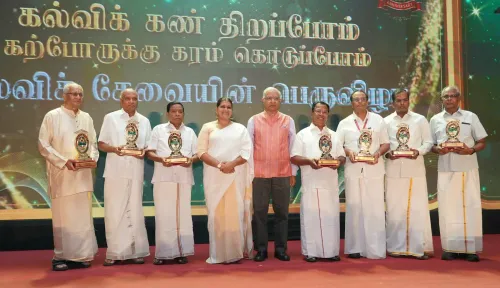
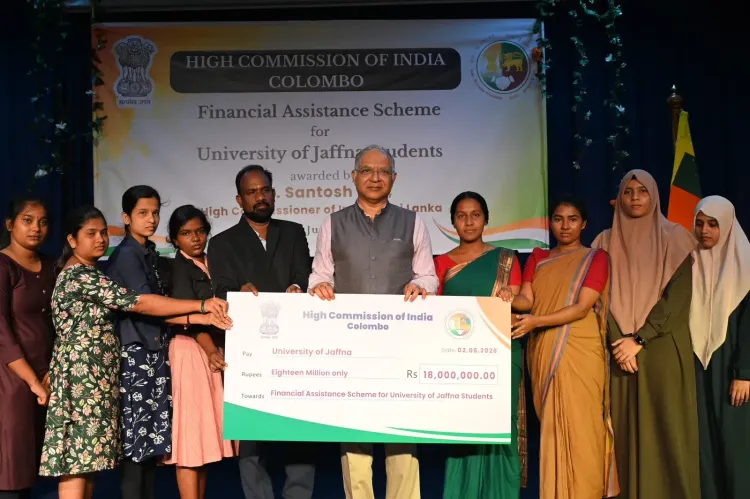
India's High Commissioner Santosh Jha handed scholarships to the 2nd batch of first-year students at the University of Jaffna on 2 June .
The scheme offers LKR 7,500/month to 100 undergraduates for the full degree duration.
It will eventually support 400 students annually.
Announced by PM Modi during President Anura Kumara Dissanayaka's visit in December 2024 .
Jha also inaugurated an RO water plant at Keerimalai Naguleshwaram Temple and visited the Atchuvely Industrial Estate , built with an Indian grant of LKR 220 million in 2015.
India's High Commissioner to Sri Lanka, Santosh Jha, on Tuesday, 2 June presented scholarships to the second batch of first-year undergraduates at the University of Jaffna under New Delhi's financial assistance scheme for economically vulnerable students. The initiative, first announced by Prime Minister Narendra Modi during Sri Lankan President Anura Kumara Dissanayaka's visit to India in December 2024, provides LKR 7,500 per month to 100 undergraduates through the full duration of their degree.
Key Developments
The scheme will eventually scale up to support 400 students annually, Jha said in a post on X. 'Empowering youth through education!' he wrote, framing the scholarships as a reaffirmation of India's 'Neighbourhood First' policy.
The High Commissioner described the rollout as part of New Delhi's broader push to deepen people-to-people ties with Sri Lanka's Northern Province, where Tamil-majority Jaffna has historically anchored India's outreach.
Books, Water Plant and Industrial Estate
Beyond the scholarships, Jha also visited the iconic Jaffna Public Library, paid tributes at the 'Bharat Corner' to former President Dr A.P.J. Abdul Kalam, and donated a collection of books to support local scholars and readers.
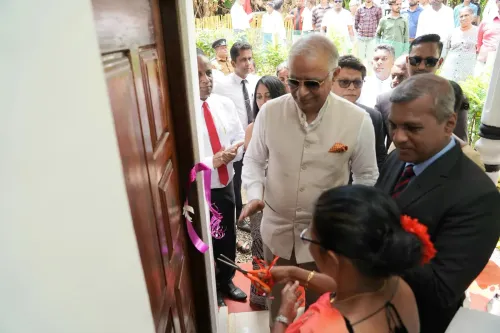
He subsequently inaugurated a Reverse Osmosis (RO) water plant on the premises of the Keerimalai Naguleshwaram Temple in Kankesanturai, one of Sri Lanka's revered Pancha Ishwarams. The site was previously visited by PM Modi during his landmark 2015 trip to Jaffna.
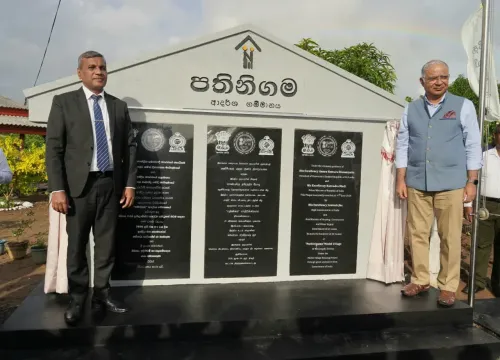
Jha also toured the Atchuvely Industrial Estate, built with an Indian grant of LKR 220 million and inaugurated in 2015. 'Glad to see local industries thriving, generating jobs and boosting the economy,' he noted on X, adding that India remained committed to scaling such high-impact projects.
Why It Matters
The Jaffna outreach comes as India seeks to consolidate its development footprint in Sri Lanka's north amid intensifying regional competition for influence, particularly from China. Education, civic infrastructure and industrial grants have emerged as the three principal vectors of New Delhi's engagement with the Tamil-majority region.
Notably, this is the second batch under the scholarship programme, signalling continuity barely six months after the Modi-Dissanayaka summit.
What's Next
Officials indicated that the scheme will progressively widen its intake to reach the 400-student annual target. India's Northern Province pipeline reportedly includes further connectivity, energy and community projects in the coming months.
Point of View
Not symbolic. Scholarships, a temple water plant and an industrial estate visit — bundled into a single envoy's day — show New Delhi treating Sri Lanka's Tamil north as a long-term influence theatre, not a one-off goodwill stop. The real test is scale: 100 students today, a promised 400 a year tomorrow. If the pipeline holds through political cycles in both Colombo and Delhi, this becomes a template; if not, it joins a familiar list of announced-but-tapered neighbourhood programmes.
NationPress
20 Sept 2026
Frequently Asked Questions
What is India's scholarship scheme for Jaffna University students?
It is a financial assistance programme that provides LKR 7,500 per month to 100 first-year undergraduates at the University of Jaffna for the full duration of their degree. The scheme targets economically vulnerable students and will eventually scale to 400 beneficiaries annually.
Who announced the scholarship initiative and when?
Prime Minister Narendra Modi announced the scheme during Sri Lankan President Anura Kumara Dissanayaka's visit to India in December 2024. It falls under India's 'Neighbourhood First' policy.
What other projects did Santosh Jha launch during his Jaffna visit?
He inaugurated a Reverse Osmosis water plant at the Keerimalai Naguleshwaram Temple in Kankesanturai and visited the Atchuvely Industrial Estate, built with an Indian grant of LKR 220 million in 2015. He also donated books at the 'Bharat Corner' of the Jaffna Public Library.
Why is India focusing on Sri Lanka's Northern Province?
The Tamil-majority Northern Province is central to India's people-centric development strategy in Sri Lanka and to its broader regional influence calculus. Education, civic infrastructure and industrial grants have become the three main vectors of New Delhi's engagement in the region.