India grants $840,000 to Tanzania for climate risk financing under UN fund
Synopsis
India is committing $840,000 to Tanzania for climate disaster risk financing — routed through a UN fund where Tanzania, not India, decides how the money is spent. It is a model that quietly challenges how traditional donor-driven aid works, and signals India's growing footprint as a development partner across Africa.
Key Takeaways
India is granting $840,000 to Tanzania for a climate risk protection programme, announced on 1 August .
Funds will flow through the India-UN Development Fund , established in 2017 with a $150 million corpus.
The grant is disbursed via the Fund's Commonwealth Window , reserved for fellow Commonwealth nations.
Tanzania's Disaster Management Department under the Prime Minister's Office will lead the project, ensuring national ownership.
The five-year plan targets financial resilience for vulnerable groups including women , people with disabilities , and low-income communities .
India is co-implementing the project with the UN Office for Disaster Risk Reduction (UNDRR) .
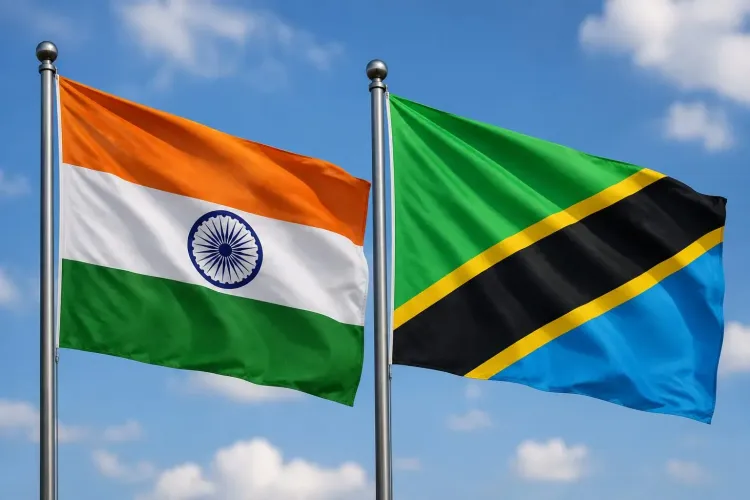
India is extending a $840,000 grant to Tanzania to fund a climate risk protection programme, according to India's Permanent Mission to the United Nations. The aid, announced on 1 August, will flow through the India-UN Development Fund and is aimed at strengthening Tanzania's financial defences against climate-related disasters.
What the Grant Covers
The funding will support Tanzania's National Disaster Risk Financing Framework and Implementation Plan 2031 (NDRFFIP), formally channelled through a programme titled 'Enhancing Financial Resilience Through the Climate Insurance and Resilience Programme (CIRP)'. The five-year plan is designed to bolster financial preparedness and climate resilience, with a particular focus on vulnerable groups including women, people with disabilities, and low-income communities.
How the India-UN Development Fund Works
India established the India-UN Development Fund in 2017 with a corpus of $150 million, in partnership with the United Nations, to channel development assistance to nations of the Global South. The Tanzania grant will be disbursed through the Fund's Commonwealth Window, which is reserved exclusively for fellow Commonwealth member states.
A defining feature of the Fund — one that sets it apart from most bilateral aid structures — is that recipient countries retain full control over how the grants are used. 'India fully supports the Tanzanian Government's determination to the proposed project which shall serve as an effective vehicle in dealing with the climate-related hazards threatening lives and livelihood,' the mission said.
Tanzania's National Ownership of the Project
The Tanzanian government's Disaster Management Department, operating under the Prime Minister's Office, will lead the project — a structure India's mission described as ensuring alignment with the country's own priorities and strategic plans. India is co-implementing the project in partnership with the UN Office for Disaster Risk Reduction (UNDRR).
According to the Tanzanian Prime Minister's Office, the NDRFFIP's core principles include timely funding, risk layering, efficient disbursement, adaptive capacity building, and multi-stakeholder engagement. The framework is intended to represent 'a paradigm shift from reactive disaster management to proactive financial preparedness, integrating disaster risk financing into national and sector development planning and budgeting,' it said.
Broader Significance for South-South Cooperation
The grant is part of India's broader strategy of South-South cooperation, through which New Delhi positions itself as a development partner rather than a traditional donor. By routing assistance through a UN-managed fund and deferring project design to recipient governments, India's model contrasts with Western aid frameworks that typically carry donor-defined conditionalities. This is among the more recent disbursements from the Fund since its establishment in 2017, reflecting India's continued engagement with African nations on climate and disaster resilience. With climate shocks increasingly threatening East African economies, the CIRP aims to plug financing gaps before disasters strike rather than after.
Point of View
000 climate grant to Tanzania is modest in dollar terms but meaningful as a signal. The India-UN Development Fund's recipient-driven model — where Tanzania decides how the money is spent, not New Delhi — is a deliberate departure from Western conditionality-based aid, and it resonates across the Global South. What mainstream coverage tends to miss is the cumulative weight of these disbursements: since 2017, India has been quietly building a development partnership architecture in Africa that runs parallel to China's infrastructure-led presence. Climate resilience is an astute entry point — it is underfunded, politically uncontroversial, and deeply needed across East Africa. The real question is whether India scales this model fast enough to match its diplomatic ambitions on the continent.
NationPress
15 Sept 2026
Frequently Asked Questions
What is the $840,000 grant India is giving to Tanzania?
India is extending an $840,000 grant to Tanzania to fund the Climate Insurance and Resilience Programme (CIRP), which supports Tanzania's National Disaster Risk Financing Framework through 2031. The grant is routed through the India-UN Development Fund and focuses on protecting vulnerable communities from climate-related financial shocks.
What is the India-UN Development Fund?
The India-UN Development Fund is a $150 million corpus established by India in 2017 in partnership with the United Nations to provide development assistance to countries of the Global South. A key feature is that recipient countries — not India — decide how the grants are used.
Why is Tanzania's national ownership significant in this grant?
Unlike most development aid programmes where donors set the terms, this grant places Tanzania's Disaster Management Department under its Prime Minister's Office in charge of the project. This ensures the initiative aligns with Tanzania's own national priorities rather than external donor agendas.
Who are the intended beneficiaries of the climate resilience programme?
The five-year programme targets vulnerable communities in Tanzania, specifically women, people with disabilities, and low-income groups who are disproportionately exposed to climate-related hazards and have the least financial capacity to recover from disasters.
What role does the UN Office for Disaster Risk Reduction play?
The UN Office for Disaster Risk Reduction (UNDRR) is India's implementing partner in the project. It will work alongside Tanzania's Disaster Management Department to operationalise the climate risk financing framework and ensure alignment with international disaster risk reduction standards.