Climate change a crisis of livelihoods and power, experts warn at CRF launch

Synopsis
Climate change is a crisis of power and representation, not just the environment — that was the central argument at the New Delhi launch of CRF's 'Gendering Climate Futures.' Experts warned that without gender-disaggregated data and land rights for women, India's climate adaptation plans will continue to leave the most vulnerable behind.
Key Takeaways
The Chintan Research Foundation (CRF) launched 'Gendering Climate Futures: Power, Finance, and Justice in a Warming World' in New Delhi on 8 October 2026 .
The volume, edited by Kalyani Shukla and Sandra Kurian , focuses on gender, climate vulnerability, and just transition in South Asia and India .
CRF President Shishir Priyadarshi stressed that land ownership is key to enabling women's access to climate finance and resilient investments.
Panellists identified gender-disaggregated data and cross-departmental coordination as critical gaps in current climate policy.
Experts called for gender to be integrated at the design stage of climate programmes, not treated as an afterthought.
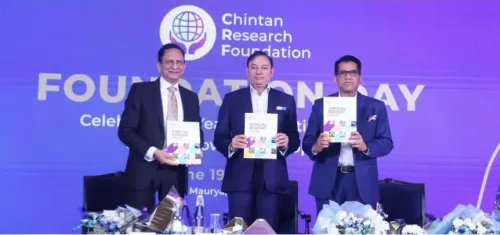
Climate change is not only an environmental crisis but also a profound crisis of livelihoods, access, representation, and power, leading experts emphasised at a panel discussion in New Delhi on 8 October 2026. The remarks came at the launch of a landmark edited volume by the Chintan Research Foundation (CRF) that centres gender justice within the climate conversation.
The Volume and Its Scope
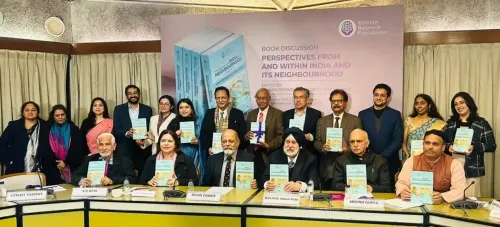
The Chintan Research Foundation formally unveiled its new edited volume titled 'Gendering Climate Futures: Power, Finance, and Justice in a Warming World' at the national capital event. Edited by Kalyani Shukla and Sandra Kurian, the volume examines the intersections of gender and climate change across questions of vulnerability, access, agency, finance, and participation in the just transition, with a particular focus on South Asia and India. It draws on diverse methodologies including policy analysis, case studies, feminist political ecology, grassroots perspectives, and quantitative research. The volume is now available for purchase online.
Key Arguments: Gender at the Centre of Climate Policy
Shishir Priyadarshi, President of CRF, highlighted the disproportionate impacts of climate change on women, including disruptions to livelihoods and education. He underscored the importance of land ownership in enabling women's access to credit and climate-resilient investments, and stressed that gender must move from the periphery to the centre of climate policy — shaping how vulnerability, adaptation, and justice are understood. This framing positions climate finance not merely as an environmental instrument but as a tool of social equity.
Panel Discussion: Barriers and Priorities
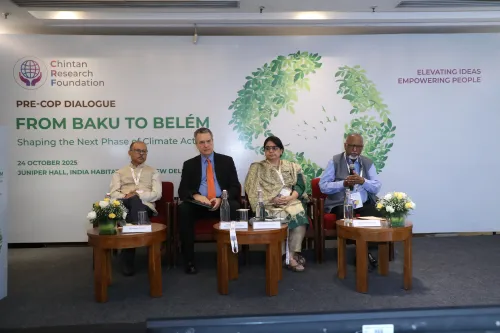
A panel discussion moderated by Dr Mini Govindan, Senior Fellow at TERI, brought together Arti Ahuja, IAS (Retd), Former Secretary, Labour and Employment, Government of India; Dr Nikhil Raj, Development Economist and Director, Sustainable Outcomes; Pinky Pradhan, Communications and Media Specialist, UNFPA; and Dr Aditi Kapoor, Gender Consultant, Asian Development Bank. Panellists underscored the importance of improving women's access to land, finance, technology, data, and social protection as foundational to any equitable climate response.
Data Gaps and Institutional Challenges
The discussion also examined institutional barriers to mainstreaming gender in climate and employment policies, with coordination across departments and stakeholders emerging as a key challenge. Greater availability of gender-disaggregated data was identified as essential for understanding the economic and social impacts of climate change and for informing responsive policies, according to CRF. Panellists further stressed the importance of integrating gender considerations at the design stage of climate and development programmes, rather than treating them as an afterthought.
Broader Context and What's Next
This comes amid growing global pressure ahead of COP climate negotiations to embed gender equity frameworks in national climate action plans. India's own climate adaptation commitments under the Paris Agreement have been criticised by researchers for insufficient attention to gendered vulnerability, particularly in agrarian and coastal communities. The CRF volume is expected to inform policy advocacy and research across South Asian institutions in the months ahead.
Point of View
And women's land rights remain legally murky in large parts of the country. The panel's emphasis on design-stage integration is a direct rebuke to the tokenistic 'women's chapter' approach that has characterised many national adaptation plans. Without enforceable linkages between climate finance and gender outcomes, this risks being another well-argued volume that does not move policy.
NationPress
8 Oct 2026
Frequently Asked Questions
What is the CRF volume 'Gendering Climate Futures' about?
'Gendering Climate Futures: Power, Finance, and Justice in a Warming World' is an edited volume by the Chintan Research Foundation examining how gender intersects with climate vulnerability, finance, and the just transition, with a focus on South Asia and India. It was launched in New Delhi on 8 October 2026 and is available for purchase online.
Why do experts say climate change is also a gender crisis?
Experts argue that climate change disproportionately disrupts women's livelihoods and education, particularly in agrarian and resource-dependent communities. Without land ownership, women are also excluded from accessing credit and climate-resilient investments, compounding existing inequalities.
What did panellists identify as the biggest gaps in gender-responsive climate policy?
Panellists highlighted three key gaps: the shortage of gender-disaggregated data needed to measure social and economic climate impacts; institutional silos that hinder cross-departmental coordination; and the tendency to treat gender as an afterthought rather than integrating it at the design stage of climate programmes.
Who participated in the panel discussion at the CRF launch?
The panel was moderated by Dr Mini Govindan of TERI and included Arti Ahuja (IAS Retd, Former Secretary, Labour and Employment), Dr Nikhil Raj (Development Economist, Sustainable Outcomes), Pinky Pradhan (UNFPA), and Dr Aditi Kapoor (Asian Development Bank).
What is the significance of the CRF launch ahead of COP negotiations?
The launch comes as global pressure mounts on countries to embed gender equity into national climate action plans before upcoming COP negotiations. India's existing climate adaptation commitments have been criticised for insufficient attention to gendered vulnerability, making this volume timely for both researchers and policymakers.