Jaishankar hopes G20 finds common ground before December summit
Synopsis
At the close of the G20 Foreign Ministers' Meeting in Atlanta, EAM Jaishankar struck a cautiously optimistic note — saying consensus at the December summit is 'within the realm of possibility' and holding up BRICS as proof. His remarks also flagged India's growing currency as a diplomatic bridge-builder in an increasingly polarised world, and signalled that the Quad is pushing to expand its agenda.
Key Takeaways
Jaishankar expressed hope that the G20 can achieve common ground ahead of the December 2026 summit .
He cited the BRICS grouping's ability to produce a consensus statement as a benchmark for what is achievable.
Jaishankar described India as a country that can 'talk to all sides' in a polarised world — a view he said was broadly appreciated by fellow foreign ministers in Atlanta .
He clarified that his 'lone power' characterisation of the US was made in a different, analytical context at the Munich Security Conference delegation meeting.
The Quad held its third foreign ministers' meeting of the year in Atlanta, with Jaishankar signalling plans to expand the grouping's agenda.
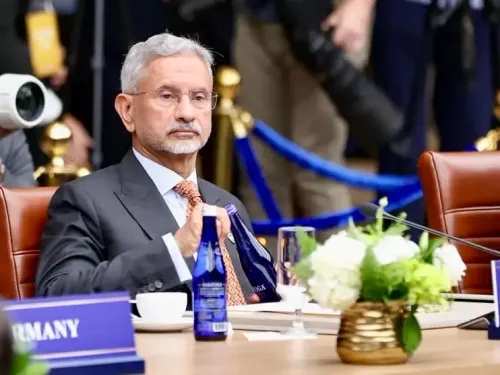
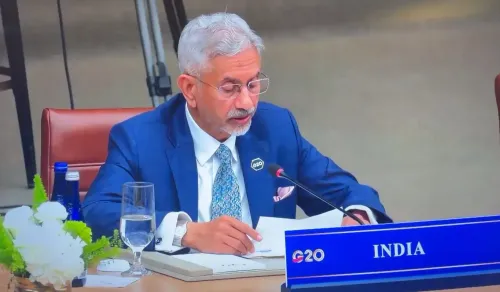
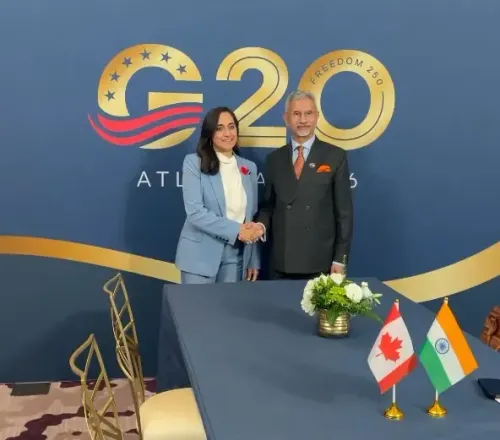
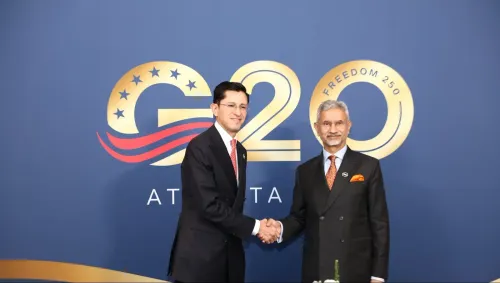
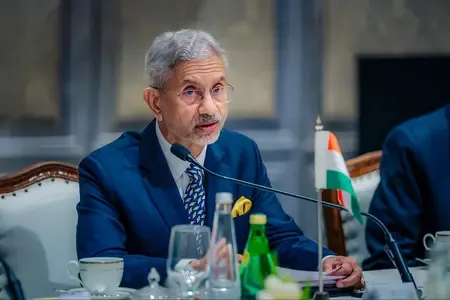
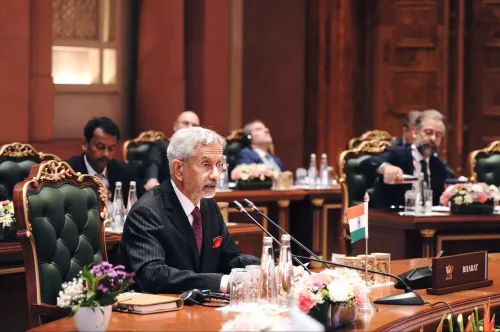
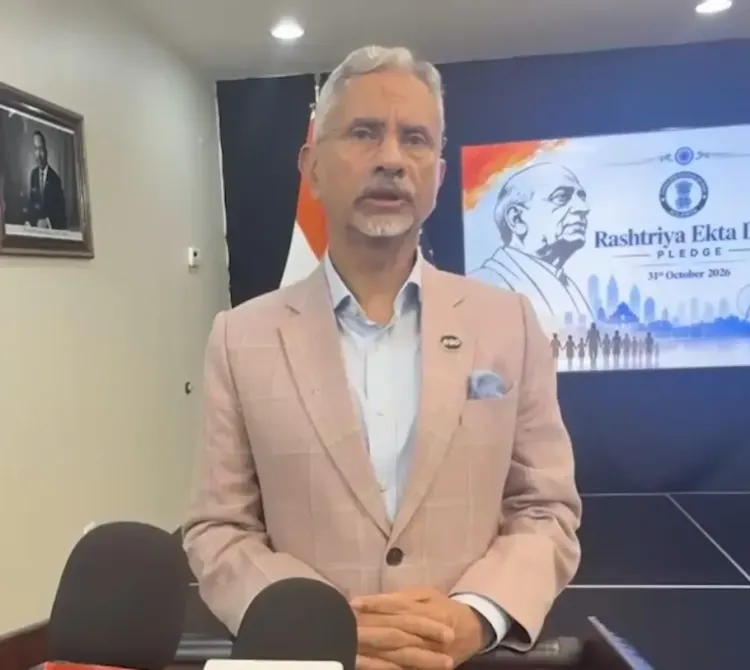
External Affairs Minister S. Jaishankar has expressed hope that the G20 grouping will be able to reach consensus ahead of its December summit, speaking to Indian reporters in Atlanta on Saturday, 1 November, at the close of the G20 Foreign Ministers' Meeting. The remarks come as geopolitical polarisation continues to challenge multilateral diplomacy on nearly every front.
What Jaishankar Said on the December Summit
When asked whether India could replicate the consensus it achieved when it hosted the G20 Presidency, Jaishankar was measured. 'We haven't yet reached that stage (of Summit). So we'll have to see when we come to the summit in December,' he said.
He added that the ambition remained intact: 'It's our hope that G20 do produce common ground. And if an effort is made, then it's within the realm of possibility.' He pointed to the BRICS grouping as recent evidence that divergent players can agree. 'You saw even at BRICS, in a somewhat different context with somewhat different players, we were able to actually get the key participants to agree on a common statement,' he said.
India's Role as a Bridge in a Polarised World
Jaishankar underscored a recurring theme of Indian foreign policy — New Delhi's ability to maintain dialogue with multiple competing blocs simultaneously. 'I would say there was a general appreciation. That India was a country in a somewhat polarised world today. We have the ability to talk to all sides. We are contributing. We are bridging. We are communicating. I think that sense, that appreciation was there,' he said, referring to the mood among foreign ministers at the Atlanta meeting.
This framing aligns closely with India's positioning at the G20 New Delhi Declaration of 2023, where New Delhi secured a consensus document despite deep divisions over the Russia-Ukraine war — a diplomatic achievement that drew wide international attention at the time.
Clarification on 'Lone Power' Remark
Jaishankar also addressed questions over a recent characterisation of the United States as 'the lone power,' clarifying that the remark was made in a specific context. 'I was talking in a very different context. I was talking to the Munich Security Conference delegation. That kind of event is very different from this kind of event,' he said. He added that what a minister says is shaped by the nature of the audience — distinguishing between a gathering of analysts and policymakers versus one of foreign ministers.
Quad Progress and Bilateral Engagements
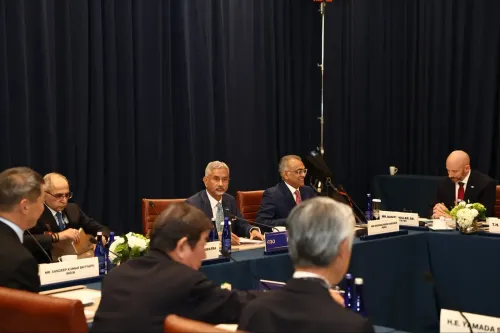
On the margins of the Atlanta meetings, the Quad — comprising India, the United States, Japan, and Australia — held its foreign ministers' meeting on Saturday morning. Jaishankar noted this was 'in fact the third foreign ministers meeting this year,' following earlier sessions in Delhi and Manila. 'We felt we have really progressed the Quad, and we hope the Quad will meet in a manner in which we'd be able to set directions for the future. Think in terms of expanding its agenda,' he said.
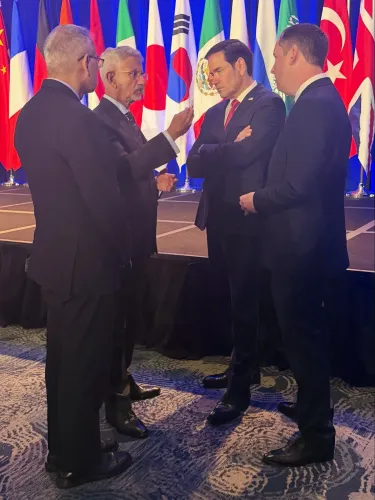
Jaishankar also confirmed he had held bilateral meetings on the sidelines with 'pretty much everybody,' both one-to-one and in groups, reflecting India's active diplomatic footprint at the Atlanta gathering.
What to Watch Next
With the December G20 summit approaching, the diplomatic community will be watching whether the bridging efforts initiated at Atlanta translate into a workable consensus text. The stakes are high: a fragmented outcome would contrast sharply with India's celebrated 2023 consensus and raise questions about the forum's effectiveness in an era of sharpened great-power rivalry.
Point of View
Burnished at the 2023 New Delhi G20, is not a one-off but a durable foreign policy asset. The BRICS reference is telling: by invoking a forum where Russia and China are central players, Jaishankar is subtly reminding the West that India's value lies precisely in its refusal to pick sides. Yet the harder question is whether 'bridging' produces durable outcomes or merely deferred disagreements. The December summit will test that distinction in real time.
NationPress
1 Nov 2026
Frequently Asked Questions
What did EAM Jaishankar say about the G20 December summit?
Jaishankar said India hopes the G20 will produce common ground by the December summit, calling it 'within the realm of possibility' if a genuine effort is made. He was speaking to reporters in Atlanta at the end of the G20 Foreign Ministers' Meeting on 1 November 2026.
Why did Jaishankar cite BRICS in the context of the G20?
He used BRICS as proof that disparate players can agree on a common statement despite differences. The comparison was meant to signal optimism that the G20, though more complex, could similarly reach consensus before the December summit.
What did Jaishankar clarify about calling the US 'the lone power'?
He said the remark was made in a different setting — before a Munich Security Conference delegation of analysts and policymakers — and should not be read as a statement made to fellow foreign ministers. He distinguished between the analytical context of that forum and a formal diplomatic gathering.
What is the status of the Quad after the Atlanta meeting?
The Quad foreign ministers met in Atlanta on Saturday morning — the third such meeting in 2026, following sessions in Delhi and Manila. Jaishankar said the grouping has 'really progressed' and signalled plans to expand its agenda going forward.
How does India's diplomatic stance at the G20 compare to its 2023 presidency?
India secured a landmark consensus declaration at its G20 presidency in New Delhi in 2023 despite sharp divisions over the Russia-Ukraine conflict. Jaishankar's Atlanta remarks suggest India is attempting to replicate that bridging role, though he acknowledged the December summit has not yet reached the consensus stage.