Jaishankar at G20 Atlanta: 'Right to industrialise' must be upheld, predatory practices resisted
Synopsis
At the G20 Foreign Ministers' Meeting in Atlanta, Jaishankar didn't just speak about supply chains — he framed it as a rights issue. His call for the 'right to industrialise' and resistance to 'predatory practices' signals India's intent to become a vocal architect of a new, multipolar global economic order, even as it simultaneously met with Rubio's Quad partners and sat down with Russia's Lavrov on Ukraine.
Key Takeaways
Jaishankar addressed the G20 Foreign Ministers' Meeting in Atlanta on 31 October , focusing on supply chain resilience.
He called for protection of the 'right to industrialise' and firm resistance to predatory practices in global supply chains.
Jaishankar pushed for de-politicisation of markets and de-concentration of the global economy to prevent weaponisation of finance and resources.
US Secretary of State Marco Rubio echoed supply chain priorities, flagging the security of the Strait of Hormuz and Bab al-Mandeb Strait .
Jaishankar attended the Quad Foreign Ministers' Meeting — the third this year — alongside Rubio, Motegi , and Wong .
On the sidelines, Jaishankar met Russian FM Sergey Lavrov to discuss Ukraine, the Gulf situation, and multilateral issues.
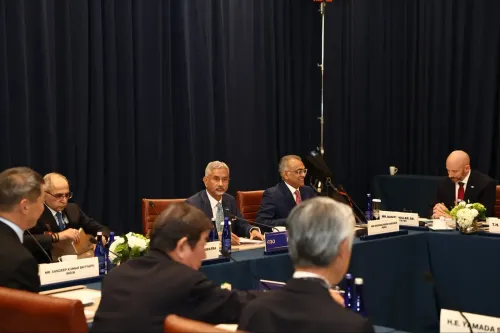
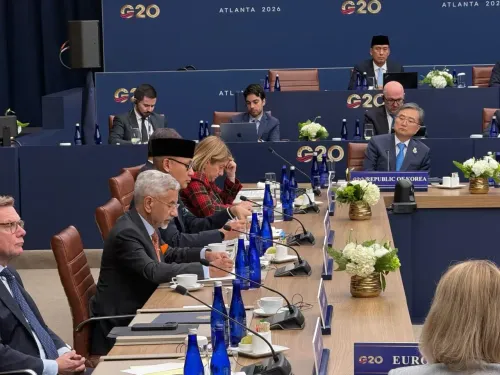
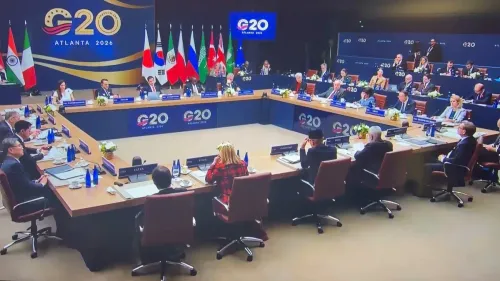
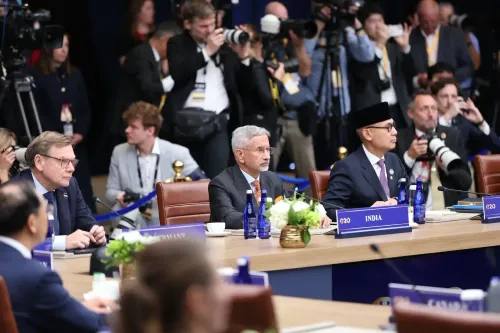
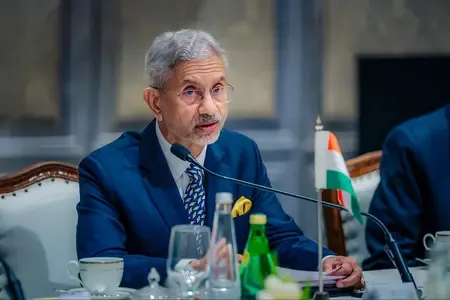
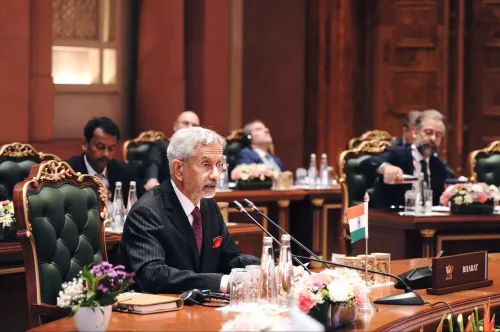
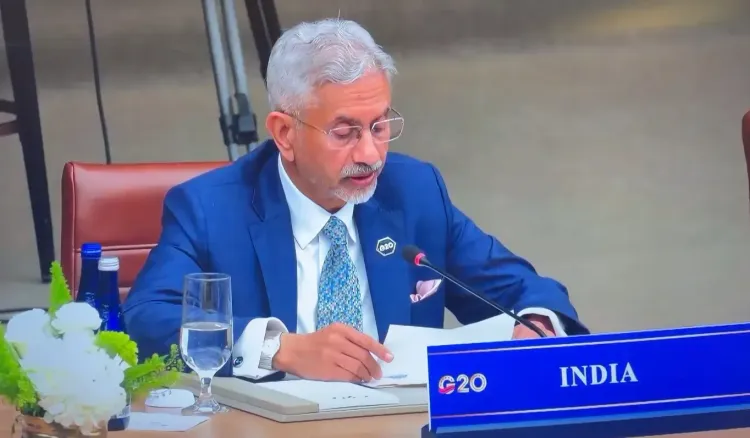
External Affairs Minister S. Jaishankar on Saturday, 31 October made a strong pitch at the G20 Foreign Ministers' Meeting in Atlanta for protecting the 'right to industrialise', resisting predatory supply chain practices, and pushing for the de-politicisation of global markets. His remarks came as the summit's final plenary — focused exclusively on supply chains — wrapped up under the US G20 presidency.
Key Demands Jaishankar Placed Before the G20
Outlining India's position, Jaishankar argued that supply chain resilience is now central to the health of the global economy. He called for diversification and de-risking — including in connectivity — as a shield against disruptions from pandemics, conflicts, climate events, and industrial mishaps.
Jaishankar said: 'The right to industrialise must be promoted; predatory practices and targeting competition should be firmly resisted.' He pushed further, arguing that de-concentration of the global economy and optimisation of production across geographies could 'discourage the weaponisation of finance, resources, production and market share.'
Calling for structural reform at the multilateral level, he said: 'G20 countries must reconcile their national interests for the collective good by promoting transparent and multiple supply chains, making the global economy truly multi-stakeholder.'
Rubio Echoes Supply Chain Priority, Flags Hormuz and Bab al-Mandeb
US Secretary of State Marco Rubio, who hosted the meeting on behalf of the US G20 presidency, also centred his closing remarks on supply chains. In a post on X, Rubio stated: 'Secure supply chains are essential for growth.'
Rubio specifically flagged the security of critical trade routes — the Strait of Hormuz and the Bab al-Mandeb Strait — and called for strengthening and expanding critical mineral supply chains to protect future economic stability. The convergence between Jaishankar's and Rubio's framing points to a rare area of US-India alignment on multilateral economic architecture.
Quad Foreign Ministers Convene in Atlanta
Earlier on Saturday, Jaishankar also participated in the Quad Foreign Ministers' Meeting in Atlanta alongside Rubio, Japan's Foreign Minister Toshimitsu Motegi, and Australia's Foreign Minister Penny Wong. He described it as 'the third such interaction this year', following earlier meetings in New Delhi and Manila.
Among the themes flagged at the Quad session were deepening cooperation on supply chain resilience, ensuring access to technology, critical minerals, and energy security, and countering non-market practices and rising economic stresses across the Indo-Pacific.
Jaishankar Meets Lavrov on Ukraine, Gulf, and Multilateral Issues
On the sidelines of the G20 meeting, Jaishankar also held talks with Russian Foreign Minister Sergey Lavrov. He said the discussion covered the Ukraine conflict, the Gulf situation, and multilateral issues — a meeting that underlines India's continued diplomatic engagement with Moscow even as it deepens ties with Western partners within the Quad framework.
This comes amid growing global pressure on nations to pick sides in the Russia-Ukraine conflict. India's simultaneous participation in both the Quad and bilateral talks with Lavrov reflects its long-standing doctrine of strategic autonomy.
What Comes Next
The US holds the G20 presidency in 2025, and the Atlanta ministerial outcome will feed into the broader G20 Leaders' Summit agenda. India's consistent advocacy for the industrialisation rights of the Global South — and its resistance to supply chain weaponisation — is expected to shape India's diplomatic posture heading into the next cycle of multilateral engagements.
Point of View
Then Jaishankar met Lavrov on Ukraine — demonstrating that New Delhi's strategic autonomy is not rhetoric but operational policy. The real question is whether G20 declarations will carry enforcement teeth, or whether 'de-politicisation of markets' will remain the kind of principle that earns applause in plenaries and goes nowhere in practice.
NationPress
1 Nov 2026
Frequently Asked Questions
What did Jaishankar say at the G20 Foreign Ministers' Meeting in Atlanta?
Jaishankar called on the G20 to protect the 'right to industrialise', resist predatory supply chain practices, and work towards de-politicisation of global markets. He argued that diversification, de-risking, and de-concentration of the global economy are essential to supply chain resilience.
What is the significance of India's 'right to industrialise' demand at G20?
The demand is a direct challenge to supply chain structures dominated by advanced economies, which critics argue effectively restrict manufacturing access for developing nations through export controls and targeted competition. India, as a leading voice for the Global South, is pushing for a more equitable multilateral economic architecture.
What was discussed at the Quad Foreign Ministers' Meeting in Atlanta?
The Quad Foreign Ministers — Jaishankar, US Secretary of State Rubio, Japan's FM Motegi, and Australia's FM Wong — discussed supply chain resilience, technology and critical mineral security, energy security, and countering non-market practices in the Indo-Pacific. It was the third Quad FM meeting of the year.
Why did Jaishankar meet Russian FM Lavrov at the G20 sidelines?
Jaishankar held a bilateral meeting with Russian Foreign Minister Sergey Lavrov on the sidelines of the Atlanta G20 summit, covering the Ukraine conflict, the Gulf situation, and multilateral issues. The meeting reflects India's policy of engaging all major powers while maintaining strategic autonomy.
Who hosted the G20 Foreign Ministers' Meeting and what was the US position on supply chains?
US Secretary of State Marco Rubio hosted the G20 Foreign Ministers' Meeting in Atlanta, as the US holds the G20 presidency. Rubio stressed that secure supply chains are essential for growth and called for protecting critical trade routes including the Strait of Hormuz and the Bab al-Mandeb Strait, as well as strengthening critical mineral supply chains.