India joins G20 energy consensus in Houston on minerals, LPG and water
Synopsis
India signed on to four G20 energy consensus outcomes in Houston — covering LPG access, faster infrastructure permits, water reuse, and critical-mineral security. The agreements are non-binding but directly mirror India's own policy priorities, from clean cooking fuel to mineral processing ambitions, making Houston a diplomatic alignment moment even if implementation remains entirely domestic.
Key Takeaways
India adopted four consensus outcomes at the G20 Energy Abundance Ministerial in Houston, Texas on 21 September 2026 .
The outcomes cover household energy access (including LPG), infrastructure permitting reform , a voluntary water-reuse initiative , and critical-mineral supply-chain security .
LPG was specifically recognised as a fast-track replacement for traditional biomass in developing countries.
US Interior Secretary Doug Burgum and US Energy Secretary Chris Wright highlighted the need to diversify mineral supply chains and expand reliable energy globally.
Hitachi Energy announced a $528 million power-transformer plant in Mississippi; Caturus announced an LNG expansion adding 7.75 million tonnes of annual capacity.
G20 ministerial outcomes are political commitments, not binding treaties ; implementation depends on each country's domestic policy decisions.
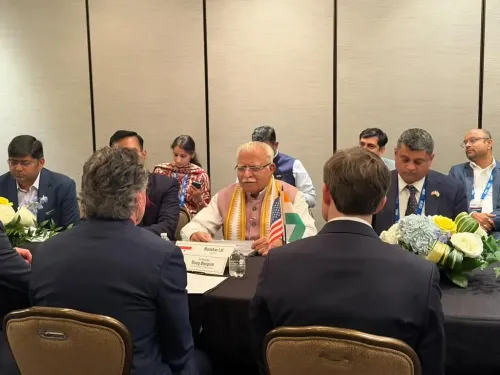
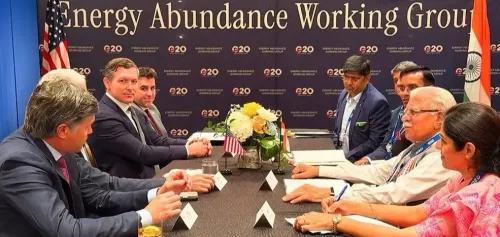
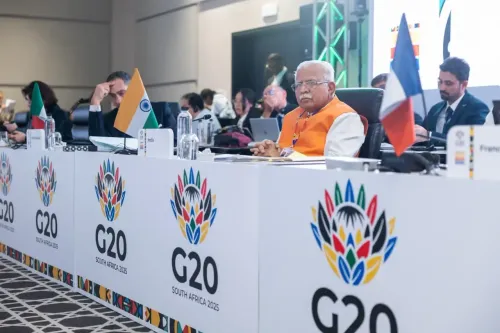
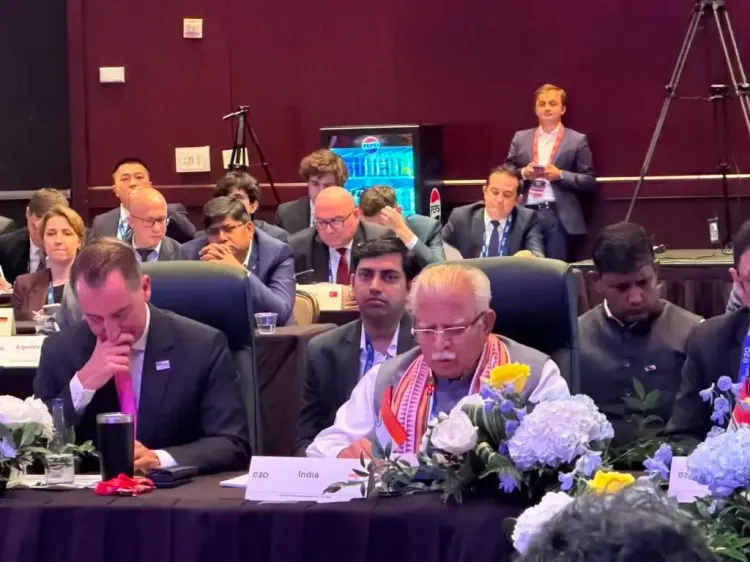
India joined fellow G20 nations on 21 September 2026 in adopting four consensus outcomes at the G20 Energy Abundance Ministerial in Houston, Texas, covering household energy access, infrastructure permitting, water reuse, and critical-mineral supply-chain security. The three-day ministerial, hosted by the United States, marks a fresh push by the world's largest economies to align on energy and resource priorities.
The Four Consensus Outcomes
The agreements, adopted at the conclusion of the ministerial, advance three stated priorities of the G20 Energy Abundance Working Group: energy security and affordable baseload power, permitting and regulatory efficiency, and resilient critical-mineral supply chains.
On household energy access, ministers backed affordable, scalable approaches tailored to individual country conditions. The consensus specifically recognised liquefied petroleum gas (LPG) as a viable option for rapidly replacing traditional biomass in countries where it can be reliably expanded — a provision directly relevant to developing economies still reliant on solid fuels for cooking.
The second outcome calls for more efficient, predictable, and effective domestic permitting and regulatory processes for infrastructure projects, a long-standing bottleneck for energy investments across both advanced and emerging economies.
Ministers also adopted a voluntary water-reuse initiative spanning communities, energy production, manufacturing, agriculture, and other essential sectors. The framework promotes quality- and purpose-driven approaches to reused water.
The fourth agreement calls for voluntary cooperation to build resilient, affordable, and diversified critical-mineral value chains, including information-sharing, innovation, investment, capacity-building, and local value addition.
What US Officials Said
US Interior Secretary Doug Burgum underscored the stakes: "The world cannot build secure energy systems, advanced manufacturing capacity, or digital infrastructure on fragile mineral supply chains." He added that the Houston consensus supports a 'common-sense approach' of diversifying supply, strengthening domestic and regional capacity, encouraging investment and innovation, and respecting each nation's sovereignty over its natural resources.
US Energy Secretary Chris Wright said the agreements would help expand reliable energy and infrastructure globally. "A highly energized society brings health, wealth, and opportunity," Wright said, describing the outcomes as advancing cooperation to support 'prosperity, resilience, and opportunity throughout the world.'
Commercial Announcements at the Margins
Several investment announcements accompanied the ministerial. Japan's Hitachi Energy announced a $528 million investment to build a power-transformer manufacturing facility in Gallman, Mississippi, expected to create 654 jobs. Houston-based Caturus announced a five-train expansion of its Commonwealth LNG export facility in Louisiana, adding 7.75 million tonnes of annual capacity and nearly doubling planned output to about 17.25 million tonnes. Continental Resources also signed a memorandum of understanding with Venezuela's state-owned PDVSA to develop and operate the 126,000-acre Ayacucho 2 Block in the Orinoco Belt.
Notably, EPA Administrator Lee Zeldin announced the repeal of most greenhouse-gas requirements imposed on American power plants under the previous administration. The US Environmental Protection Agency (EPA) estimates the repeal will save $310 billion, with a further proposal to withdraw remaining standards projected to reduce direct compliance costs by an additional $370 million, according to the administration's own figures.
What It Means for India
India attended the ministerial alongside the United States, China, Russia, Canada, Australia, Brazil, Indonesia, Japan, South Korea, Saudi Arabia, and several European countries, with the African Union and European Union also represented.
The four outcomes closely map to India's existing policy priorities: the Pradhan Mantri Ujjwala Yojana and clean cooking fuel expansion, domestic infrastructure reform, water conservation, and access to minerals — including lithium, cobalt, and rare earths — needed for electronics, advanced manufacturing, and energy technologies. The commitment to local value addition could also support India's ambitions to build domestic mineral processing capacity rather than remain dependent on imported finished materials.
It is worth noting that G20 ministerial outcomes are consensus-based political commitments, not legally binding treaties. Their real-world impact will depend on the domestic policies, regulations, and investment decisions of each participating government.
With implementation timelines still to be defined, the coming months will reveal whether Houston's political commitments translate into on-ground shifts in energy access, mineral trade flows, and infrastructure development across G20 member nations.
Point of View
Fast-track mineral processing investments, and reform infrastructure permitting without appearing to act unilaterally. The critical-mineral consensus is the most consequential plank: with China dominating rare-earth and battery-mineral processing, a G20 framework nudging 'local value addition' aligns with India's own push to become a processing hub rather than a raw-material exporter. The EPA's simultaneous rollback of US greenhouse-gas rules at the same venue creates a visible tension within the consensus — nations committed to cleaner energy will need to manage the optics of a framework co-authored by an administration actively unwinding climate regulations.
NationPress
22 Sept 2026
Frequently Asked Questions
What are the four G20 energy consensus outcomes India joined in Houston?
The four outcomes cover: affordable household energy access (with LPG recognised as a clean cooking option), more efficient domestic infrastructure permitting processes, a voluntary water-reuse initiative, and voluntary cooperation on resilient critical-mineral supply chains. These were adopted at the G20 Energy Abundance Ministerial in Houston, Texas on 21 September 2026.
Why does the G20 energy consensus matter for India specifically?
The outcomes align closely with India's existing priorities — expanding LPG access under clean cooking fuel schemes, reforming infrastructure approvals, water conservation, and securing minerals like lithium and cobalt for electronics and energy manufacturing. The local value addition provision could accelerate India's mineral processing ambitions.
Are G20 ministerial consensus outcomes legally binding?
No. G20 ministerial outcomes are consensus-based political commitments, not treaties. Their implementation depends entirely on the domestic policies, regulations, and investment decisions of each participating government.
Which countries attended the G20 Energy Abundance Ministerial in Houston?
India attended alongside the United States, China, Russia, Canada, Australia, Brazil, Indonesia, Japan, South Korea, Saudi Arabia, and several European countries. The African Union and European Union were also represented.
What commercial investments were announced alongside the Houston ministerial?
Japan's Hitachi Energy announced a $528 million power-transformer manufacturing facility in Mississippi, expected to create 654 jobs. Houston-based Caturus announced an LNG expansion adding 7.75 million tonnes of annual capacity in Louisiana. Continental Resources signed an MoU with Venezuela's PDVSA to develop the 126,000-acre Ayacucho 2 Block.