Japan pushes G20 to boost oil stockpiles, free energy trade at Atlanta meet
Synopsis
At the G20 Foreign Ministers' Meeting in Atlanta, Japan's Foreign Minister Motegi pressed for a three-pronged energy security push — free trade, coordinated stockpiling, and producer-consumer cooperation — while revealing plans for a comprehensive Gulf cooperation plan. With Asia bearing the brunt of supply instability, Tokyo is positioning itself as the critical bridge between Middle Eastern producers and regional consumers.
Key Takeaways
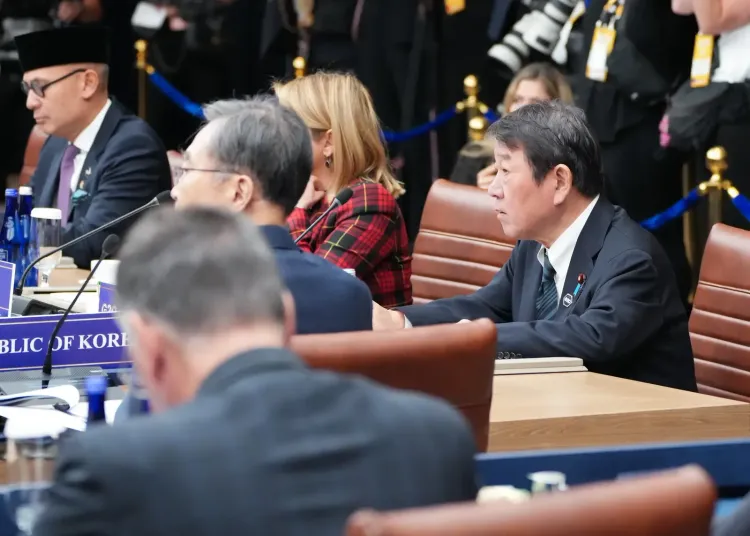
Japan's Foreign Minister Toshimitsu Motegi presented energy security proposals at the G20 Foreign Ministers' Meeting in Atlanta on 31 October .
Three priorities outlined: free and transparent energy trade, stronger oil stockpiles, and closer producer-consumer cooperation.
The G20 accounts for more than 80 per cent of global GDP and energy consumption, Motegi said.
Japan is formulating a comprehensive cooperation plan with Gulf countries ; no timetable or funding figure was disclosed.
The POWERR Asia initiative, launched in April , covers immediate supply, medium-term stockpiling, and long-term source diversification.
Japan cited existing cooperation on desalination plants and LNG liquefaction facilities in the Middle East as a base for deeper engagement.
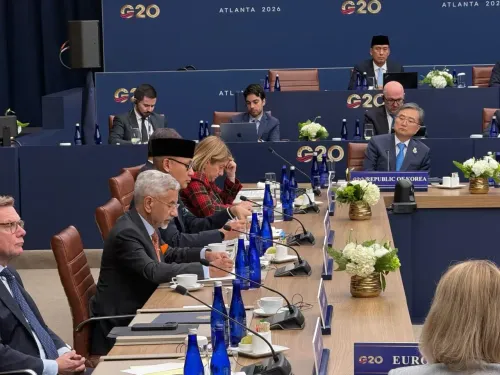
Japanese Foreign Minister Toshimitsu Motegi on 31 October urged G20 nations to strengthen oil stockpiles and maintain free and transparent energy trade, while unveiling plans for deeper cooperation with Gulf countries to shore up energy security. The call came during Session 2 of the G20 Foreign Ministers' Meeting in Atlanta, according to an official Japanese government readout.
Three Priorities Japan Put on the Table
Motegi laid out a three-point agenda for the G20: ensuring free and transparent energy trade, strengthening oil stockpiles through international coordination, and deepening cooperation between energy-producing and energy-consuming nations. He argued that the G20 — which collectively accounts for more than 80 per cent of global GDP and energy consumption — bore shared responsibility for resolving the ongoing supply crisis, exacerbated by developments in the Middle East.
This comes amid heightened global anxiety over energy supply chains, with Asian economies among the most exposed to price volatility and supply disruption stemming from geopolitical instability in oil-producing regions.
Japan's Gulf Cooperation Plan
Tokyo also disclosed that it is formulating a comprehensive cooperation plan with Gulf countries aimed at bolstering their economic and energy resilience. The readout did not specify a timetable, a funding amount, or the precise countries that would participate. Motegi framed the initiative as part of Japan's broader strategic objective of bridging Middle Eastern oil producers with Asian consumers — with Japan positioning itself as an active facilitator through cooperation on energy supplies, storage infrastructure, and engineering.
Notably, Japan cited existing financing and engineering cooperation for desalination plants and liquefied natural gas (LNG) liquefaction facilities in Middle Eastern countries as a foundation for deepening this engagement. Officials indicated that expanding such activities would contribute meaningfully to global energy security.
POWERR Asia Initiative in Focus
Motegi also highlighted Japan's POWERR Asia initiative, launched in April — several months before the Atlanta meeting — as a core pillar of its response to supply instability. The initiative addresses three time horizons: immediate energy supply needs, medium-to-long-term regional stockpiling systems, and longer-term diversification of energy sources. Friday's presentation described ongoing activities under the programme; it was not an announcement of a new scheme.
Japan pointed to work already under way to expand stockpiles across Asia, describing the region as heavily affected by supply instability. The Japanese readout did not identify any new allocation or project specifically targeting India.
G20 as the Forum for Energy Coordination
In his remarks, Motegi described the G20 as 'the premier forum for international economic cooperation' and emphasised its unique role in convening both producer and consumer nations on energy supply challenges. He called on all G20 members to coordinate closely and stated that Japan was determined to play a leading role in that effort.
The Atlanta session reflects a broader international push to institutionalise energy security frameworks ahead of what analysts warn could be a prolonged period of supply uncertainty. Whether the G20's major energy consumers — including India, China, and the European Union — align with Japan's stockpiling and trade-transparency proposals remains to be seen.
Point of View
Tokyo is seeking a structural diplomatic role in a corridor dominated by bilateral deals. The absence of specifics on the Gulf cooperation plan — no funding, no timeline, no named partners — is telling: this is intent signalling at a multilateral forum, not a committed programme. The deeper question is whether India and China, the two largest Asian energy consumers, will align with Japan's stockpiling and trade-transparency framework or pursue their own bilateral arrangements with producers, which has historically been their preference.
NationPress
31 Oct 2026
Frequently Asked Questions
What did Japan propose at the G20 Foreign Ministers' Meeting in Atlanta?
Japan urged G20 nations to strengthen oil stockpiles, maintain free and transparent energy trade, and deepen cooperation between energy producers and consumers. Foreign Minister Motegi presented these as three core priorities during the energy and economic growth session in Atlanta on 31 October.
What is Japan's POWERR Asia initiative?
POWERR Asia is a Japanese energy security initiative launched in April, several months before the Atlanta meeting. It covers three areas: meeting immediate energy supply needs, building stronger regional stockpiling systems over the medium and long term, and diversifying energy sources.
What is Japan's Gulf cooperation plan?
Japan disclosed it is formulating a comprehensive cooperation plan with Gulf countries to strengthen their economic and energy resilience. The plan aims to connect Middle Eastern oil producers with Asian consumers, with Japan facilitating through cooperation on energy supplies, storage, and infrastructure. No timetable, funding amount, or participating countries were specified.
Why does Japan say Asia is particularly vulnerable to energy supply instability?
The official Japanese readout described Asian countries as heavily affected by unstable energy supplies, in part due to developments in the Middle East. Japan argues the region's dependence on Gulf oil, combined with limited regional stockpiling capacity, makes it more exposed to supply shocks than other parts of the world.
Does the G20 energy proposal specifically mention India?
No. The Japanese readout did not identify any new allocation or project specifically for India. Motegi's remarks outlined a regional approach covering Asia broadly, without singling out individual countries for targeted measures.