India-Mongolia 14th JWG meeting held in Ulaanbaatar, defence ties reaffirmed
Synopsis
India and Mongolia held their 14th defence JWG meeting in Ulaanbaatar on 16 October, days after completing the 18th Nomadic Elephant joint military exercise in Uttarakhand. With parliamentary delegations, a former president meeting and a foreign minister visit all in the same week, the India-Mongolia relationship is firing on multiple tracks simultaneously — a signal of deepening strategic intent beyond the usual bilateral optics.
Key Takeaways
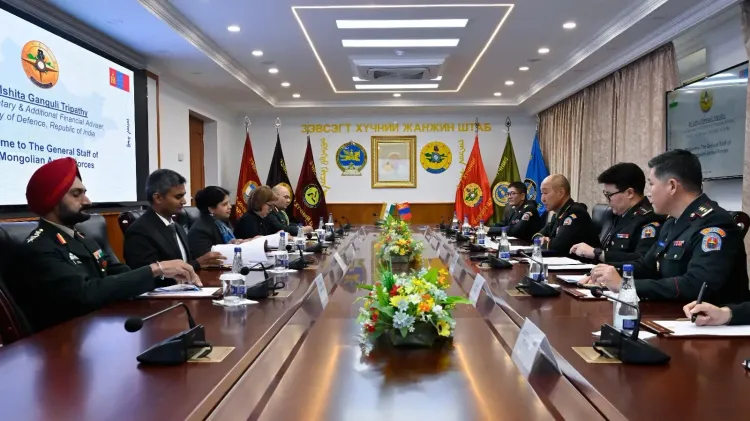
India and Mongolia held the 14th Joint Working Group meeting on defence in Ulaanbaatar on 16 October 2026 .
The meeting was co-chaired by India's Dr Ishita Ganguly Tripathi (MoD) and Mongolia's Brigadier General Gansukh E .
The 18th Nomadic Elephant joint military exercise was held in Pithoragarh, Uttarakhand from 21 September to 3 October 2026 , with 45 personnel each .
MP Kumari Selja led India's women's parliamentary delegation to the World Women Parliamentarians' Forum in Ulaanbaatar, meeting former President Nambaryn Enkhbayar and Foreign Minister B Battsetseg .
India and Mongolia established diplomatic ties in 1955 and marked their 70th anniversary in 2025 .
India and Mongolia convened the 14th Joint Working Group (JWG) meeting on defence cooperation in the Mongolian capital Ulaanbaatar on Friday, 16 October 2026, with both sides reaffirming their commitment to deepen bilateral defence ties and promote regional peace and security. The meeting underscores the growing strategic dimension of a partnership rooted in over seven decades of diplomatic engagement.
Leadership and Key Discussions
The meeting was co-chaired by Dr Ishita Ganguly Tripathi, Joint Secretary in India's Ministry of Defence (MoD), and Brigadier General Gansukh E, Deputy State Secretary of Defence, Mongolia. According to a statement from the MoD's Directorate of Public Relations, 'Both countries reaffirmed their longstanding bonds of friendship and mutual trust, and reiterated their commitment to further strengthening bilateral defence cooperation and promoting regional peace and security.'
High-Level Parliamentary Engagement
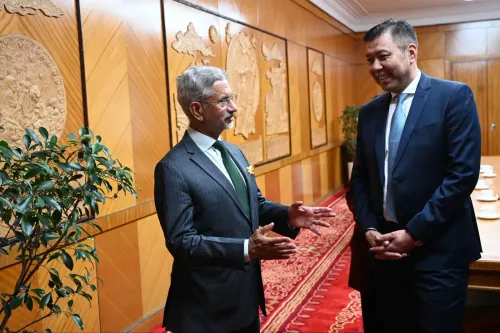
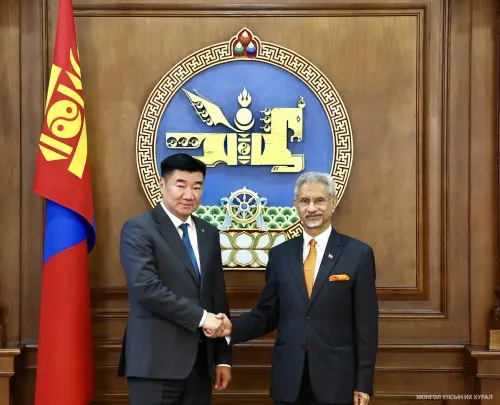
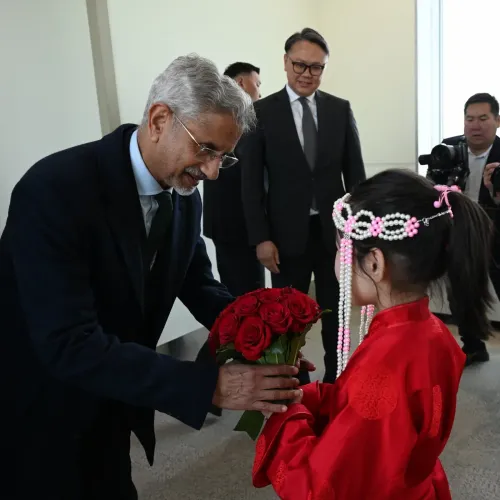
The JWG meeting coincided with a busy week of India-Mongolia diplomatic activity. On 14 October 2026, former Mongolian President Nambaryn Enkhbayar met with Member of Parliament Kumari Selja, who led an Indian women's parliamentary delegation to the World Women Parliamentarians' Forum hosted by the Parliament of Mongolia at the State Palace in Ulaanbaatar. Indian Ambassador to Mongolia Atul Malhari Gotsurve was present during those discussions.
Mongolian lawmaker O Soronzonbold, a member of the Mongolia-India Parliamentary Friendship Group, hosted a dinner in honour of the visiting delegation, which comprised MPs Kumari Selja, Anita Chouhan, and Maya Naroliya. Earlier in the week, the delegation also met Mongolian Foreign Minister B Battsetseg and congratulated her on the forum's successful organisation. Selja delivered India's statement at the forum's Opening Session.
Nomadic Elephant 2026: Joint Military Exercise
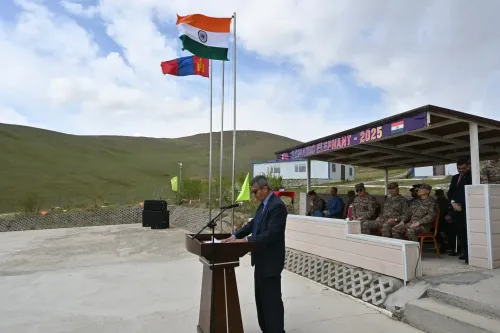
The flurry of diplomatic contacts follows a recently concluded military exercise. The 18th edition of Exercise Nomadic Elephant — the annual platoon-level joint military drill conducted alternately in India and Mongolia — was held at the Foreign Training Node in Pithoragarh, Uttarakhand, from 21 September to 3 October 2026, with 45 personnel each from the Indian Army and the Mongolian Armed Forces.
During the exercise, Mongolian personnel trained in small arms weapon handling and firing, while the Indian Army demonstrated Room Intervention Drills covering systematic entry, room clearance, coordinated movement, communication, fire discipline, and casualty evacuation. Mongolian troops also showcased Mongolian Classical Wrestling (Bokh) and unarmed combat techniques, highlighting their martial traditions.
Seven Decades of Strategic Partnership
Diplomatic ties between India and Mongolia were established in 1955, and the two countries marked the 70th anniversary of that relationship in 2025. According to the Indian Embassy in Ulaanbaatar, India and Mongolia describe themselves as strategic partners, spiritual siblings, and 'third neighbours' with deep civilisational linkages through Buddhism. In recent years, the partnership has been anchored by what officials term the 'four Ds': Dharma, Democracy, Development Partnership, and Digital Development Cooperation.
With defence exercises, parliamentary diplomacy, and working-group meetings all converging in October 2026, the India-Mongolia relationship appears to be entering a new phase of operational depth — one that will be watched closely given the broader strategic geometry of Central and East Asia.
Point of View
A joint military exercise, and a multi-layered parliamentary visit within a single fortnight is not routine diplomacy — it reflects a deliberate Indian effort to consolidate Mongolia as a strategic node in its northern arc, distinct from both the China-dominated SCO framework and the traditional South Asia focus. Mongolia's geographic position as a landlocked buffer between Russia and China gives this relationship quiet but real strategic value. The 'four Ds' framing — Dharma, Democracy, Development, Digital — is India's soft-power architecture in miniature, and its durability will depend on whether development and digital cooperation acquire substance beyond declarations. The 70th anniversary year of bilateral ties has clearly been used as a launchpad for operational deepening; the question now is whether institutional momentum survives beyond the anniversary calendar.
NationPress
16 Oct 2026
Frequently Asked Questions
What was discussed at the 14th India-Mongolia Joint Working Group meeting?
The 14th India-Mongolia Joint Working Group meeting on defence, held in Ulaanbaatar on 16 October 2026, focused on strengthening bilateral defence cooperation and promoting regional peace and security. Both sides reaffirmed their longstanding bonds of friendship and mutual trust.
What is Exercise Nomadic Elephant?
Exercise Nomadic Elephant is an annual platoon-level joint military exercise conducted alternately in India and Mongolia. The 18th edition was held in Pithoragarh, Uttarakhand, from 21 September to 3 October 2026, with 45 personnel each from the Indian Army and the Mongolian Armed Forces.
Why did an Indian parliamentary delegation visit Mongolia in October 2026?
The delegation, led by MP Kumari Selja, attended the World Women Parliamentarians' Forum hosted by the Parliament of Mongolia at the State Palace in Ulaanbaatar. During the visit, the delegation met former President Nambaryn Enkhbayar, Foreign Minister B Battsetseg, and Mongolian lawmakers from the Mongolia-India Parliamentary Friendship Group.
How long have India and Mongolia maintained diplomatic relations?
India and Mongolia established diplomatic relations in 1955, marking 71 years of ties as of 2026. The two countries celebrated the 70th anniversary of their diplomatic relationship in 2025 and describe themselves as strategic partners and 'third neighbours' with deep civilisational ties through Buddhism.
What are the key pillars of the India-Mongolia relationship?
According to the Indian Embassy in Ulaanbaatar, the India-Mongolia relationship is anchored by four pillars known as the 'four Ds': Dharma, Democracy, Development Partnership, and Digital Development Cooperation. The two countries are also strategic partners with centuries-old civilisational linkages through Buddhism.