India-New Zealand counter-terrorism pact: Joint Working Group, no double standards
Synopsis
PM Modi's Auckland visit has produced more than diplomatic optics — India and New Zealand are now building a structured counter-terrorism architecture, including a Joint Working Group, backed by an explicit 'no double standards' doctrine. The geographic logic is deliberate: an Indian Ocean power and a Pacific Ocean power closing ranks, with implications for the broader Indo-Pacific order.
Key Takeaways
India and New Zealand agreed on 11 July to establish a Joint Working Group on counter-terrorism and violent extremism during PM Modi's Auckland visit.
MEA Secretary (East) Rudrendra Tandon stated there can be 'no double standard' in combating terrorism — a pointed message to the international community.
The bilateral relationship has been elevated to a strategic partnership , with PM Christopher Luxon credited for energising the ties.
India framed the partnership around a shared commitment to a rules-based Indo-Pacific order , with both nations positioned as Indian Ocean and Pacific Ocean powers respectively.
The Joint Working Group is one of several mechanisms being activated; broader cooperation in trade, defence, and people-to-people ties is expected to follow.
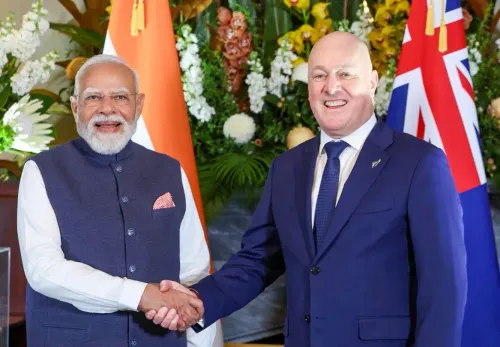
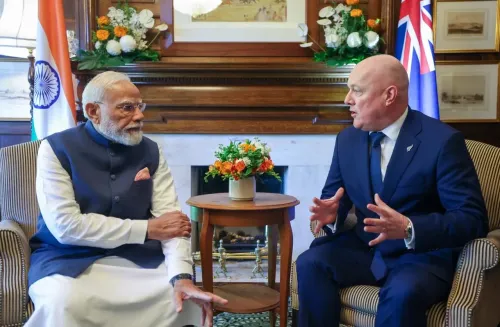
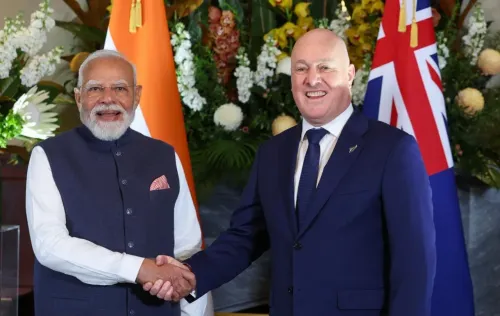
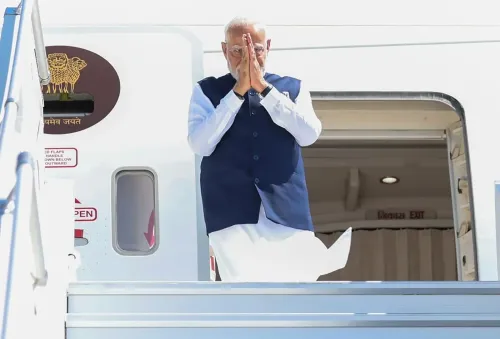
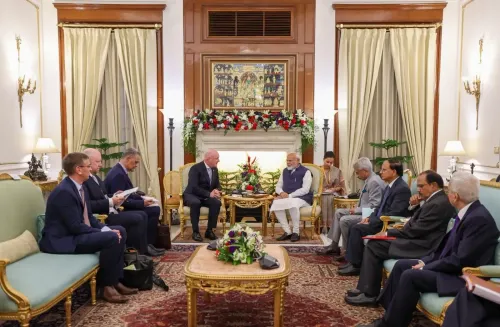
India and New Zealand on Saturday, 11 July formally committed to deepening cooperation against terrorism and violent extremism, with both sides agreeing to establish a Joint Working Group as a key mechanism for structured collaboration. The pledge came during Prime Minister Narendra Modi's ongoing visit to Auckland, marking a significant step in elevating the bilateral relationship to a full strategic partnership.
Key Developments
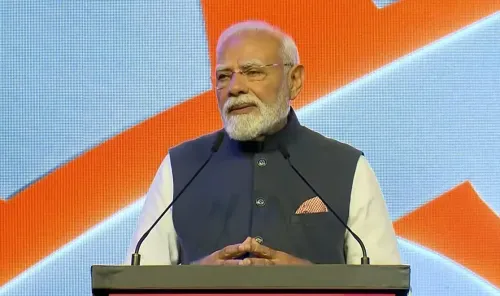
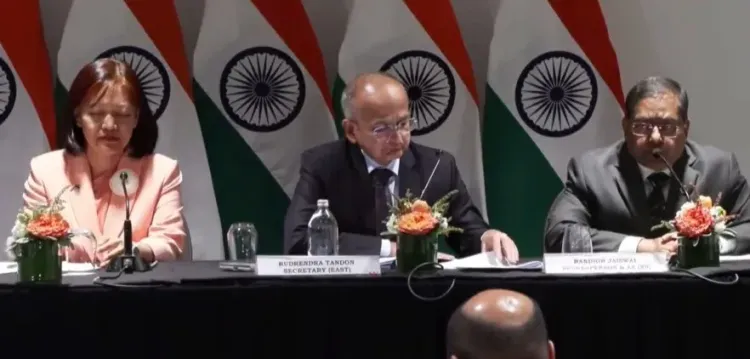
Rudrendra Tandon, Secretary (East) at the Ministry of External Affairs (MEA), addressed a press briefing outlining the scope of the engagements. He underscored that the Joint Working Group is one of several mechanisms being activated, not a standalone measure, signalling that the counter-terrorism architecture between the two nations is being built on multiple tracks simultaneously.
Tandon was unequivocal on the principle underpinning the cooperation: 'There can be no double standard when you are tackling such a great threat,' he said, in an apparent reference to the international community's inconsistent approach to designating and acting against terror groups.
What India Said on Terrorism
'Terrorism and violent extremism is very well known. We will constantly remind the international community and our partners that this poses a significant threat to peace and security all over the world,' Tandon stated. He added that India and New Zealand are 'fairly like-minded and tough on this entire issue,' and stressed the need for 'the closest collaboration to defeat this threat.'
The remarks carry particular weight given India's long-standing push at multilateral forums — including the United Nations — for a universal, no-exceptions approach to counter-terrorism, an effort that has frequently run into geopolitical friction.
Indo-Pacific Order and Strategic Framing
Beyond counter-terrorism, Tandon framed Modi's Auckland visit as part of a broader effort to reinforce a rules-based order in the Indo-Pacific. 'The purpose of this visit is to strengthen the rule-based Indo-Pacific order,' he said, describing New Zealand as a 'significant partner' and a 'like-minded power' in the region.
He specifically credited New Zealand Prime Minister Christopher Luxon for injecting 'new energy' into the bilateral relationship. 'To the credit of Prime Minister Luxon, he has been working very hard to impart this new energy to the relationship, which is now a strategic relationship,' Tandon noted.
India-Pacific and Indian Ocean Convergence
A notable framing in Tandon's remarks was the geographic logic linking the two nations: India as an Indian Ocean nation and New Zealand as a Pacific Ocean power. 'Precisely because of this idea — that as an inhabitant of the Indian Ocean and New Zealand as an inhabitant of the Pacific Ocean — we need to establish a close strategic relationship,' he said.
India, he noted, closely monitors developments in adjoining maritime zones and views the Pacific as a vital strategic corridor, making New Zealand a natural anchor partner in that arc.
What Comes Next
The Joint Working Group on counter-terrorism is expected to formalise its mandate and meeting schedule in the coming weeks. Analysts see the India-New Zealand strategic elevation as part of a wider pattern of New Delhi deepening ties with Pacific-rim democracies — a trend that has accelerated since the Quad framework gained momentum. The bilateral relationship, now upgraded to a strategic partnership, is expected to expand into trade, defence, and people-to-people connectivity in subsequent engagements.
Point of View
Each individually modest but collectively significant. Whether the Joint Working Group produces actionable intelligence-sharing or remains a consultative forum will determine if this is a genuine security upgrade or well-crafted optics.
NationPress
10 Oct 2026
Frequently Asked Questions
What did India and New Zealand agree on counter-terrorism during PM Modi's Auckland visit?
India and New Zealand agreed to establish a Joint Working Group on counter-terrorism and violent extremism during PM Modi's visit to Auckland on 11 July. The group is one of several mechanisms being activated to deepen structured collaboration against these threats.
What did MEA Secretary Rudrendra Tandon say about double standards on terrorism?
Tandon said there can be 'no double standard when you are tackling such a great threat,' stressing that India will continue to remind the international community that terrorism and violent extremism pose the gravest risks to global peace and security.
Why is New Zealand considered a key partner for India in the Indo-Pacific?
India views New Zealand as a like-minded power committed to a rules-based Indo-Pacific order. The geographic logic — India as an Indian Ocean nation and New Zealand as a Pacific Ocean power — makes the partnership a natural strategic fit for covering a critical maritime arc.
What is the significance of the India-New Zealand strategic partnership upgrade?
The elevation to a strategic partnership signals that ties now go beyond trade and diaspora links to encompass defence, maritime security, and counter-terrorism. PM Christopher Luxon has been credited with injecting new energy into the relationship, which is expected to expand into multiple new cooperation tracks.
What comes next after the Joint Working Group announcement?
The Joint Working Group is expected to formalise its mandate and schedule in the coming weeks. Broader bilateral cooperation in trade, defence, and people-to-people connectivity is anticipated in subsequent engagements between the two governments.