India offers Black Sea shipping ideas; Rubio eyes Quad action at Manila summit
Synopsis
At the G20 foreign ministers' meeting in Atlanta, US Secretary of State Marco Rubio confirmed India is actively contributing ideas to keep Black Sea shipping lanes open — a direct response to the food security fallout of the Russia-Ukraine war. He also signalled that the Quad must stop talking and start delivering, with a Manila leaders' summit in November expected to produce concrete announcements.
Key Takeaways
India and Turkey have offered ideas to protect Black Sea shipping lanes disrupted by the Russia-Ukraine war , according to US Secretary of State Marco Rubio .
Rubio cautioned that international interest in the issue should not be mistaken for progress toward a formal agreement.
African nations are among the most affected by Black Sea shipping disruptions, with food security bearing the heaviest toll.
The Quad is expected to hold a leaders' summit in Manila in November , with announcements on infrastructure, disaster response, and maritime cooperation anticipated.
A proposed Quad business forum would bring together companies from India , the US , Japan , and Australia to identify commercial opportunities.
Rubio rejected the characterisation of the Quad as an anti-China coalition, even while acknowledging that coercive behaviour patterns point to one country.
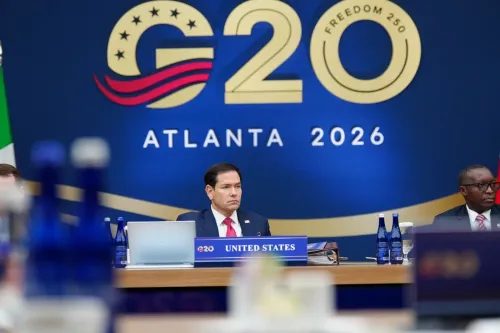
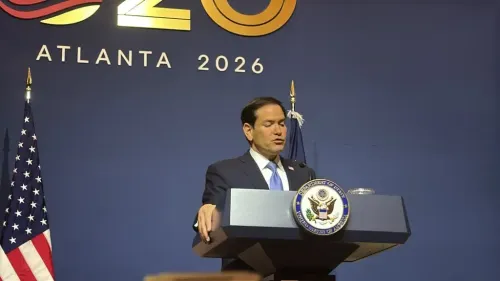
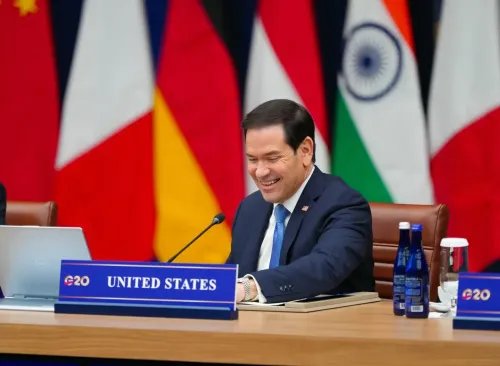
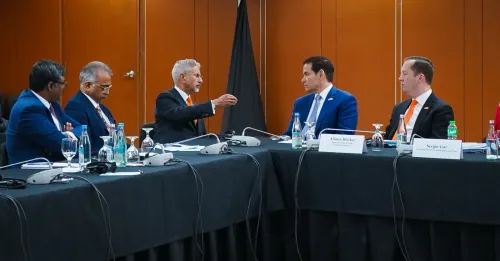
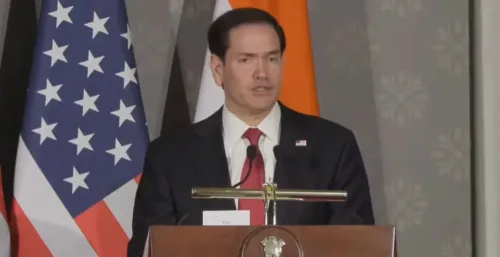
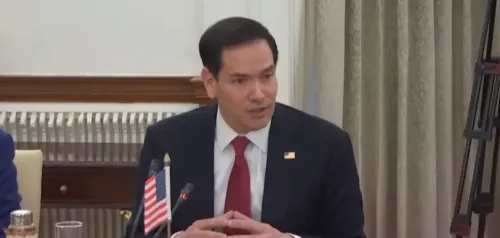
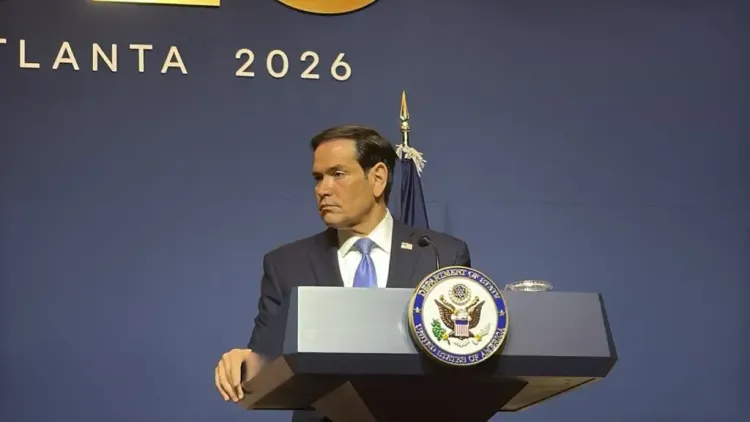
US Secretary of State Marco Rubio confirmed on 31 October that India has put forward ideas to help sustain Black Sea shipping lanes disrupted by the Russia-Ukraine war, even as Washington pressed for concrete outcomes from the next Quad leaders' meeting, expected in Manila in November. Rubio made the remarks at the close of the G20 foreign ministers' gathering in Atlanta, where food security, critical minerals, and freedom of navigation dominated the agenda.
India's Role on Black Sea Shipping
Rubio identified India and Turkey as the two countries actively contributing proposals to protect the movement of agricultural and other cargo through the Black Sea. He did not detail India's specific suggestions, nor did he announce any agreement. Rubio was careful to draw a distinction between international interest and actual progress toward a deal.
'We'd like to see it happen. It doesn't solve a war problem, but at least it diminishes some of the impact, spillover impact that it's having on the food security of vulnerable countries,' Rubio said. He declined to assess the likelihood of a limited ceasefire covering shipping lanes, while reaffirming that Washington remains open to proposals and continues to pursue a broader negotiated end to the conflict.
Rubio noted that disruptions to Black Sea shipments were disproportionately hurting vulnerable nations, with African countries bearing a particularly high cost in terms of food security.
Quad: From Talk to Action
On the Quad — the grouping of India, the United States, Japan, and Australia — Rubio said the forum needed to translate discussions into practical cooperation. He pointed to infrastructure, disaster response, and maritime domain awareness as priority areas for tangible collaboration.
A proposed Quad business forum would bring together companies from all four nations to identify commercial opportunities. 'We wanna continue to build on that, and we are hoping to put together a business forum so that the businesses of the four countries can meet and identify unique opportunities to work together,' Rubio said.
Maritime cooperation, he added, would extend to monitoring activity both on the surface and underwater, including threats to freedom of navigation. On humanitarian relief, Rubio said the four countries aimed to pool resources and respond rapidly to emergencies — typhoons, earthquakes, and mudslides — affecting the broader Indo-Pacific region.
'The best way to make a forum useful and important is to make sure that it does something, not just talks about it, but does it,' Rubio said, signalling impatience with process-heavy diplomacy.
Manila Summit and Next Steps
Rubio said he hoped Quad leaders would convene in Manila in November and announce further steps, describing the gathering as an expected development with an announcement already anticipated. The Manila meeting, if confirmed, would be a significant moment for the grouping as it seeks to demonstrate operational relevance beyond joint statements.
On China and Economic Coercion
Asked whether Quad concerns about economic coercion and export restrictions were directed at China, Rubio rejected the framing of the grouping as a coalition against any single country. 'Now, those activities or behaviours are coming repetitively from one country, that's gonna be obvious to everybody, but it is not an anti-China or anti-anybody coalition,' he said.
The remark reflects a studied ambiguity that has characterised Quad messaging — acknowledging patterns of behaviour without naming Beijing as a formal adversary, a posture that allows India in particular to maintain its strategic autonomy.
G20 Atlanta: Shared Problems, Divided Solutions
On the broader G20 foreign ministers' discussions, Rubio said participants agreed on shared challenges — food security, critical minerals, supply chains, and freedom of navigation — but cautioned that consensus on the problems did not extend to their causes or solutions. He said President Donald Trump wanted the G20 to refocus on its core economic mandate. The Atlanta deliberations will feed into preparations for the leaders' summit in Florida in December, with energy access and secure supply chains among the headline priorities.
This comes amid growing pressure on multilateral forums to move beyond declarations and deliver measurable outcomes — a theme that ran through both the Quad and G20 conversations in Atlanta.
Point of View
While reinforcing its value to Washington without compromising its Russia ties. Rubio's deliberate non-specificity about India's ideas suggests the proposals are still exploratory, and the gap between 'offering ideas' and 'reaching an agreement' remains wide. On the Quad, the Manila summit will be a credibility test: the forum has produced impressive joint statements but limited operational outcomes, and Rubio's own 'does something, not just talks about it' formulation signals awareness of that gap. The business forum proposal, while welcome, risks becoming another layer of process unless it is anchored to specific project pipelines within a defined timeline.
NationPress
1 Nov 2026
Frequently Asked Questions
What ideas has India offered on Black Sea shipping?
India has put forward proposals to help keep Black Sea shipping lanes operational amid the Russia-Ukraine war, according to US Secretary of State Marco Rubio. He did not detail the specific suggestions, and no agreement has been announced.
Why does Black Sea shipping matter for food security?
The Black Sea is a critical corridor for agricultural exports, and disruptions caused by the Russia-Ukraine war have raised food costs globally. Rubio noted that vulnerable nations, particularly in Africa, are paying a disproportionately high price for the disruption.
When is the next Quad leaders' summit expected?
Rubio said he hoped Quad leaders would meet in Manila in November, describing it as an expected development with an announcement already anticipated. The summit would bring together leaders from India, the United States, Japan, and Australia.
What concrete steps is the Quad planning?
The Quad is looking at practical cooperation in infrastructure, disaster response, and maritime domain awareness. A proposed business forum would connect companies from all four member nations to identify commercial opportunities in the Indo-Pacific.
Is the Quad directed against China?
Rubio explicitly rejected describing the Quad as an anti-China coalition, though he acknowledged that coercive economic behaviours 'are coming repetitively from one country.' The grouping frames itself as a positive agenda for the Indo-Pacific rather than a containment alliance.