G20 Foreign Ministers split on solutions despite shared concerns, Rubio says
Synopsis
G20 foreign ministers left Atlanta on 31 October with a shared diagnosis but no shared prescription — agreeing that shipping, food supplies, and critical minerals face serious threats while disagreeing on causes and responses. With the leaders' summit in Florida weeks away, the Atlanta meeting reveals how far apart the world's largest economies remain on the rules governing the global economy.
Key Takeaways
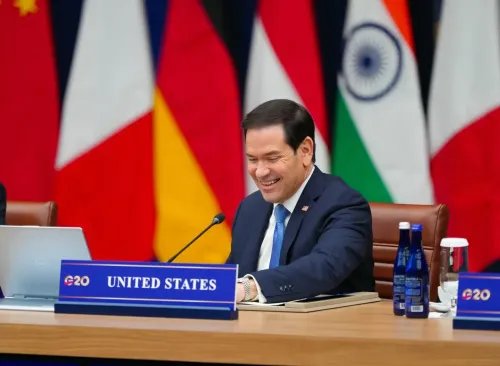
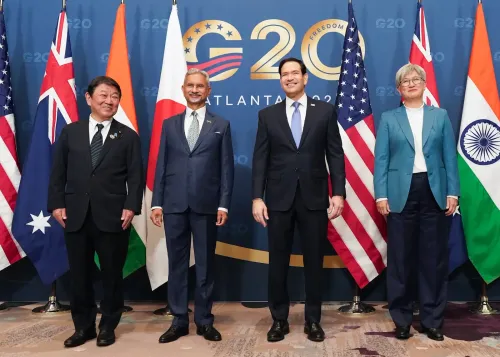
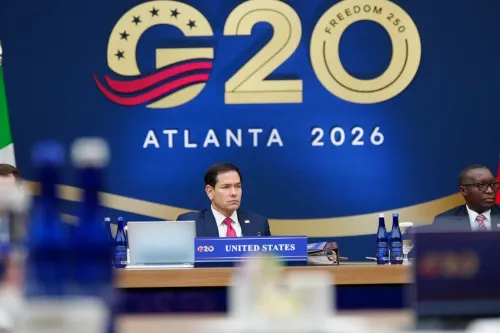
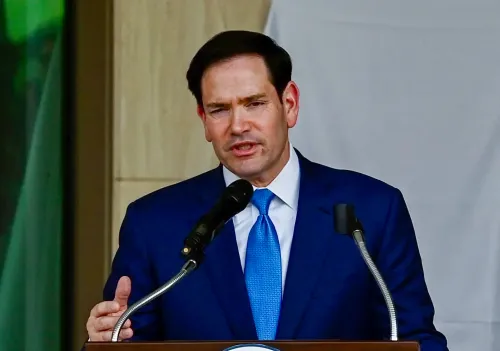
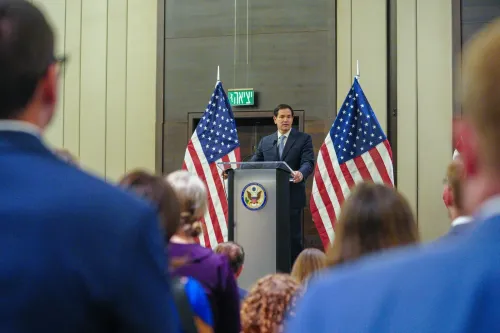
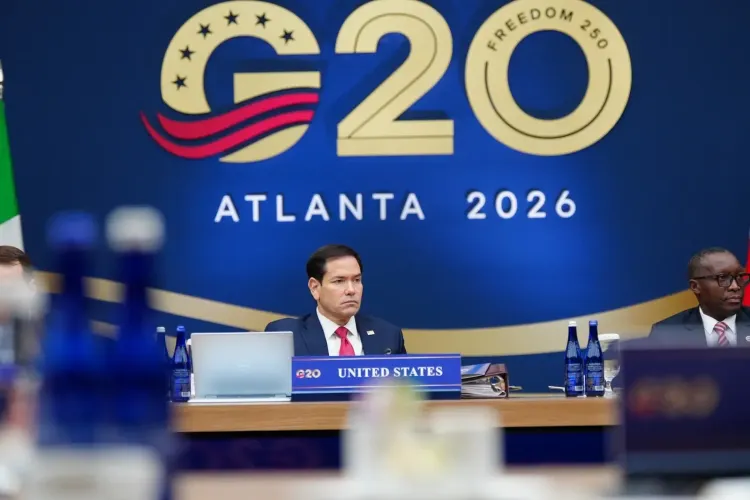
US Secretary of State Marco Rubio closed the G20 Foreign Ministers' Meeting in Atlanta on 31 October , citing consensus on problems but division on solutions.
Discussions covered energy security , technology , supply chains , and freedom of navigation .
Rubio accused Iran of targeting commercial vessels and said US forces are defending shipping against drones and missiles.
India and Turkey were cited as contributing ideas on Black Sea shipping access.
Climate change was kept off the US agenda, though Brazil and others raised it in their statements.
The Atlanta meeting feeds into the G20 leaders' summit set for Florida in December 2025 .
US Secretary of State Marco Rubio said on 31 October that G20 foreign ministers gathered in Atlanta reached broad agreement on the threats posed by disruptions to shipping, food supplies, and critical minerals — but remained sharply divided over the causes of those disruptions and the measures needed to address them. The remarks came at the close of the G20 Foreign Ministers' Meeting, a preparatory event ahead of the G20 leaders' summit scheduled for Florida in December.
Where Consensus Ended and Division Began
Rubio framed the acknowledgment of shared problems as a meaningful, if limited, achievement. 'The first obstacle in any is to identify what the problems are. If you can't even agree on what the problems are, you can't make progress,' he said. However, he stopped short of claiming the Atlanta meeting had produced a unified approach to resolving those problems. Discussions spanned energy security, technology access, supply chain resilience, and freedom of navigation — all areas where member nations hold divergent strategic interests.
Maritime Security and Iran in the Spotlight
Maritime security featured prominently in Rubio's account of the proceedings. He directly accused Iran of targeting commercial vessels and said US forces were regularly defending shipping lanes against drones and missiles. He also cited coercion in Asian waterways as a growing threat to regional economic activity. Rubio warned that sea-lane disruptions could prevent energy, fertiliser, and agricultural products from reaching their destinations — with cascading consequences for global food security.
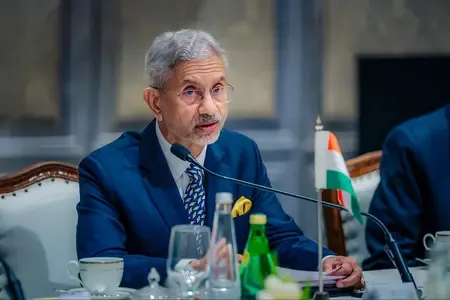
On the Black Sea, Rubio identified India and Turkey as countries contributing constructive ideas to facilitate shipments. He welcomed that international interest but cautioned against interpreting it as a sign that a formal agreement was imminent.
Wars and Regional Conflicts Complicate the Agenda
Rubio acknowledged that President Donald Trump had directed the US G20 Presidency to refocus the forum on its core economic mandate. Yet ongoing conflicts complicated that effort. He pointed to the Russia-Ukraine war, the conflict in the Middle East, and fighting involving Sudan, Congo, and Rwanda as pressures bearing on the wider agenda. Governments, he noted, addressed several geopolitical issues through bilateral meetings on the sidelines rather than in the main ministerial sessions.
Climate Change Kept Off the US Agenda
Rubio confirmed that climate change was not on the US agenda for the Atlanta meeting, even as Brazil and other participating nations raised it in their statements. The exclusion reflects a broader divergence between the Trump administration's economic-first framing and the priorities of several other G20 members — a tension that is likely to persist through the Florida summit.
Long-Term Stakes, No Quick Fixes
Asked what the ministerial discussions would mean for businesses and workers navigating economic uncertainty, Rubio was candid about the timeline. 'But none of these are magic elixirs that happen overnight,' he said. He argued that energy availability, critical minerals access, and reliable supply chains would shape countries' economic trajectories over decades rather than quarters, drawing on the Covid-19 pandemic as an example of how localised supply disruptions can ripple into global price shocks. The Atlanta meeting sets the diplomatic groundwork for what is expected to be a consequential leaders' summit in Florida later this year.
Point of View
Middle East, sub-Saharan Africa — are ones on which member states hold irreconcilable positions. Rubio's framing of the meeting as a success in 'identifying problems' is diplomatically accurate but strategically thin. The exclusion of climate change from the US agenda, even as Brazil and others pushed it, signals that the Florida summit will face the same ideological fractures in a higher-stakes setting. For India, the specific mention of its Black Sea contributions is a quiet acknowledgment of New Delhi's growing role as a diplomatic bridge — a position that carries both opportunity and exposure.
NationPress
1 Nov 2026
Frequently Asked Questions
What was agreed at the G20 Foreign Ministers' Meeting in Atlanta?
G20 foreign ministers agreed that threats to shipping, food supplies, and critical minerals are serious and demand attention, but they did not reach consensus on the causes of those threats or the measures needed to address them. US Secretary of State Marco Rubio described the shared identification of problems as a necessary first step toward progress.
What did Marco Rubio say about Iran at the G20 meeting?
Rubio accused Iran of targeting commercial vessels and said US forces are regularly defending shipping lanes against Iranian drones and missiles. He cited maritime insecurity as a direct threat to global energy, fertiliser, and food supply chains.
Why was climate change not discussed at the Atlanta G20 meeting?
Climate change was not on the US agenda for the Atlanta meeting, reflecting the Trump administration's emphasis on economic and trade issues for the G20 forum. Brazil and other member nations did raise climate in their own statements, highlighting a continuing divide between Washington and several G20 partners.
What is the significance of India and Turkey being mentioned in the Black Sea context?
Rubio identified India and Turkey as countries contributing constructive ideas to help shipments move through the Black Sea. He welcomed the interest but cautioned that it did not mean a formal agreement was near, signalling that both nations are playing a bridging role in an otherwise deadlocked diplomatic environment.
What comes next after the Atlanta G20 Foreign Ministers' Meeting?
The Atlanta gathering was a preparatory step for the G20 leaders' summit scheduled in Florida in December 2025. The ministerial discussions were designed to set the agenda and surface areas of convergence and division before heads of state convene.