India-US trade deal inches closer as Rubio visits India, dairy access key hurdle
Synopsis
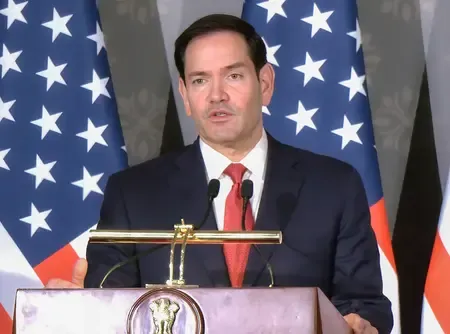
India and the US are a signature away from their first trade tranche — but dairy is holding it back. As Secretary of State Marco Rubio touches down in India for talks with Jaishankar in Mumbai on 20 October, the deal's fate may be decided within days, with US midterm politics adding urgency on both sides of the table.
Key Takeaways
India and the US are close to finalising the first tranche of a bilateral trade deal, with dairy access the last major obstacle.
US Secretary of State Marco Rubio is visiting Mumbai and Jamnagar from 17–22 October 2026 , with talks scheduled with EAM Jaishankar on 20 October .
The existing framework slashed the US reciprocal tariff on Indian goods from 25% to 18% and removed an additional 25% oil-linked duty.
Commerce Minister Piyush Goyal confirmed the first tranche is in legal drafting ; Nirmala Sitharaman urged early conclusion.
India's merchandise exports rose 23% to $44.4 billion in September 2026 , according to the Consulate General of India in New York.
The US became India's largest LNG supplier for the first time in the March–May 2026 quarter, underscoring deepening energy ties.
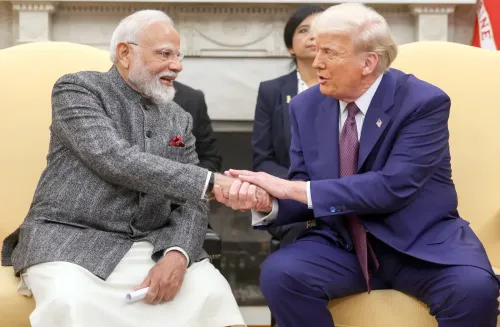
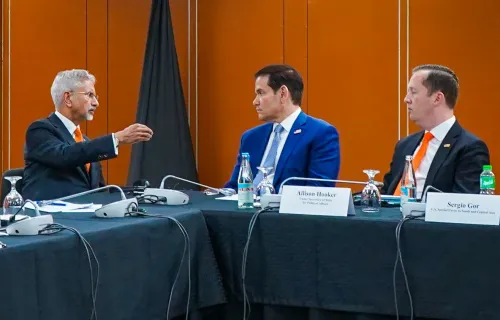
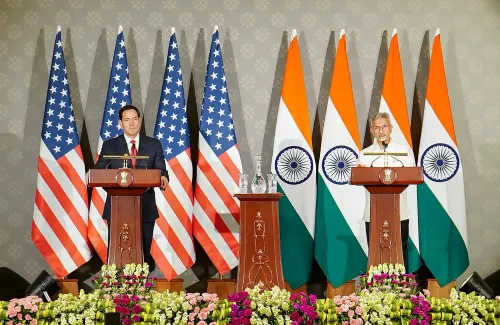
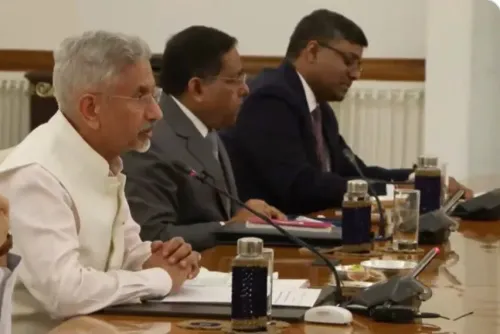
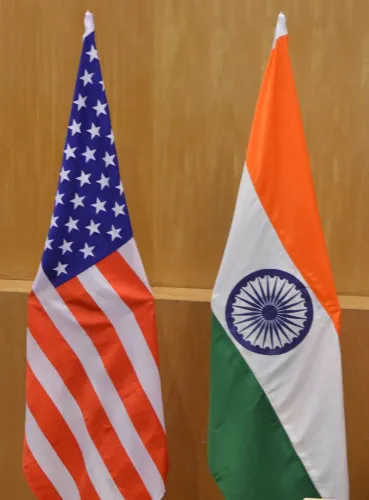
India and the United States are on the verge of sealing the first tranche of a bilateral trade agreement, with dairy market access remaining the most contentious unresolved issue, as US Secretary of State Marco Rubio embarks on a visit to India from 17 October to 22 October 2026. Rubio is scheduled to hold talks with External Affairs Minister S. Jaishankar in Mumbai on 20 October, in what is being seen as a critical diplomatic push toward finalising the agreement.
The Framework on the Table
At its core, the proposed deal is a structured exchange: lower and more predictable US tariffs on Indian goods in return for broader American access to Indian markets. Under a framework announced in February 2026, Washington reduced its reciprocal tariff on Indian goods from 25% to 18%, and separately removed an additional 25% duty that had been linked to India's purchases of Russian oil.
In return, India committed to eliminating or reducing tariffs on US industrial goods and a range of agricultural products, including tree nuts, fruit, soybean oil, wine, and spirits. Notably, President Donald Trump on Friday signed an order implementing the Lindsey O. Graham Sanctioning Russia and Iran Act, while waiving its tariffs on buyers of Russian oil — a move that shapes the broader energy and sanctions backdrop against which these talks are progressing.
Where Talks Stand Now
Commerce and Industry Minister Piyush Goyal said on Thursday that the first tranche of the agreement had been finalised and was currently in legal drafting, but added that implementation would depend on clarity about India's competitive advantage. External Affairs Minister S. Jaishankar has described the negotiations as nearing a 'landing point.' However, US Trade Representative Jamieson Greer said as recently as 2 October that a deal was not imminent, suggesting some divergence in expectations between the two sides.
Finance Minister Nirmala Sitharaman on Friday expressed hope that the agreement would be concluded 'at the earliest,' citing the interests of global trade and bilateral economic ties. This comes amid a notable surge in India's merchandise exports — which reportedly jumped 23% to $44.4 billion in September 2026, with the trade deficit narrowing, according to the Consulate General of India in New York.
Energy: The Strategic Undercurrent
Energy dynamics are increasingly central to the India-US trade calculus. India's refineries are configured largely for medium sour crude — a grade sourced primarily from the Gulf and Russia — making a rapid pivot away from Russian barrels structurally difficult. Lighter US crude and heavier grades can be blended in only to a limited extent, and disruptions to shipping through the Strait of Hormuz due to the ongoing West Asia conflict have further complicated supply chains.
Yet India has made a sharp turn toward American gas. According to data from research firm Kpler, the US became India's largest liquefied natural gas (LNG) supplier for the first time in the March–May 2026 quarter. In August, the US supplied more than half of India's liquefied petroleum gas (LPG) imports, though the UAE reclaimed the top spot in September as Gulf cargoes recovered.
Large-scale Indian purchases of US goods — including commercial aircraft, coking coal, gold, energy, and defence equipment — are also being viewed as levers to narrow the bilateral trade gap, which remains a sticking point for Washington.
US Political Calculus
Washington has its own urgency. Rising fuel prices ahead of the November 3 midterm elections give the Trump administration strong domestic reasons to avoid any sharp supply disruptions. A stable energy and trade arrangement with India — one of the world's fastest-growing energy consumers — serves both geopolitical and electoral interests for the US.
What Comes Next
Rubio's itinerary — spanning Samarkand, Mumbai, and Jamnagar between 17 and 22 October — signals that the visit carries both bilateral and regional significance. His talks with Jaishankar in Mumbai are expected to provide a clearer picture of whether the first tranche can be signed before the US midterms. Dairy access, which India has long guarded as a sensitive sector, remains the final major sticking point and could determine the timeline for formalisation.
Point of View
With energy purchases serving as the informal currency. The dairy impasse is a proxy for a deeper structural tension: India's farm-sector politics and the political economy of rural constituencies make any concession on food imports existentially sensitive for New Delhi. Washington's midterm calculus adds artificial urgency, which India can exploit for a better dairy carve-out. What mainstream coverage misses is that the deal's real strategic weight lies not in the tariff arithmetic but in whether it creates a template for weaning India's energy mix away from Russian dependence — something that has far larger geopolitical implications than any soybean-oil clause.
NationPress
17 Oct 2026
Frequently Asked Questions
How close is the India-US trade deal to being signed?
The first tranche of the India-US trade deal has reportedly been finalised and is currently in legal drafting, according to Commerce Minister Piyush Goyal. However, dairy access remains unresolved, and US Trade Representative Jamieson Greer said on 2 October that a deal was not imminent.
Why is dairy access a sticking point in India-US trade talks?
Dairy is one of India's most politically sensitive agricultural sectors, given its links to rural livelihoods and cooperative movements. India has historically resisted opening this sector to foreign competition, making it the final major obstacle in an otherwise near-complete first tranche of the trade agreement.
What is the purpose of Marco Rubio's visit to India?
US Secretary of State Marco Rubio is visiting Mumbai and Jamnagar from 17 to 22 October 2026, with talks scheduled with External Affairs Minister S. Jaishankar on 20 October. The visit is expected to provide diplomatic momentum toward finalising the first tranche of the bilateral trade deal.
What tariff reductions has the US already made on Indian goods?
Under a framework announced in February 2026, the US cut its reciprocal tariff on Indian goods from 25% to 18% and removed an additional 25% duty linked to India's purchases of Russian oil. In return, India committed to reducing tariffs on US industrial goods and select farm products.
How has energy trade shaped India-US relations?
Energy has become a growing pillar of the bilateral relationship. The US became India's largest LNG supplier for the first time in the March–May 2026 quarter, and supplied more than half of India's LPG imports in August, according to Kpler data. Large Indian purchases of US energy, aircraft, and defence equipment are also being used to narrow the bilateral trade gap.