Ro Khanna sees 2028 path even if AOC runs, vows no self-funding
Synopsis
Ro Khanna is openly saying there is room for him in 2028 even if AOC runs. The Indian American congressman is pitching an AI-era 'New Deal' and a $3,500 cap on candidates funding themselves. He is not running yet, but this sounds like an early bid for the progressive lane.
Key Takeaways
Ro Khanna said on 29 November 2026 that an Alexandria Ocasio-Cortez presidential bid would still leave room for him in 2028 .
He made the remarks on NBC’s “Meet the Press” but did not announce a campaign.
Khanna backed the DNC pledge against super PAC and dark-money spending if candidates also cap personal contributions at $3,500 .
He said he would not self-fund a presidential run and urged rivals to make the same commitment.
He proposed an AI-era economic programme modelled on Franklin D.
Roosevelt’s New Deal .
He did not commit on whether his family backs a run.
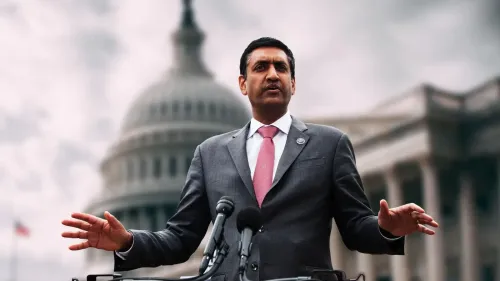
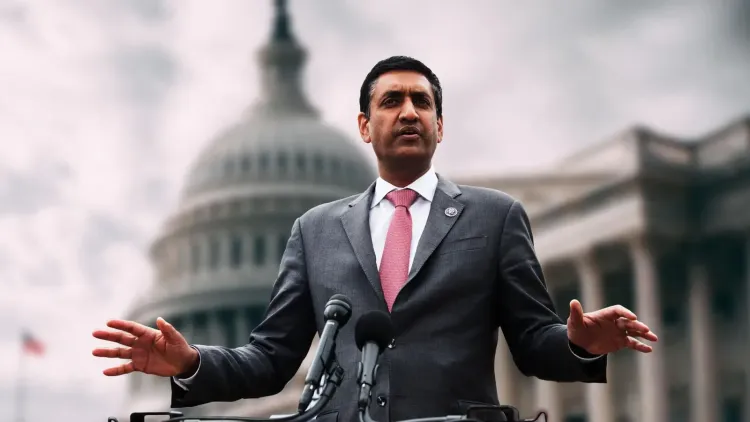
Indian American Congressman Ro Khanna said on Sunday, 29 November 2026, that a possible presidential run by fellow progressive Alexandria Ocasio-Cortez would still leave room for him to seek the Democratic nomination in 2028. Speaking on NBC’s “Meet the Press”, the California Democrat also called for limits on how much of their own money candidates can put into their campaigns. He did not announce a campaign.
His comments are the clearest sign yet that Khanna is weighing a national run. They also show that the progressive wing of the Democratic Party could field more than one contender in the post-2024 nomination race.
Key Developments From the Interview
Host Kristen Welker asked whether Khanna would have an opening if the New York congresswoman entered the race. Khanna answered the question as a hypothetical. Neither lawmaker has declared a candidacy.
He praised Ocasio-Cortez and said he wanted a competitive primary with several strong candidates. That framing presents a crowded progressive field as healthy competition rather than a split in the movement.
Welker also asked about the Thanksgiving endorsement Khanna received from progressive commentator Cenk Uygur.
Khanna's Economic Pitch
Khanna said his central economic argument would focus on the gap between the wealth concentrated in Silicon Valley and the lives of people in the Pennsylvania communities where he grew up.
He called for a new economic programme built for artificial intelligence and technological change. He compared it with Franklin D. Roosevelt’s New Deal, which responded to the industrial economy of its time. Khanna said the benefits of a modern economy should reach a wider section of Americans.
The pitch draws on both his ties to the technology sector and his roots in industrial America. That combination could appeal across regions within the Democratic coalition.
Campaign Finance and the DNC Pledge
Welker asked whether the Democratic National Committee’s (DNC) new pledge against super PAC and dark-money spending could favour wealthy candidates who can fund their own campaigns.
Khanna said he supported the pledge, provided candidates also limit personal contributions to $3,500. His position on self-funding and outside spending was:
- He would not self-fund a presidential campaign if he entered the race.
- He urged other prospective candidates to take the same position.
- Candidates should not steer donors towards aligned super PACs.
- Candidates should denounce independent spending on their behalf.
Under the DNC’s published rules, presidential candidates must sign and comply with its Fair Campaign Practices Pledge to qualify for party-sanctioned debates. The party says it cannot legally ban super PACs or dark-money groups. It can, however, require candidates to denounce specified spending that supports them or attacks their primary opponents. According to the DNC, these provisions apply only to the Democratic primary, not the general election.
Family and the Road Ahead
Khanna did not commit when asked whether his family supported a presidential bid. He said campaigning is demanding on spouses and families and that the decision involves more than political calculation.
He said he hoped a new generation of political leaders could help bridge divisions and offer an economic programme that lets more Americans prosper. As the 2028 field takes shape, attention will turn to whether Ocasio-Cortez decides to run and whether Khanna turns his remarks into a formal campaign.
Point of View
500 self-funding cap looks like a principle, but it also works as a strategic weapon. It would blunt any billionaire entrant in a primary where the DNC has already boxed in super PACs. His wish for a 'competitive primary' alongside AOC overlooks a real risk: two progressives splitting one lane is how establishment candidates usually win. For Indian audiences, the story is significant because an Indian American is laying early groundwork for a presidential run. The AI-era New Deal is the idea to watch, because it tests whether Silicon Valley's own congressman can credibly argue against Silicon Valley's concentration of wealth.
NationPress
29 Nov 2026
Frequently Asked Questions
Is Ro Khanna running for president in 2028?
Ro Khanna has not announced a 2028 presidential campaign. On 29 November 2026, he said on NBC’s Meet the Press that there would still be room for him in the Democratic primary even if Alexandria Ocasio-Cortez runs.
What did Ro Khanna say about AOC running in 2028?
Khanna said a presidential bid by Alexandria Ocasio-Cortez would still leave room for him to seek the Democratic nomination. He praised her and said he wanted a competitive primary with several strong candidates.
What is Ro Khanna's position on self-funding campaigns?
Khanna wants candidates to limit personal contributions to their own campaigns to $3,500. He said he would not self-fund a presidential run and urged other prospective candidates to make the same commitment.
What is the DNC's Fair Campaign Practices Pledge?
It is a pledge that Democratic presidential candidates must sign and follow to qualify for party-sanctioned debates. The DNC says it cannot legally ban super PACs or dark-money groups, but it can require candidates to denounce specified outside spending in the primary.
What economic agenda is Ro Khanna proposing?
Khanna proposes a new economic programme suited to artificial intelligence and technological change, modelled on Franklin D. Roosevelt's New Deal. He wants to close the gap between Silicon Valley's wealth and communities like the parts of Pennsylvania where he grew up.