Ro Khanna demands $1,700 Iran war refund checks for US families
Synopsis
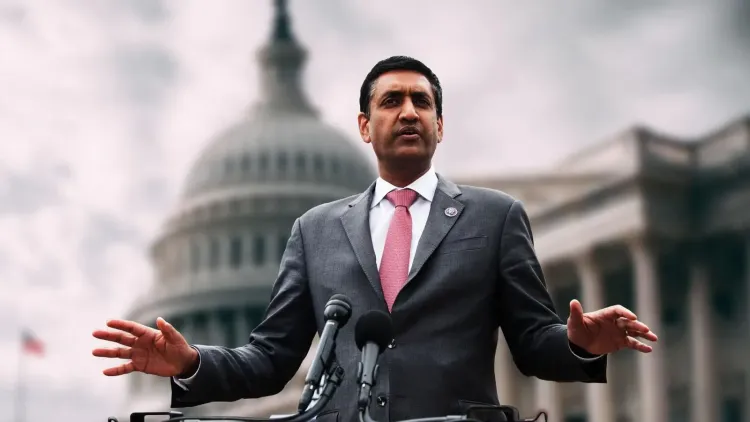
Congressman Ro Khanna is demanding $1,700 checks for every American family to offset Iran war costs — but the figure isn't in his own bill. As Democrats prepare to retake Congress, Khanna is simultaneously pushing a war-refund agenda and backing a challenger to Chuck Schumer's leadership, making him one of the most disruptive voices shaping the party's January reset.
Key Takeaways
Ro Khanna called for $1,700 payments to American families to offset Iran war costs, posting the demand on his official House X account on Monday, 17 November 2026 .
His Illegal War Refund Act (H.R.
10498) , introduced on 17 September , sets no fixed dollar amount and targets annual October deadlines from fiscal 2027 — not January as his post implied.
Under the bill, the Office of Management and Budget would calculate war costs and the Treasury would distribute equal payments to eligible tax filers and dependents.
Khanna endorsed Maryland Senator Chris Van Hollen on Saturday to replace Chuck Schumer as Senate Democratic leader; Schumer says he has the votes to hold on.
Senate Democratic leadership elections are scheduled for December , ahead of Democrats taking control of both chambers in January 2027 .
The bill was co-introduced with Democratic Representatives Jesus 'Chuy' Garcia , Bonnie Watson Coleman , Val Hoyle , and Pramila Jayapal .
Indian American Congressman Ro Khanna has called on incoming Democratic majorities in Congress to approve $1,700 payments to every American family to offset economic costs he attributes to the Iran war, while simultaneously escalating his public challenge to Senate Democratic Leader Chuck Schumer. The demand, posted on Monday from his official House account on X, sets a timetable and a dollar figure that differ in key respects from the legislation he already introduced.
What Khanna Proposed
'I want to give every American family a $1700 check to make them whole for the war in Iran,' Khanna wrote, calling on Democrats to act in the first week of January and 'put it on Trump's desk.' The California Democrat added that the opportunity to deliver was squarely with his party: 'Democrats have a chance to deliver.'
Notably, neither the $1,700 figure nor the January timetable appears in the Illegal War Refund Act (H.R. 10498), the legislation Khanna introduced on 17 September alongside Democratic Representatives Jesus 'Chuy' Garcia, Bonnie Watson Coleman, Val Hoyle, and Pramila Jayapal. The bill specifies annual October deadlines beginning in fiscal year 2027 and does not set a fixed payment amount.
How the Bill Would Work
Under H.R. 10498, the Office of Management and Budget (OMB) would calculate the war's total economic cost to taxpayers — factoring in higher interest rates, fuel prices, food prices, and inflation. An equivalent sum would then be transferred from unobligated Department of War funds to the Treasury, which would distribute equal payments to qualifying tax filers and their dependents.
The bill's eligibility rules are more granular than Monday's social media post suggested. While Khanna referred to 'American families', the legislation targets individual tax filers and their dependents, meaning a household's total payment would depend on the number of qualifying individuals. Nonresident aliens, estates, and trusts would be excluded. Crucially, payment documents could not carry any elected official's name, signature, or likeness. Military personnel accounts, military construction funds, and the Defence Health Program would be exempt from the transfer mechanism.
The Schumer Confrontation
Khanna's payment push arrived alongside a pointed attack on his party's existing Senate leadership. 'We need New Deal Democrats, not Chuck Schumer Democrats. It's time to rebuild the Democratic Party with a moral purpose,' he wrote separately on his personal X account on Monday.
On Saturday, Khanna endorsed Maryland Senator Chris Van Hollen, who is challenging Schumer for the Senate Democratic leadership position. 'Democrats need a big tent, not a shallow one. Stop triangulating. Stop chasing donors. Take on the insurance and drug companies. Pass Medicare for All. No half measures,' Khanna wrote in endorsing Van Hollen.
Schumer, however, has signalled confidence in his position. 'I have the votes to continue serving as Democratic Leader,' he reportedly wrote last week. Senate Democratic leadership elections are scheduled for December, according to reports.
Background and Context
When introducing the Illegal War Refund Act in September, Khanna framed the measure as a taxpayer-protection bill. 'While the wealthy and powerful profit off the war, American taxpayers should not bear the economic costs of the President's broken promises. They deserve their money back,' he said at the time.
Khanna represents California's 17th Congressional District, which covers part of Silicon Valley. His positioning — combining progressive economics with an aggressive challenge to incumbent party leadership — reflects a broader tension within the Democratic Party as it prepares to assume control of both chambers in January 2027. Whether the refund bill gains traction will depend on whether Democratic leadership, whichever form it takes after December, is willing to put a war-costs reckoning on the legislative agenda.
Point of View
700 figure and January deadline he floated publicly do not appear in his own bill, which is a signal that the demand is as much about defining a progressive Democratic identity as it is about passing legislation. The timing is deliberate: by coupling a populist war-refund push with an open challenge to Schumer and a Van Hollen endorsement, Khanna is positioning himself as the most visible left-flank disruptor ahead of the party's December leadership vote. The deeper question is whether a party that just won back Congress will spend political capital on a war-accountability bill or whether this, too, becomes a headline number that never reaches the floor.
NationPress
17 Nov 2026
Frequently Asked Questions
What is Ro Khanna's $1,700 Iran war refund proposal?
Congressman Ro Khanna has proposed sending $1,700 checks to American families to compensate them for economic costs — including higher inflation, fuel, and food prices — that he attributes to the Iran war. He posted the demand on his official House X account on 17 November 2026, calling on Democrats to act in the first week of January.
What is the Illegal War Refund Act (H.R. 10498)?
H.R. 10498 is legislation Khanna introduced on 17 September 2026, directing the Office of Management and Budget to calculate the Iran war's total economic cost to taxpayers and requiring the Treasury to distribute equivalent payments to eligible tax filers and dependents. Unlike his Monday post, the bill sets no fixed $1,700 figure and uses annual October deadlines beginning in fiscal 2027, not a January timetable.
Who is eligible for payments under the Illegal War Refund Act?
The bill proposes equal payments to qualifying individual tax filers and their dependents. Nonresident aliens, estates, and trusts would be excluded. A household's total payment would depend on how many people in it individually qualify, not a flat per-family amount.
Why is Khanna challenging Chuck Schumer's leadership?
Khanna has publicly backed Maryland Senator Chris Van Hollen to replace Chuck Schumer as Senate Democratic leader, arguing the party needs to shift away from donor-driven triangulation toward bolder policies like Medicare for All. He posted his endorsement on Saturday, framing the leadership contest as a choice between a 'big tent' versus a 'shallow' Democratic Party.
When will Senate Democrats choose their new leader?
Senate Democratic leadership elections are scheduled for December 2026, ahead of Democrats assuming control of both chambers in January 2027. Schumer has stated he has sufficient votes to retain the top post.