India-South Korea Special Strategic Partnership talks: Kapoor meets FM Cho Hyun in Seoul
Synopsis
India's Deputy NSA Pavan Kapoor's Seoul visit was not routine diplomatic courtesy — it marked the launch of two inaugural institutional dialogues (economic security and steel) and a face-to-face with South Korea's foreign minister, all flowing from the Modi–Lee summit of April 2026. The push on critical minerals, shipbuilding, and supply chain resilience signals that the India–South Korea partnership is shifting from strategic declaration to operational depth.
Key Takeaways
Deputy NSA Pavan Kapoor met South Korean Foreign Minister Cho Hyun in Seoul on 4 November 2026 to advance the India–RoK Special Strategic Partnership .
India and South Korea held their inaugural Economic Security Dialogue in Seoul on 2 November 2026 , co-chaired by Kapoor and Song Ki-ho , covering critical minerals, energy, shipbuilding, high technology, and talent.
The inaugural India–RoK Steel Dialogue was also held on 2 November 2026 , co-chaired by Vinod Kumar Tripathi , Joint Secretary, Ministry of Steel.
Both dialogues implement outcomes of the Modi–Lee Jae Myung Leaders Summit in April 2026 and the Joint Strategic Vision 2026–2030 .
Kapoor also met Lim Woong-soon , Second Deputy Director, South Korea's National Security Office, on bilateral and regional security issues.
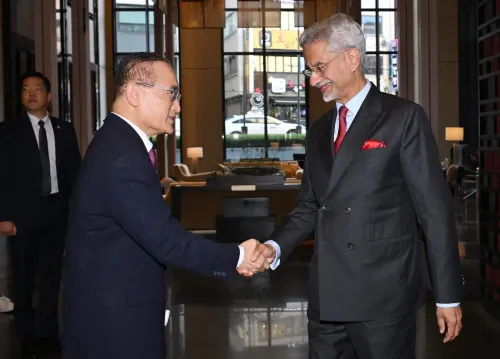
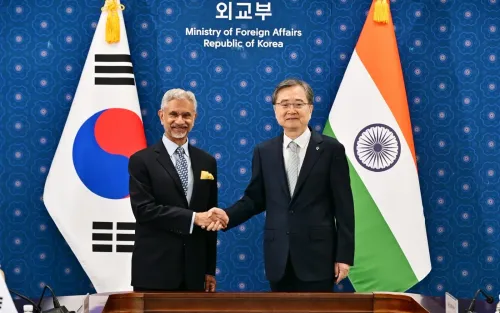
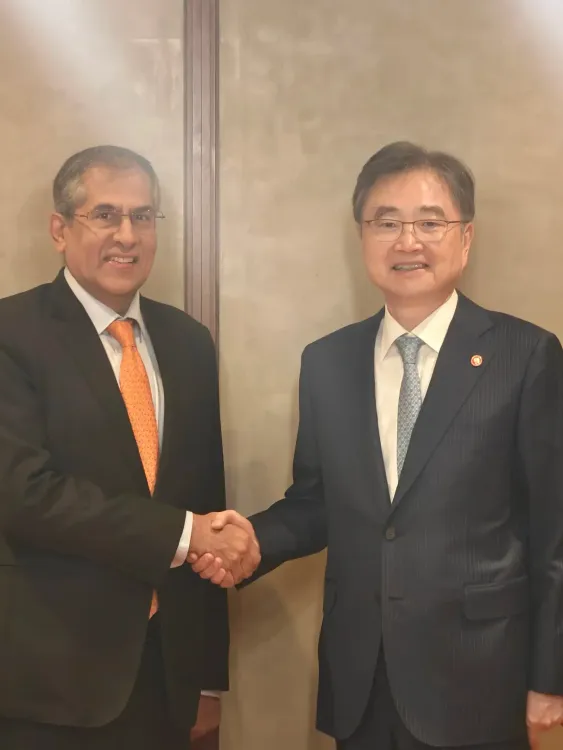
Deputy National Security Adviser Pavan Kapoor met South Korean Minister of Foreign Affairs Cho Hyun in Seoul on 4 November 2026, with both sides holding detailed discussions on deepening the India–Republic of Korea (RoK) Special Strategic Partnership. The high-level engagement follows a broader two-day diplomatic push that saw the two countries launch multiple inaugural dialogues on economic security and steel cooperation.
Key Developments from the Kapoor–Cho Hyun Meeting
During the bilateral meeting, Kapoor and Cho Hyun exchanged views on strengthening the Special Strategic Partnership and shared perspectives on regional and global issues of mutual interest. The meeting built on the momentum from South Korean Foreign Minister Cho Hyun's recent meeting with External Affairs Minister S. Jaishankar.
Cho Hyun, sharing details of the engagement on X, noted: 'Following my meeting with External Affairs Minister S Jaishankar last week, I was pleased to welcome India's Deputy National Security Adviser Pavan Kapoor over breakfast today. His first visit to Korea for the Korea-India Economic Security Dialogue builds on the agreement reached by our leaders at their summit in April.'
'We had a fruitful discussion on strengthening bilateral ties and expanding economic and security cooperation. I look forward to building on this momentum to further deepen our Special Strategic Partnership,' he added.
The Indian Embassy in South Korea also posted on X, describing the talks as 'advancing shared strategic priorities for India–RoK Special Strategic Partnership' and noting that both sides 'exchanged practical ideas' for further deepening the relationship.
Inaugural Economic Security Dialogue Held in Seoul
On 2 November 2026, India and South Korea held their inaugural Economic Security Dialogue in Seoul, implementing a decision reached at the Leaders Summit in April 2026 between Prime Minister Narendra Modi and South Korean President Lee Jae Myung. Pavan Kapoor co-chaired the dialogue with Song Ki-ho, Third Deputy Director of South Korea's National Security Office.
The two sides explored potential cooperation in critical minerals, energy resources, shipbuilding, high technology, and talent. The Indian Embassy noted that the dialogue aimed to leverage 'respective strengths to enhance each other's economic resilience and create diversified supply chains' — areas of growing strategic importance amid global supply chain restructuring.
Inaugural India-RoK Steel Dialogue
Also on 2 November 2026, India and South Korea convened their inaugural Steel Dialogue in Seoul, bringing together government and industry representatives from both countries. The dialogue was co-chaired on the Indian side by Vinod Kumar Tripathi, Joint Secretary, Ministry of Steel.
Discussions covered deepening cooperation in the steel sector, including expanding trade and investment opportunities and advancing practical technology partnerships. The dialogue takes forward a key outcome of the Joint Strategic Vision for India–South Korea Special Strategic Partnership (2026–2030), announced by Modi and Lee in April 2026.
Meeting with South Korea's National Security Office
During his Seoul visit, Kapoor also met Lim Woong-soon, Second Deputy Director of South Korea's National Security Office. Discussions focused on bilateral ties and key regional and international developments, underscoring the security dimension of the partnership alongside the economic track.
What This Signals for India–South Korea Ties
The cluster of inaugural dialogues — economic security and steel — points to a structured institutionalisation of the India–South Korea partnership, moving beyond periodic summits to sector-specific mechanisms. Notably, the focus on critical minerals and supply chain resilience aligns with India's broader strategic diversification push, particularly in the context of global dependencies on single-source supply chains. With the 2026–2030 Joint Strategic Vision framework now operational, the two countries appear to be accelerating implementation well ahead of earlier timelines.
Point of View
In particular, is worth watching, as India's steel sector faces overcapacity pressures even as it eyes export-market diversification.
NationPress
3 Nov 2026
Frequently Asked Questions
What did India's Deputy NSA Pavan Kapoor discuss with South Korea's Foreign Minister Cho Hyun?
Pavan Kapoor and South Korean Foreign Minister Cho Hyun discussed further strengthening the India–RoK Special Strategic Partnership and shared perspectives on regional and global issues of mutual interest. The meeting, held in Seoul on 4 November 2026, followed the inaugural Economic Security Dialogue between the two countries.
What is the India–South Korea Economic Security Dialogue?
The India–South Korea Economic Security Dialogue is a new bilateral mechanism, held for the first time in Seoul on 2 November 2026, implementing a decision from the Modi–Lee Jae Myung Leaders Summit in April 2026. It explores cooperation in critical minerals, energy resources, shipbuilding, high technology, and talent to build resilient supply chains.
What was discussed at the inaugural India–South Korea Steel Dialogue?
The inaugural India–RoK Steel Dialogue, held in Seoul on 2 November 2026, brought together government and industry representatives to deepen cooperation in the steel sector, including expanding trade and investment and advancing technology partnerships. It was co-chaired on the Indian side by Vinod Kumar Tripathi, Joint Secretary, Ministry of Steel.
What is the India–South Korea Joint Strategic Vision 2026–2030?
The Joint Strategic Vision for India–South Korea Special Strategic Partnership (2026–2030) was announced by Prime Minister Narendra Modi and President Lee Jae Myung at their Leaders Summit in April 2026. It provides the framework for the two countries' bilateral cooperation, including the newly launched economic security and steel dialogues.
Who did Pavan Kapoor meet during his South Korea visit besides the Foreign Minister?
Besides Foreign Minister Cho Hyun, Pavan Kapoor met Lim Woong-soon, Second Deputy Director of South Korea's National Security Office, for discussions on bilateral ties and key regional and international developments. He also co-chaired the inaugural Economic Security Dialogue with Song Ki-ho, Third Deputy Director of the National Security Office.