Is India Being Cautious Yet Engaged in Taiwan Strait Security?
Synopsis
India's recent statement emphasizes its recognition of shared interests with Taiwan, marking a pivotal moment for regional stability. New Delhi's approach highlights the importance of peace in the Indo-Pacific amidst rising tensions, positioning India as a vital player in ensuring security in the Taiwan Strait.
Key Takeaways
India recognizes the importance of regional stability in its relationship with Taiwan.
Stability in the Taiwan Strait is critical for India's economic and security interests.
India advocates for peaceful resolutions and cautions against unilateral actions.
Engagement with Taiwan reflects India's strategic autonomy.
Deeper ties with Taiwan can enhance India's influence in the Indo-Pacific.
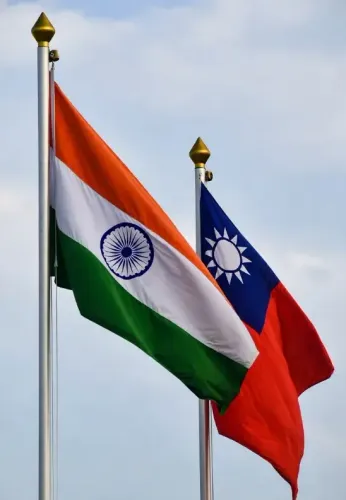
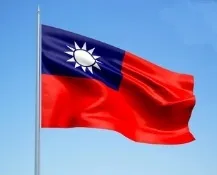
Taipei, Feb 6 (NationPress) India's recent declaration regarding its relationship with Taiwan illustrates New Delhi's acknowledgment of mutual interests and the strategic significance of maintaining regional stability, according to a report.
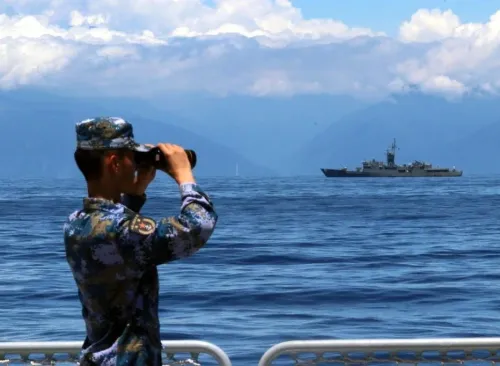
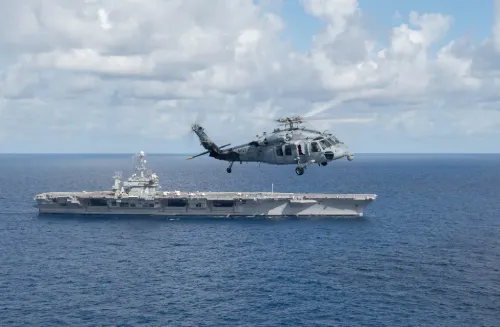
"India meticulously monitors developments in the Indo-Pacific region. Our commitment to peace and stability is paramount, considering our substantial trade, economic, cultural, and maritime interests. We call upon all involved parties to exercise caution, avoid unilateral actions, and resolve disputes through peaceful dialogue without resorting to threats or force," stated Randhir Jaiswal, spokesperson for the Ministry of External Affairs (MEA), while addressing inquiries about recent occurrences, including China's military drills around Taiwan and their implications for regional harmony, during a media briefing in New Delhi on January 9 this year.
Commenting on the MEA spokesperson's remarks, Sana Hashmi, a fellow at the Taiwan-Asia Exchange Foundation, noted in Taiwan's prominent daily, Taipei Times, that this establishes a robust foundation for India-Taiwan relations at the year's outset and reflects New Delhi’s understanding of shared interests alongside the importance of regional stability.
Hashmi pointed out that India has made similar statements previously, particularly following Nancy Pelosi’s visit to Taiwan in 2022 and the subsequent Chinese military exercises. However, this latest declaration is notable for several reasons.
According to Hashmi, it indicates a consistent approach in India's view that stability in the Taiwan Strait is no longer a remote concern but one that directly impacts its broader strategic landscape. The Taiwan Strait serves as a crucial maritime route for global trade and energy, and any instability could jeopardize India's economic and security interests.
By linking its position to trade, economic, cultural, and maritime interests, India perceives Taiwan’s security as a tangible strategic issue rather than an abstract principle, showcasing a pragmatic stance rooted in national interests.
Furthermore, India's advocacy for restraint and peaceful dispute resolution reflects New Delhi's objective to maintain a stable balance of power within the Indo-Pacific region amidst a dynamic and often chaotic global environment, establishing India as a cautious yet involved stakeholder in Taiwan Strait security. Additionally, the reference to unilateral actions in the statement illustrates India's disapproval of Chinese conduct without engaging in overt confrontation.
Hashmi emphasized that India possesses both strategic interests and economic incentives to engage with Taiwan. Avoiding conflict and urging China to uphold the "status quo" is in India's best interest. Taiwan's significance to India has been well recognized economically.
"Importantly, New Delhi must not view Taiwan solely through the lens of either the US or China. An independent and autonomous approach towards Taiwan would greatly benefit India in the long run. If true strategic autonomy is to have meaning, it must also apply to Taiwan policy. This month’s statement signifies continuity and an increasing acknowledgment that India’s regional and economic interests, particularly regarding Taiwan, cannot be addressed through mere rhetorical caution," Hashmi expressed in the Taipei Times.
"Taiwan’s security is intertwined with India’s strategic environment, and treating it as a peripheral issue misinterprets the realities of Indo-Pacific interdependence. Ensuring stability in the Taiwan Strait transcends alignment or taking sides; it is about advancing national interests through clarity, consistency, and credible strategic engagement. In this context, deeper engagement with Taiwan serves as a vital test of India’s professed commitment to strategic autonomy and multialignment," the author added.
Point of View
It is essential to highlight India's strategic approach towards Taiwan. The ongoing developments necessitate a balanced view, acknowledging India's commitment to peace while navigating its economic interests in a volatile region. Our coverage aims to inform and engage readers on the complexities of India's foreign relations.
NationPress
13 Oct 2026
Frequently Asked Questions
What did India's recent statement about Taiwan emphasize?
India's recent statement highlighted the recognition of shared interests with Taiwan and the importance of regional stability in the context of the Indo-Pacific.
Why is the Taiwan Strait significant for India?
The Taiwan Strait is a crucial maritime corridor for global trade and energy, and instability in this area could adversely affect India's economic and security interests.
What is India's stance on unilateral actions in the region?
India's statement expresses disapproval of unilateral actions, particularly those by China, advocating for peaceful resolutions to disputes.
How does India view its relationship with Taiwan?
India views its relationship with Taiwan as a significant strategic concern, aligning its policies with national interests rather than external influences.
What should India's approach towards Taiwan be according to experts?
Experts suggest that India should adopt an independent policy towards Taiwan, focusing on its own national interests rather than solely aligning with the US or China.