Iran urges nations to reject US sanctions, calls them illegal
Synopsis
Tehran is running a two-track play: formally calling US sanctions illegal under the UN Charter while Foreign Minister Araghchi publicly dangles a diplomatic off-ramp — but only if Washington drops the pressure. With a June MoU already off the rails and Trump threatening 'unprecedented' economic warfare, Iran is betting on international solidarity to blunt the squeeze.
Key Takeaways
Iran's Foreign Ministry on 28 August urged all nations to refuse participation in US unilateral sanctions against Tehran.
The ministry said the sanctions violate the UN Charter , international humanitarian law, and human rights norms.
Foreign Minister Seyed Abbas Araghchi said in an X post that diplomacy can resume if Washington accepts that 'pressure doesn't work.' Araghchi met Qatari PM Sheikh Mohammed bin Abdulrahman in Tehran on Thursday for what he described as 'creative discussions.' A US-Iran MoU signed on 18 June set a 60-day negotiation deadline ending 17 August ; the talks' fate remains unclear after a subsequent escalation.
US President Donald Trump earlier threatened 'the most crushing economic operation ever' against Iran; Treasury Secretary Scott Bessent announced a new sanctions wave.
Iran's Foreign Ministry on Friday, 28 August formally urged countries worldwide to refuse participation in Washington's unilateral sanctions regime against Tehran, condemning the measures as violations of international law. The appeal marks one of Tehran's sharpest public pushbacks against US economic pressure in recent months.
Tehran's Core Argument
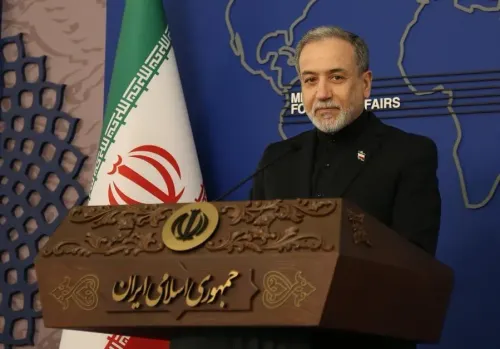
In an official statement, the Iranian Foreign Ministry said the US sanctions violate the UN Charter, international humanitarian law, and human rights norms. The ministry further accused Washington of weaponising the dollar to coerce other nations into adopting what it described as 'interventionist' policies against Iran.
The statement called on all countries to refrain from implementing the sanctions or recognising 'the situations or impacts resulting from these illegal actions' — language that signals Tehran is actively lobbying for a coalition of non-compliance.
Araghchi's X Post and the Qatar Meeting
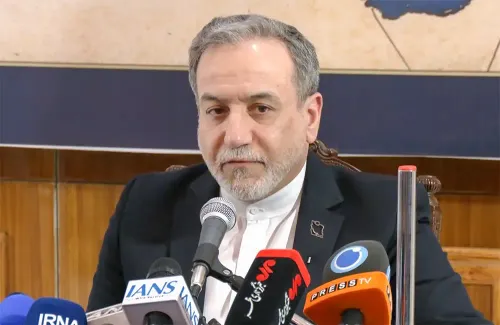
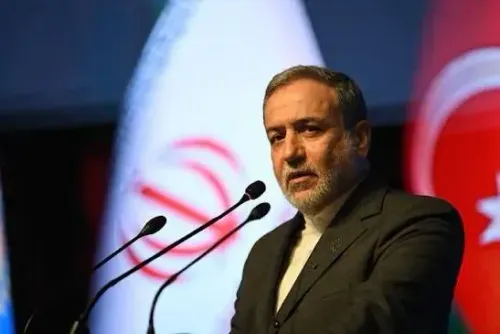
Earlier on the same day, Iranian Foreign Minister Seyed Abbas Araghchi signalled conditional openness to renewed diplomacy with the United States. In a post on X, Araghchi referenced his Thursday meeting in Tehran with Qatari Prime Minister and Foreign Affairs Minister Sheikh Mohammed bin Abdulrahman bin Jassim Al Thani, describing the talks as involving 'creative discussions.'
Araghchi wrote: 'Putting diplomacy back on track isn't impossible. It hinges on US understanding of one simple fact: pressure doesn't work.' He called on Washington to build trust, speak respectfully, acknowledge Iran's rights, and uphold its commitments toward the country.
Backdrop: Trump's Pressure Campaign
The Iranian statements come after US President Donald Trump declared earlier this month that the United States would launch 'the most crushing economic operation ever' against Iran, characterising it as 'economic warfare and isolation on an unprecedented scale.' US Treasury Secretary Scott Bessent subsequently announced a fresh wave of sanctions designed to further isolate Tehran.
Notably, this escalation follows a period of tentative engagement. On 18 June, the United States and Iran signed a memorandum of understanding (MoU) on ending regional conflict, with a 60-day negotiation window set to conclude by 17 August. However, a sharp escalation between the two sides last month has left the fate of those talks uncertain.
What Comes Next
The dual signals from Tehran — a hard legal challenge to US sanctions and a conditional diplomatic olive branch — suggest Iran is pursuing a two-track strategy: rallying international opinion while keeping a negotiated off-ramp nominally open. Whether third countries heed Tehran's call to resist US pressure will depend heavily on their own exposure to dollar-denominated trade and Washington's secondary sanctions enforcement. The next move, analysts suggest, lies with Washington.
Point of View
And few dollar-dependent economies will risk secondary sanctions exposure to stand with Iran. Araghchi's 'pressure doesn't work' framing is aimed as much at domestic audiences as at Washington. The more telling detail is the Qatar channel: Doha has historically served as a back-channel between Tehran and Washington, and 'creative discussions' is diplomatic code for something substantive being explored. The real story is not the public statement — it is what was said in that room in Tehran on Thursday.
NationPress
13 Oct 2026
Frequently Asked Questions
What did Iran's Foreign Ministry say about US sanctions on 28 August?
Iran's Foreign Ministry formally urged all countries to refuse implementing US unilateral sanctions against Tehran, calling them violations of the UN Charter, international humanitarian law, and human rights. The ministry also accused Washington of using the dollar as a coercive tool against other nations.
What did Iranian Foreign Minister Araghchi say about diplomacy with the US?
Foreign Minister Seyed Abbas Araghchi said in an X post on 28 August that US-Iran diplomacy can resume if Washington recognises that pressure against Tehran does not work. He called on the US to build trust, speak respectfully, acknowledge Iran's rights, and honour its commitments.
What was the US-Iran MoU signed in June, and what happened to it?
On 18 June, the United States and Iran signed a memorandum of understanding on ending regional conflict, with a 60-day window for negotiations to reach a final agreement by 17 August. The fate of those talks remains unclear following an escalation between the two sides last month.
What sanctions measures has the US announced against Iran?
US President Donald Trump declared plans for 'the most crushing economic operation ever' against Iran, describing it as economic warfare on an unprecedented scale. Treasury Secretary Scott Bessent subsequently announced a new wave of sanctions aimed at further isolating Tehran.
Why did Araghchi meet Qatar's Prime Minister, and what was discussed?
Iranian Foreign Minister Araghchi met Qatari Prime Minister Sheikh Mohammed bin Abdulrahman bin Jassim Al Thani in Tehran on Thursday for what Araghchi described as 'creative discussions.' Qatar has historically served as a diplomatic intermediary between Tehran and Washington, though the specific substance of the talks was not disclosed.