Iran strikes US bases in Jordan, UAE after Larak Island attack
Synopsis
Iran has struck US military bases in Jordan and the UAE — a dramatic widening of the conflict — after the US hit Larak Island to prevent sea mines from being launched into the Strait of Hormuz. With the UAE, a Gulf partner, now directly targeted by Iranian drones, this is no longer a bilateral US-Iran confrontation. It is a regional escalation.
Key Takeaways
US forces struck two launchers on Larak Island , southern Iran, on Sunday night, 31 August , citing an imminent threat to the Strait of Hormuz .
Iran's IRGC retaliated with drone and ballistic missile strikes on King Hussein and Al-Azraq air bases in Jordan .
Iran's army also struck Al Minhad Air Base in the UAE with drones — the first publicly acknowledged Iranian strike on UAE soil.
The UAE condemned the attack as a direct threat to its security, stability, and territorial integrity.
Iran's Foreign Ministry warned that further US aggression would bring consequences for Washington and any cooperating parties.
The US strike was reportedly the first known military action against Iran since late July .
Iran's Foreign Ministry on Monday, 31 August strongly condemned a US military strike on Larak Island in southern Iran as an 'act of aggression,' and confirmed that Iranian forces had retaliated by striking US bases in Jordan and the United Arab Emirates. The escalation marks one of the most direct military exchanges between Washington and Tehran in recent memory.
The US Strike on Larak Island
US Central Command (CENTCOM) spokesperson Tim Hawkins confirmed in a statement that US forces on Sunday night struck two launchers on Larak Island after Iranian forces 'were observed preparing to launch rockets with sea mines into the Strait of Hormuz.' The strike was described as the first known US military action against Iran since late July.
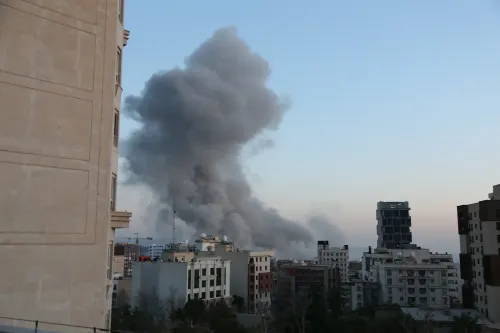
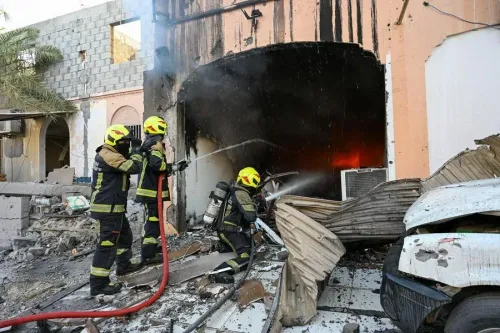
Iran's Foreign Ministry said the attack 'killed and wounded a number of Iran's military personnel and citizens' and caused damage to public and private properties. The ministry characterised the strike as a violation of Iran's 'national sovereignty and territorial integrity.'
Iran's Retaliatory Strikes
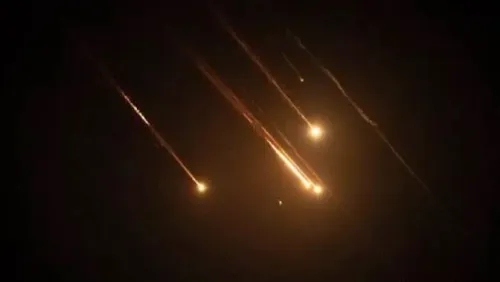
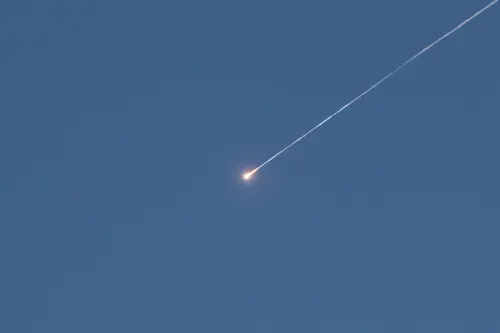
In response, Iran's Islamic Revolutionary Guard Corps (IRGC) aerospace forces launched drone and ballistic missile strikes against the King Hussein and Al-Azraq air bases in Jordan, targeting, according to the IRGC, 'technical and maintenance infrastructure as well as hangars housing US fighter aircraft.'
Iran's army separately said it attacked Al Minhad Air Base in the UAE using drones, targeting areas 'where US helicopters and personnel' were stationed. The UAE swiftly condemned the strike, calling it a direct threat to the safety of its citizens and residents, as well as to the country's security, stability, and territorial integrity.
Iran's Position and Broader Accusations
The Iranian Foreign Ministry framed its retaliatory action as an exercise of Iran's 'inherent right' to legitimate self-defence under international law. It further blamed both the United States and Israel for instability in regional shipping lanes and the Strait of Hormuz, citing what it described as ongoing attacks against Iran since 28 February and a US naval blockade.
The IRGC vowed that the Larak strike would be met 'with punishment for the aggressor,' signalling that Tehran does not consider its response concluded. The ministry warned that the US and any parties cooperating with it would bear responsibility for consequences of any further military aggression.
Regional and Strategic Implications
This comes amid a prolonged period of heightened tension across the Middle East, with the Strait of Hormuz — through which a significant share of global oil exports pass — now explicitly named as a flashpoint. The involvement of Jordan and the UAE, both US partners in the region, as sites of Iranian retaliation significantly widens the geographic scope of the confrontation.
Notably, this is the first time Iran has publicly acknowledged striking the UAE directly, a development that could reshape Gulf security calculations. How Washington and its regional partners respond in the coming hours will determine whether this exchange remains contained or escalates further.
Point of View
Tehran will have demonstrated that the cost of striking Gulf-hosted US assets is manageable. Meanwhile, the Strait of Hormuz framing — sea mines, not just missiles — points to an Iranian strategy of economic coercion that goes beyond military signalling. Washington's next move will be watched as closely in Riyadh and Abu Dhabi as it is in Tehran.
NationPress
31 Aug 2026
Frequently Asked Questions
Why did the US strike Larak Island?
US Central Command said its forces struck two rocket launchers on Larak Island after Iranian forces were observed preparing to launch rockets with sea mines into the Strait of Hormuz. The US described the strike as a defensive action to protect freedom of navigation in one of the world's most critical shipping lanes.
How did Iran respond to the Larak Island attack?
Iran's IRGC launched drone and ballistic missile strikes against the King Hussein and Al-Azraq air bases in Jordan, and separately attacked Al Minhad Air Base in the UAE with drones. Tehran framed both actions as legitimate self-defence under international law.
What is the significance of Iran striking the UAE?
Iran's attack on Al Minhad Air Base in the UAE is significant because it is the first publicly acknowledged Iranian strike on UAE soil, directly targeting a US military presence in a Gulf Arab state. The UAE condemned the attack as a threat to its security and territorial integrity.
What is Iran's stated justification for its military actions?
Iran's Foreign Ministry invoked its 'inherent right' to self-defence, accusing the US and Israel of repeated attacks on Iran since 28 February and of imposing a naval blockade. It also blamed Washington and Tel Aviv for instability in the Strait of Hormuz and regional shipping routes.
Could this escalation affect global oil supplies?
The Strait of Hormuz, explicitly named in Iran's accusations, is a critical chokepoint through which a major share of global oil exports pass. Iran's reported attempt to deploy sea mines in the strait, and the subsequent US strike, signal that the waterway is now an active flashpoint, which could affect shipping and energy markets if the confrontation widens.