Iran threatens Hormuz ban on ships taking frozen asset payouts
Synopsis
Iran has turned a financial dispute into a maritime threat: any ship that accepts US compensation drawn from frozen Iranian funds will be banned from the Strait of Hormuz — the chokepoint for roughly 20% of global oil trade. With US-Iran talks ongoing and Trump warning of resumed military action, the standoff has moved from the negotiating table to one of the world's most consequential waterways.
Key Takeaways
Khatam al-Anbiya Central Headquarters declared on 28 July that ships accepting payouts from Iran's frozen assets will be barred from the Strait of Hormuz .
President Trump proposed on 27 July using Iranian funds under US control to compensate shipping firms for Gulf conflict damages, ruling out US taxpayer money.
Iran's military spokesman attributed the shipping damage to US military actions and an 'illegal and unsafe' route south of the strait.
Trump confirmed US-Iran negotiations are ongoing and that Iran has sought a pause in attacks during talks.
Trump warned the US could resume military action if no agreement is reached.
The Strait of Hormuz handles roughly 20% of global petroleum trade, making any transit disruption a potential global energy shock.
Iran's top military command, Khatam al-Anbiya Central Headquarters, declared on Tuesday, 28 July that any vessel belonging to a country or company that accepts compensation drawn from Iran's frozen assets will be barred from transiting the Strait of Hormuz. The warning, broadcast by Iran's state-run network IRIB, marks a direct counter to a proposal by US President Donald Trump to use seized Iranian funds to reimburse shipping firms for damages incurred during the recent Gulf conflict.
Iran's Position
A spokesman for Khatam al-Anbiya Central Headquarters flatly rejected Trump's compensation plan, arguing that the vessels in question were damaged due to insecurity created by the US military and their use of what he described as an illegal and unsafe shipping corridor south of the strait. The spokesman made clear that Iran's armed forces would enforce the transit ban against any flag or company that accepts such payments.
What Trump Proposed
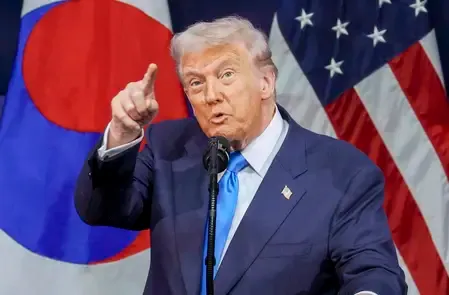
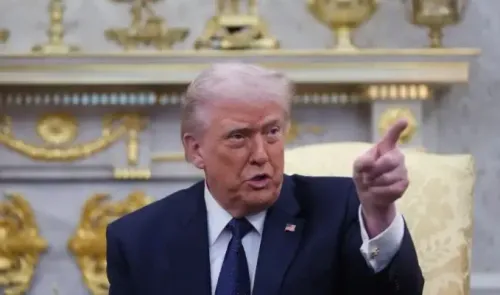
Speaking to reporters aboard Air Force One on Monday, 27 July, Trump announced that Iranian funds under Washington's control would be used to compensate shipping companies for damage caused in the Strait of Hormuz. He ruled out using American taxpayer money for the purpose. 'No. No. We're going to use Iran's money to pay for the damage they did,' Trump said when asked whether the US would pay the companies directly. 'Iran money that we control will be used to pay for damages. Sound good? Not bad, right? You should be rewarded,' he added. Trump did not specify how much Iranian money Washington controls, which companies would qualify, or how disbursements would be structured.
State of the Strait and Ongoing Talks
Trump indicated that conditions in the Strait of Hormuz had improved following US military operations against Iran, saying, 'Their whole shoreline is wiped out. The strait is in very good shape now, and we're talking right now.' He also confirmed that Washington and Tehran are currently engaged in negotiations, and that Iran had sought a pause in attacks while talks continue. Trump warned that the United States could resume military action if no agreement is reached.
Why This Matters
The Strait of Hormuz is the world's most critical oil chokepoint, through which roughly 20% of global petroleum trade passes. An enforceable transit ban — even selectively applied — could disrupt global energy supply chains and drive up freight and insurance costs for tankers worldwide. This comes amid an already fragile diplomatic environment, with US-Iran negotiations at a delicate stage. Notably, Iran's threat shifts the compensation dispute from a bilateral financial question into a potential maritime security flashpoint.
Point of View
Tehran is effectively forcing shipping companies and their governments to choose sides — before any deal is finalised. The timing is telling: issuing this warning while simultaneously seeking a pause in attacks suggests Iran is trying to negotiate from a position of strength it may not fully hold. Washington's failure to specify how much Iranian money it controls, or which companies qualify, hands Tehran a credibility opening it has moved quickly to exploit.
NationPress
27 Oct 2026
Frequently Asked Questions
What has Iran threatened regarding the Strait of Hormuz?
Iran's military command, Khatam al-Anbiya Central Headquarters, announced on 28 July that vessels belonging to any country or company that accepts compensation from Iran's frozen assets will be denied passage through the Strait of Hormuz. The warning was broadcast by Iran's state-run network IRIB.
What compensation plan did President Trump propose?
Speaking aboard Air Force One on 27 July, Trump said Iranian funds under US control would be used to reimburse shipping companies for damage caused during the Gulf conflict. He explicitly ruled out using US government funds, saying 'We're going to use Iran's money to pay for the damage they did.' He did not detail the amount controlled or the distribution mechanism.
Why does Iran reject the US compensation plan?
Iran's military spokesman argued that the ships were damaged due to insecurity created by US military operations and the use of what he called an illegal and unsafe shipping route south of the Strait of Hormuz. Tehran therefore holds the US, not Iran, responsible for the damage.
Are the US and Iran currently in talks?
Yes. President Trump confirmed on 27 July that Washington and Tehran are engaged in active negotiations, and that Iran had sought a pause in attacks while talks continue. Trump also warned that the US could resume military operations if no agreement is reached.
Why is the Strait of Hormuz so strategically significant?
The Strait of Hormuz is the world's most critical oil chokepoint, through which approximately 20% of global petroleum trade passes. Any disruption to transit — including a selective ban on certain vessels — could affect global energy supply chains and sharply raise freight and insurance costs for tankers.