Iran war could extend beyond region, IRGC chief warns
Synopsis
IRGC chief Ahmad Vahidi says a future war involving Iran may not remain confined to West Asia. His comments come as two Iranian naval forces give separate accounts of tanker fires involving mines near the Strait of Hormuz.
Key Takeaways
IRGC Chief Commander Ahmad Vahidi said a future war involving Iran would not necessarily be limited to West Asia .
Vahidi said there was no geographical limitation on increasing the range of Iranian missiles.
Iranian Armed Forces Chief of Staff Ali Abdollahi said US bases would be within range of Iranian forces if necessary, according to reports.
The IRGC Navy said four tankers exploded and caught fire after hitting mines in the Strait of Hormuz on Monday and Tuesday.
The Iranian Army’s navy separately reported fires on two tankers east of the strait; the source does not establish whether the accounts overlap.
A future Iran war would not necessarily remain confined to West Asia, Islamic Revolutionary Guard Corps (IRGC) Chief Commander Ahmad Vahidi said at a ceremony in Tehran on 25 November, according to reports. He also said there was no geographical limitation on extending the range of Iran’s missiles.
His remarks came as Iranian military authorities reported separate accounts of oil tankers catching fire after striking naval mines near the Strait of Hormuz. The reported incidents and the commanders’ statements follow earlier exchanges of attacks between Iran and Israel and the United States.
IRGC chief on missile range and a future war
Speaking on the sidelines of the ceremony in Tehran, Vahidi said Iran’s missile range faced no geographical limitation, according to reports. He linked any expansion of capabilities to requirements and available capacities.
“Today, the war will not be necessarily limited to the region, and these capabilities will be expanded in proportion to the requirements and capacities,” he said.
The remarks addressed a potential future conflict; the source did not specify a new missile range, a deployment timetable or a particular country outside the region that might be targeted.
Iranian armed forces chief comments on US bases
Separately, Ali Abdollahi, Chief of Staff of the Iranian Armed Forces, said on Tuesday that wherever US bases might be established, they would be within range of Iranian forces if necessary, according to reports.
His statement was reported alongside Vahidi’s comments on the possible geographical scope of a future war. The source did not provide further details of the capabilities or locations to which Abdollahi was referring.
Conflicting tanker accounts near Hormuz
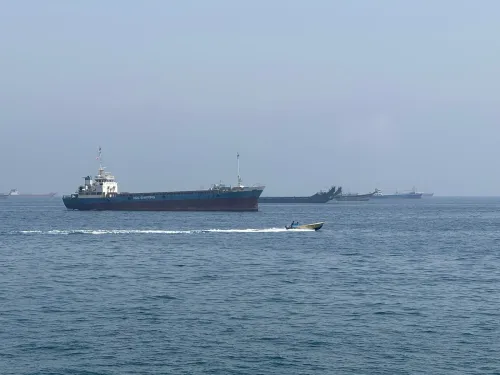
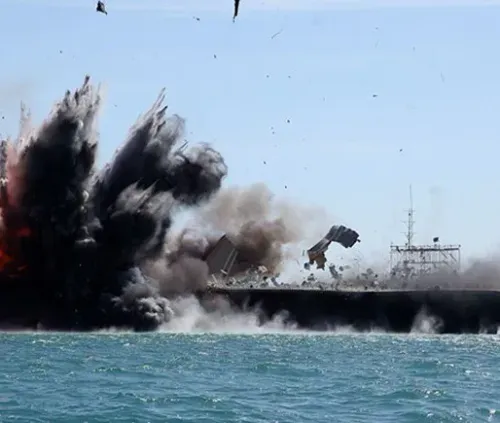
The IRGC Navy said in statements that four oil tankers it described as “violating” vessels exploded and caught fire after hitting naval mines in the Strait of Hormuz on Monday and Tuesday.
It warned vessels against using “unauthorized” routes in disregard of Iranian armed forces’ warnings. The force said such movement constituted a violation and cooperation with what it called “aggressive” forces, and would be dealt with decisively.
In a separate statement on Tuesday, the Iranian Army’s navy said two oil tankers caught fire earlier that day after striking naval mines east of the strait. It said the vessels had switched off their identification and navigation systems and entered a “forbidden” area.
The army navy said the blasts brought the tankers to a halt and stressed compliance with Iran’s regulations for safe passage. The source does not establish whether the two vessels in that account were included among the four reported by the IRGC Navy.
Background to the regional confrontation
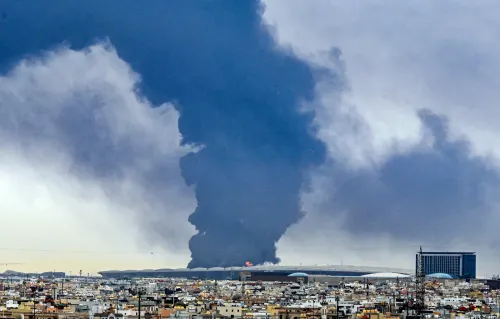
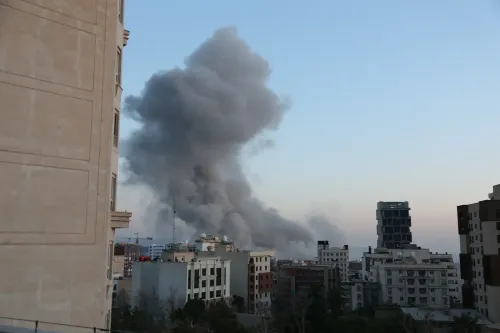
On 28 February, Israel and the United States launched joint attacks on Tehran and other Iranian cities, according to the source. Iran responded with waves of missile and drone attacks targeting Israel and US bases and assets in the region, and tightened its grip on the Strait of Hormuz.
The latest statements place both the reach of a potential conflict and navigation through the strait in focus. Further details would be needed to establish the relationship between the tanker accounts and any next steps announced by the parties.
Point of View
Particularly whether they describe overlapping incidents. For India, the key questions are what can be independently established about navigation risks and what further measures, if any, follow.
NationPress
25 Nov 2026
Frequently Asked Questions
What did the IRGC chief say about a future Iran war?
IRGC Chief Commander Ahmad Vahidi said a future war involving Iran would not necessarily be confined to West Asia. He also said there was no geographical limitation on extending the range of Iran’s missiles.
What did Iran say about US bases?
Iranian Armed Forces Chief of Staff Ali Abdollahi said US bases would be within range of Iranian forces if necessary, according to reports. The source did not specify which locations or capabilities he meant.
What happened to tankers near the Strait of Hormuz?
The IRGC Navy said four tankers exploded and caught fire after hitting mines in the strait on Monday and Tuesday. The Iranian Army’s navy separately reported fires on two tankers east of the waterway, but the source does not establish whether the accounts overlap.
Why do the Strait of Hormuz reports matter?
The reports concern tanker safety and navigation through the Strait of Hormuz amid a wider regional confrontation. Iranian naval forces warned vessels to comply with restrictions and regulations for passage.
What happens next after Iran’s military statements?
The source does not specify a timetable for further military action or missile deployments. Further details would be needed to clarify the tanker reports and any subsequent measures.