IRGC hits LPG ship NV Sunshine in Strait of Hormuz, warns of wider strikes
Synopsis
Iran's IRGC has struck LPG carrier NV Sunshine in the Strait of Hormuz, setting its engine room ablaze, and has now threatened to pursue and punish offending vessels anywhere in the region — not just at the strait. The move comes even as President Pezeshkian insists Tehran will not abandon nuclear talks with Washington, revealing the dual-track pressure strategy Iran is running simultaneously.
Key Takeaways
Iran's IRGC Navy struck the LPG tanker NV Sunshine in the Strait of Hormuz on 9 October 2026 , causing fire in its engine room.
The IRGC claimed the vessel was using an 'illegal' southern route and held the US military directly responsible for the escalation.
Tehran warned that shipping and insurance companies 'deceived by the US' will face sanctions and punitive action against their vessels.
The IRGC declared future enforcement will extend beyond the Strait of Hormuz to any part of the region.
President Masoud Pezeshkian simultaneously affirmed Iran's commitment to ongoing Iran-US negotiations despite past US strikes during dialogue.
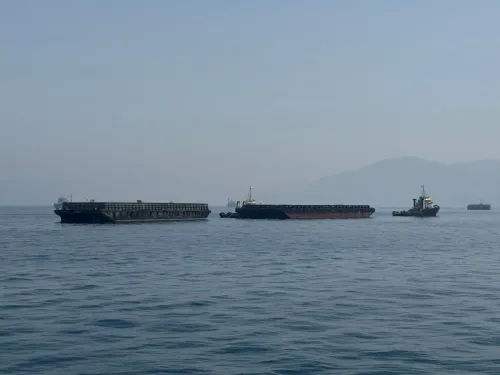
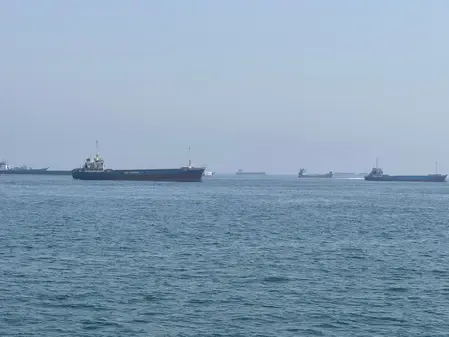
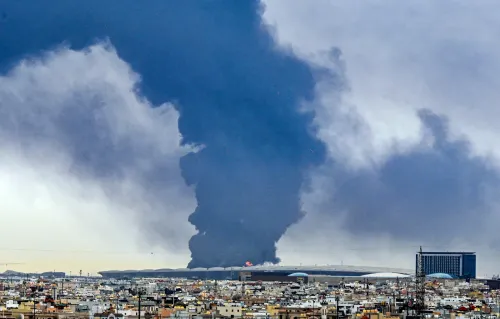
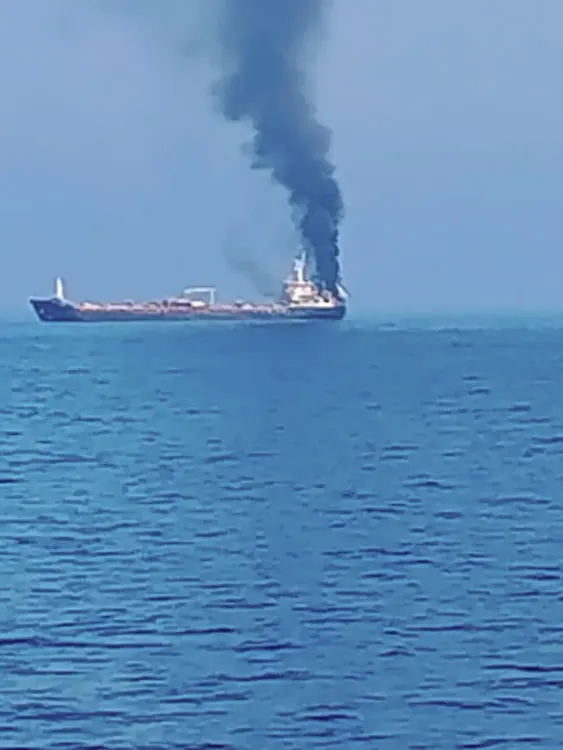
The navy of Iran's Islamic Revolutionary Guard Corps (IRGC) announced on Friday, 9 October that its forces had struck a 'giant' liquefied petroleum gas (LPG) carrier, identified as NV Sunshine, as it attempted to cross the Strait of Hormuz through what the IRGC described as an 'illegal' southern route. The strike caused a fire in the vessel's engine room and propulsion system, according to a statement published on the IRGC's official outlet Sepah News.
Details of the Strike
The IRGC Navy stated that the NV Sunshine, a large LPG-carrying vessel, was targeted after it allegedly attempted to transit the strait via an unauthorised corridor. Following the strike, the ship reportedly caught fire in its engine room and propulsion system, though the statement did not provide details on casualties or the extent of structural damage.
Notably, this incident marks a fresh escalation in maritime tensions around one of the world's most strategically critical chokepoints, through which roughly 20% of global oil and energy shipments transit annually.
IRGC's Warning to Shipping Companies
The IRGC issued a stark warning to international shipping and insurance companies, threatening sanctions and 'punitive measures' against any vessel belonging to companies that, in its words, allow themselves to be 'deceived by the United States.' The statement held the US military directly responsible for the incident, alleging that Washington orchestrates such escalations through interventions, manipulation of shipping and insurance firms, and the payment of what it characterised as 'massive bribes.'
The IRGC further declared that future enforcement against vessels using unauthorised routes will not be confined to the Strait of Hormuz — any offending ship could be 'pursued, and definitely punished' anywhere in the region. The corps also asserted it maintains 'full control' of the strait and vowed to prevent what it termed 'aggressive' foreign military presence in the area.
Iran-US Diplomacy Continues in Parallel
Even as the maritime confrontation intensified, Iranian President Masoud Pezeshkian signalled Tehran's continued willingness to engage diplomatically with Washington. Speaking on Thursday at a meeting with Russian President Vladimir Putin in Turkmenbashi, Turkmenistan, Pezeshkian acknowledged that the United States had attacked Iran twice during previous rounds of talks, but said Tehran would not walk away from negotiations.
According to a statement issued by his office, Pezeshkian said: 'We are negotiating. However, whenever we engage in dialogue with the United States, they attack again. Nevertheless, we will not abandon the negotiating table and dialogue.'
He added that Iran had submitted proposals to which the US had responded with counter-proposals, and that Tehran had revised its position. He indicated the two sides plan to 'sit down and conclude them through the existing mediators' once the revisions are finalised.
Regional and Global Implications
The Strait of Hormuz remains a pressure point of acute strategic consequence — any sustained disruption would rattle global energy markets and shipping insurance costs. This incident follows a pattern of IRGC vessel seizures and confrontations in the strait, which have intensified amid broader Iran-US tensions over Tehran's nuclear programme and regional influence. The latest strike signals that the IRGC is prepared to extend its enforcement posture well beyond the strait itself, raising the risk calculus for commercial shipping across the entire Persian Gulf and Arabian Sea corridor.
How international maritime bodies, the US Navy, and affected shipping firms respond in the coming days will determine whether this remains an isolated confrontation or the opening of a new phase of maritime pressure.
Point of View
Negotiate at the table — is a familiar Iranian playbook, but extending the threat zone to the broader Arabian Sea and Persian Gulf corridor raises the stakes materially for global energy logistics. What is often missed in the coverage is how this affects non-Western shipping too: Chinese, Indian, and Gulf-flagged vessels now operate under an expanded threat environment, which complicates India's own energy import calculus given its heavy reliance on Gulf crude. The US attribution rhetoric from Tehran, meanwhile, provides domestic legitimacy while insulating the IRGC from direct diplomatic blowback.
NationPress
10 Oct 2026
Frequently Asked Questions
What happened to the LPG tanker NV Sunshine in the Strait of Hormuz?
Iran's IRGC Navy struck the LPG carrier NV Sunshine on 9 October 2026 as it attempted to cross the Strait of Hormuz via what the IRGC described as an 'illegal' southern route. The strike caused a fire in the vessel's engine room and propulsion system.
Why did Iran's IRGC target the NV Sunshine?
The IRGC said the NV Sunshine was using an unauthorised corridor through the Strait of Hormuz. It also blamed the US military, alleging Washington manipulates shipping and insurance companies to provoke such incidents, though these claims have not been independently verified.
Has Iran threatened further strikes on shipping?
Yes. The IRGC warned that action against vessels using unauthorised routes will no longer be limited to the Strait of Hormuz, and that any offending ship could be 'pursued, and definitely punished' anywhere in the region. Shipping and insurance companies linked to violations face threatened sanctions.
How does this affect Iran-US nuclear negotiations?
Iranian President Masoud Pezeshkian said on Thursday that Tehran will not abandon negotiations with the United States despite past US military actions during previous rounds of talks. He indicated revised proposals are being finalised and that both sides plan to meet through existing mediators.
Why is the Strait of Hormuz strategically important?
The Strait of Hormuz is the world's most critical oil and gas chokepoint, with roughly 20% of global energy shipments passing through it. Any sustained disruption to transit there directly impacts global crude oil prices, shipping insurance rates, and energy security for major importers including India.