Islamabad turns 'Containerabad' as PTI march blocks cost millions
Synopsis
Islamabad has been sealed by thousands of government-deployed containers for nearly four weeks ahead of a PTI march — earning it the nickname 'Containerabad'. The security bill could top $3.6 million, private transporters say they have never been compensated, and the High Court has previously condemned the tactic. The blockade is Pakistan's most visible symptom of a political crisis that shows no sign of resolution.
Key Takeaways
The Pakistan government has deployed thousands of containers across Islamabad for nearly four weeks to block a PTI march.
The march, originally set for 27 September , was postponed to 4 October ; its aim is to press for the release of Imran Khan , detained for over three years .
Security costs have risen from an estimated $2.9 million to potentially over $3.6 million following the delay.
Each idle truck-container combination is reportedly losing 30,000–40,000 Pakistani rupees per day , with no compensation paid to owners.
The Islamabad High Court previously criticised the practice in August 2024 , with the then-Chief Justice calling the city a 'container city' .
State Minister Talal Chaudhry defended the deployments as standard intelligence-based security procedure.
Islamabad has been transformed into what residents are calling 'Containerabad' — with the Pakistan government deploying thousands of shipping containers and trucks across the capital for nearly four weeks to pre-empt a planned march by Pakistan Tehreek-e-Insaf (PTI), according to a report by Al Jazeera. The blockade has disrupted traffic, commerce, and livelihoods across the city, with transporters and business owners reporting heavy financial losses.
The Political Standoff Behind the Blockade
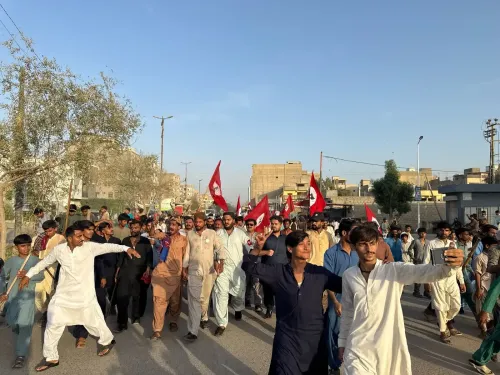
The containers were reportedly deployed ahead of a PTI march originally scheduled to begin on 27 September from Peshawar and subsequently postponed to 4 October. According to the report, the march is PTI's latest effort to pressure the government into releasing its founder Imran Khan, who has been in detention for more than three years and whom polls reportedly identify as Pakistan's most popular political figure.
This is not the first time Islamabad has seen such a deployment. When PTI petitioned the Islamabad High Court in August 2024 over a cancelled rally permit at D-Chowk, then-Chief Justice Aamer Farooq himself remarked that the authorities had turned the capital into a 'container city'. As one resident put it, 'It's like clockwork every year' — and the name 'Containerabad' has now stuck.
Government Defends the Measure
State Minister for Interior Talal Chaudhry defended the deployment, characterising it as standard security practice. 'Security preparations are based on intelligence assessments and anticipated security requirements, not simply on the date a political event is formally announced,' Chaudhry said, according to the report. He further maintained that container rentals were documented and paid through proper government processes.
Spiralling Security Costs
The financial burden on the state has also grown with the postponement. Islamabad police initially estimated a security bill of approximately $2.9 million for one week of arrangements around the planned march, according to local media reports. With the delay pushing the timeline by another week, that figure could now exceed $3.6 million, the report noted.
Transporters and Businesses Bear the Brunt
For private operators, the cost has been immediate and, so far, uncompensated. Transporters and owners of the requisitioned container trucks allege that many vehicles were seized without clear authority. Muhammad Owais Chaudhry, a lawyer who heads the All Pakistan Goods Transport Owners Association, said each idle truck-container combination was losing between 30,000 and 40,000 Pakistani rupees per day in earnings.
'Not a single rupee has been given... No procedure has ever been worked out for how it would be paid. In our history, no transporter has ever received money for any past protests,' he said.
Business owners echoed the concern, with one pointing to the wider economic signal: 'When we close a hotel and cancel all bookings, it is not the room rent that the hotel loses,' noting that the recurring blockades send discouraging signals to investors, businesses, and tourists alike.
A Recurring Pattern With Deeper Consequences
Critics argue the repeated use of container cordons has normalised a form of urban lockdown that falls disproportionately on ordinary citizens and small businesses rather than on the political actors it targets. The pattern — deploy containers, delay marches, absorb costs — has played out multiple times since 2022, each cycle adding to cumulative economic damage while resolving nothing politically. With the 4 October march now imminent, observers will be watching whether the blockade holds, and at what further cost.
Point of View
Traders, and tourists while failing to resolve the underlying political impasse. What is striking is the absence of any compensation mechanism despite years of precedent; the state commandeers private assets for political purposes and walks away. The High Court's rebuke in 2024 produced no change, which itself tells a story about institutional accountability in Pakistan. Until the government either negotiates with PTI or establishes a transparent, enforceable reimbursement framework, the containers will keep going up — and ordinary citizens will keep footing the bill.
NationPress
3 Oct 2026
Frequently Asked Questions
Why has Islamabad been filled with shipping containers?
The Pakistan government has deployed thousands of containers across Islamabad for nearly four weeks to pre-empt a march by Pakistan Tehreek-e-Insaf (PTI), rescheduled for 4 October. The march aims to pressure the government into releasing PTI founder Imran Khan, who has been in custody for more than three years.
What is the 'Containerabad' nickname and where did it come from?
'Containerabad' is a term coined by Islamabad residents to describe the city's recurring transformation into a container-blocked urban zone during PTI political events. The Islamabad High Court's then-Chief Justice Aamer Farooq used the phrase 'container city' in August 2024, and residents say the pattern repeats 'like clockwork every year.'
How much is Pakistan's government spending on the container blockade?
Islamabad police initially budgeted approximately $2.9 million for one week of security arrangements around the PTI march. Following the week-long postponement, the total bill could now exceed $3.6 million, according to local media reports cited in the Al Jazeera story.
Are the truck and container owners being compensated?
No. Muhammad Owais Chaudhry, who heads the All Pakistan Goods Transport Owners Association, said 'not a single rupee has been given' to owners, adding that no compensation procedure has ever been established and no transporter has been paid for losses incurred during any past protest-related seizure.
How does the government justify using containers to block the PTI march?
State Minister for Interior Talal Chaudhry called it standard practice, saying security preparations are driven by intelligence assessments and security requirements rather than the formal announcement date of any political event. He also stated that container rentals are documented and paid through proper official processes.