Sealing Islamabad won't resolve Pakistan's deepening crisis, analysts warn
Synopsis
Pakistan's government is sealing its capital with containers and banning public gatherings to block a PTI protest march — but an analysis in The Friday Times argues that force cannot substitute for policy: daily fuel-price hikes, soaring food costs, and a judiciary and media under pressure have created a crisis that lockdowns cannot contain.
Key Takeaways
Authorities have imposed a two-month ban on gatherings in Islamabad ahead of a PTI protest march planned for 27 September .
Punjab government enforced a 13-day ban on public gatherings across the province, deploying Rangers in four districts.
Professor Moonis Ahmar of the University of Karachi argues that sealing the capital will not resolve a crisis driven by economic and governance failures.
Pakistan is reportedly the only country in the world that revises fuel prices on a daily basis ; prices were not cut despite global crude falling below $100 a barrel .
The 26th and 27th constitutional amendments are cited as tools enabling the suppression of popular dissent.
Both Jamaat-e-Islami (JI) and PTI have mounted protest movements against fuel levies and the detention of Imran Khan respectively.
Locking down Islamabad and Rawalpindi will not help Prime Minister Shehbaz Sharif's government contain a crisis rooted in chronic mismanagement of economic, political, and governance failures, according to a detailed analysis published in Pakistani daily The Friday Times. The assessment comes as authorities prepare to block a Pakistan Tehreek-e-Insaf (PTI) protest march scheduled for 27 September, deploying hundreds of containers and ordering sweeping bans on public gatherings.
The Economic Pressure Cooker
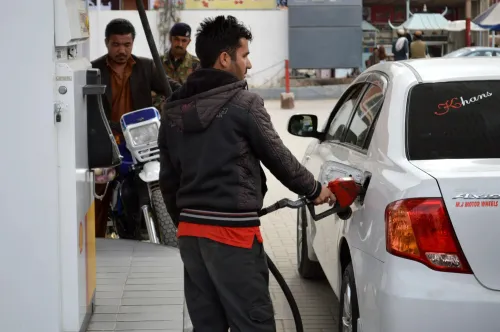
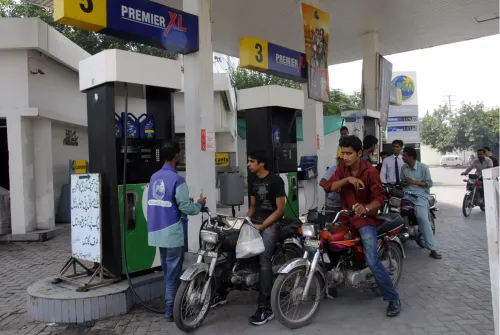
Moonis Ahmar, Professor of International Relations and former Dean of the Faculty of Social Sciences at the University of Karachi, argues that the Pakistani government is systematically squeezing citizens to fund debt servicing and state expenditure. He noted that even as global crude oil prices fell below $100 a barrel, authorities in Islamabad declined to pass on any relief, continuing daily revisions of petrol and diesel prices upward. Pakistan, he wrote, is the only country in the world that reviews fuel prices on a daily basis.
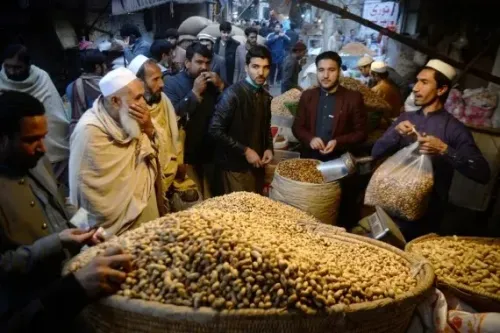
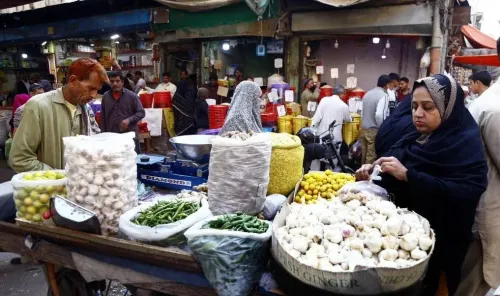
The economic strain extends well beyond fuel. Ahmar highlighted concurrent increases in electricity tariffs, gas prices, and the cost of vegetables, fruits, meat, milk, flour, and cooking oil — a convergence that has fuelled public anger across income groups.
Protests Met With Force, Not Policy
Two major protest movements are currently challenging the government. The Jamaat-e-Islami (JI) has been marching against the petroleum levy and rising fuel prices, while the PTI is mobilising for the release of its founding chairman, Imran Khan, and against the surge in prices of essential commodities. According to Ahmar, neither movement has been met with substantive policy response; instead, authorities have resorted to large-scale arrests and physical barriers.
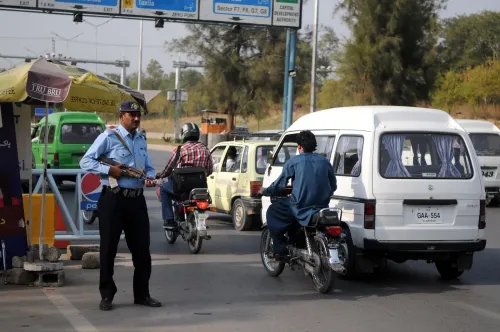
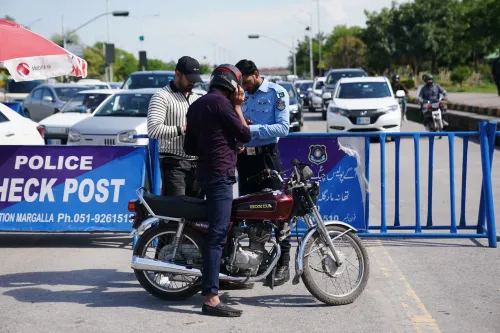
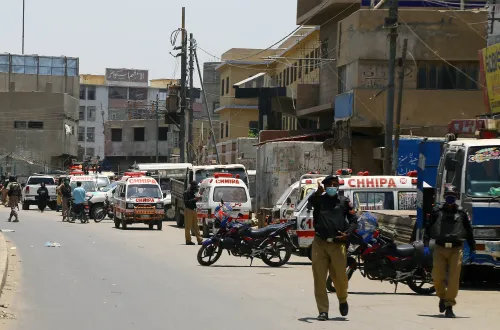
Ahead of the PTI march, local authorities in Islamabad imposed a two-month ban on all gatherings of five or more persons, processions, rallies, and demonstrations at any public place in the capital, including the Red Zone, as reported by Pakistani newspaper Dawn. The Punjab government separately enforced a 13-day ban on public gatherings across the province, closing roads and businesses in and around Attock and Rawalpindi, and deploying Rangers paramilitary forces in four districts.
Constitutional Amendments and the Taming of Institutions
Ahmar pointed to the 26th and 27th constitutional amendments as instruments that have given the military establishment and its civilian partners broad powers to suppress dissent. With the judiciary reportedly 'tamed,' independent media 'neutralised,' and civil society weakened, coalition partners have shown little appetite for democratic course correction, the analysis argued. He warned that the current approach is sustainable only until civil society leaders, lawyers, journalists, and youth decide to mount a more determined challenge to the status quo.
Image and Strategic Cost of the Lockdown
'Sealing Islamabad and Rawalpindi from the rest of the country will not help manage a crisis which is of a critical nature,' Ahmar wrote, stressing that beyond the economic cost of the capital lockdown, Pakistan's international image stands to suffer. He noted that if any 'brainstorming' is underway in military circles to avert a civil war-like scenario, it would reflect 'sanity and strategic prudence.' He concluded that the coalition government, through its mismanagement, has 'thoroughly exposed its position.'
With the PTI march days away and no sign of political negotiation, the situation in Pakistan's capital region is being closely watched as a test of the government's ability to manage compounding crises without further institutional damage.
Point of View
Mass arrests, and constitutional amendments weaponised against dissent — is a symptom of a state that has run out of policy options. Daily fuel-price revisions are not an administrative quirk; they signal a government extracting revenue in real time because its fiscal position allows no slack. The deeper concern, which Ahmar raises but mainstream coverage underplays, is institutional: when the judiciary, media, and civil society are simultaneously weakened, the feedback loops that typically force course correction in a democracy stop functioning. Pakistan's coalition is not just managing a protest; it is managing the consequences of having dismantled its own early-warning systems.
NationPress
24 Sept 2026
Frequently Asked Questions
Why is Islamabad being sealed ahead of the PTI march?
Authorities have imposed a two-month ban on all public gatherings of five or more persons in Islamabad, including the Red Zone, to prevent PTI's planned protest march on 27 September demanding the release of Imran Khan and action on rising commodity prices. Hundreds of containers have been deployed in Rawalpindi and Islamabad to physically block the march.
What is the PTI protest march about?
The PTI march is primarily demanding the release of the party's founding chairman Imran Khan and is also protesting against the surge in prices of essential commodities. It is scheduled for 27 September in Islamabad.
Why has Pakistan not reduced fuel prices despite falling global crude oil?
According to the analysis by Professor Moonis Ahmar, the Pakistani government did not reduce petrol or diesel prices even after global crude fell below $100 a barrel, as authorities are focused on revenue generation to service foreign and domestic loans and sustain state expenditure. Pakistan is described as the only country revising fuel prices on a daily basis.
What are the 26th and 27th amendments and why do they matter here?
The 26th and 27th constitutional amendments to Pakistan's constitution are cited in the analysis as provisions that have given the military establishment and civilian partners broad powers to suppress popular uprisings. Critics argue these amendments have weakened judicial independence and eroded democratic checks.
What has Jamaat-e-Islami been protesting about in Pakistan?
The Jamaat-e-Islami has been conducting a protest march against the petroleum levy and the consistent increase in prices of petroleum products. However, according to the analysis, the movement has so far not been able to impose meaningful pressure on Pakistani authorities to reverse the hikes.