Pakistan School Closures Deepening Learning Crisis: Major Report
Synopsis
Pakistan's schools have been shut for 97 days in a single academic year due to climate crises alone — and 77% of 10-year-olds still can't read a simple text. A new analysis warns that repeated closures, including PM Shehbaz Sharif's latest fuel-crisis shutdown, are permanently destroying the futures of millions of Pakistani children.
Key Takeaways
77 per cent of 10-year-olds in Pakistan cannot read or comprehend a simple text, according to the Pakistan Institute of Education .
PM Shehbaz Sharif ordered a two-week school closure in March 2025 , citing rising fuel costs linked to the West Asia conflict .
Pakistani schools were shut for 97 days in 2023–24 due to climate-related crises — equal to 54 per cent of the academic year.
Over 26 million students dropped out during the Covid-19 pandemic ; only 50 per cent returned, with girls forming the majority of dropouts.
School closures increase risks of child marriage and child labour , especially for girls in underprivileged communities.
Remote learning is inaccessible for most Pakistani students due to lack of internet access , digital devices , and literate household support.
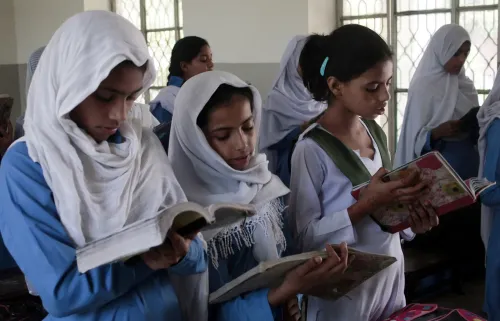
Islamabad, April 23: Pakistan's already fragile education system is being pushed deeper into crisis by a recurring pattern of school closures, with a damning new analysis revealing that 77 per cent of 10-year-olds in the country cannot read or comprehend a simple text. The report, published in Pakistan's leading daily Dawn, warns that every additional closure widens existing learning gaps and disproportionately harms girls and underprivileged children.
PM Shehbaz's School Shutdown Order Sparks Alarm
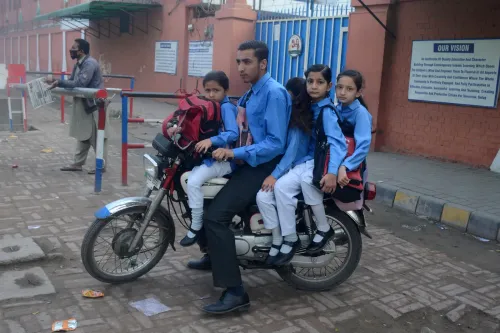
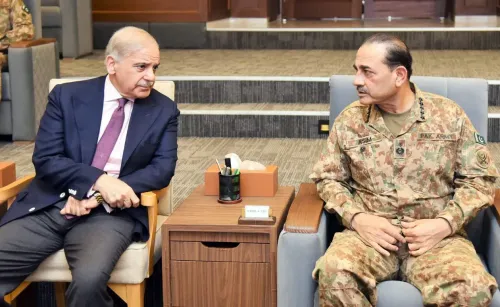
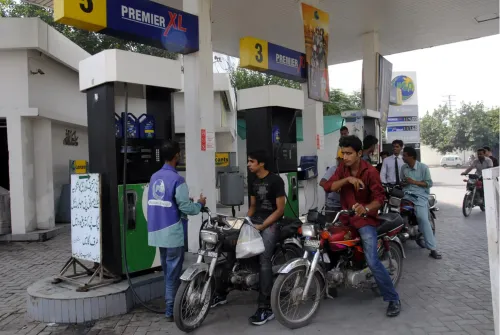
In March 2025, Prime Minister Shehbaz Sharif announced a two-week closure of schools and a mandatory shift to online classes for all higher education institutions. The stated reason was to manage the rising fuel prices triggered by the ongoing conflict in West Asia. However, development practitioners and education experts were quick to point out that this was far from an isolated decision.
Mehrin Shah, a development practitioner, wrote in Dawn that a review of news archives reveals a disturbing, recurring pattern of institutional closures — driven by reasons spanning security threats, the Covid-19 pandemic, climate change-induced crises, and smog emergencies. "Despite schools having reopened, there is no guarantee that it will not happen again," she cautioned.
Scale of Pakistan's Learning Crisis
According to the latest report by the Pakistan Institute of Education, 77 per cent of 10-year-olds in Pakistan are unable to read and comprehend a simple text — a figure that places the country among the most educationally vulnerable nations in the world. This pre-existing crisis is significantly worsened each time schools shut their doors.
In the 2023–24 academic year alone, schools in Pakistan remained closed for 97 days due to climate change-driven crises — accounting for a staggering 54 per cent of the normal academic calendar. This is not an anomaly; it reflects a systemic failure to protect learning continuity.
Pakistan was also among the first countries globally to shut schools during the Covid-19 pandemic. The consequences were catastrophic: more than 26 million students dropped out during the first wave, and only 50 per cent eventually returned. The majority of those who never came back were girls.
Gendered Impact and Child Safety Concerns
Beyond academic setbacks, school closures carry a severe gendered impact, particularly for girls in underprivileged communities. Schools serve not just as centres of learning but as safe spaces that protect children from child marriage and child labour. When those doors close, that protection disappears.
Shah emphasised that every closure heightens the risk of permanent school dropouts, especially among girls whose families may view continued education as less essential once they are already at home. This is a well-documented pattern in South Asia and one that Pakistan has repeatedly failed to adequately address through compensatory policy measures.
Remote Learning Is Not a Viable Fix for Most Students
Proponents of school closures often cite remote learning as an adequate substitute. Shah firmly challenged this assumption, pointing out that online education remains inaccessible to a large majority of Pakistani students due to multiple barriers: household distractions, lack of familial support, language comprehension gaps, and critically, limited access to the internet and digital devices.
She cited real-world examples from colleagues: one reported that teachers had instructed parents to cover lessons at home, with no plans to revisit the material upon return — effectively leaving children from illiterate households with no recourse. Another colleague noted her son spent the entire closure period playing video games, entirely disengaged from virtual learning.
"Who was going to teach those children not fortunate enough to have literate family members at home?" Shah asked pointedly in Dawn.
Systemic Failure Demands Structural Reform
Shah concluded with an urgent call to action: "An already strained education system should not be further tested through this shutdown practice. However, if such measures are deemed necessary and unavoidable, the education system must be seriously supported to protect student learning."
This demand reflects a broader frustration among Pakistani educators and civil society — that closures are announced reactively, without any parallel infrastructure to safeguard learning continuity for the country's most vulnerable children. Notably, Pakistan ranks among the lowest globally in education spending as a percentage of GDP, making the absence of robust contingency planning even more glaring.
As West Asia tensions show no sign of immediate resolution and climate-linked disruptions continue to intensify, education experts warn that Pakistan must urgently institutionalise a learning protection framework — or risk permanently losing an entire generation to illiteracy and dropout.
Point of View
Pakistan's next generation will pay the price of its leaders' indifference.
NationPress
22 Sept 2026
Frequently Asked Questions
Why did Pakistan close schools in March 2025?
Pakistan Prime Minister Shehbaz Sharif ordered a two-week school closure and shift to online classes in March 2025 to manage rising fuel prices caused by the conflict in West Asia. This was the latest in a long pattern of school shutdowns in Pakistan driven by various crises.
How many days were Pakistani schools closed due to climate change?
Pakistani schools remained closed for 97 days during the 2023–24 academic year due to climate change-driven crises, which amounts to 54 per cent of the normal academic year. This made Pakistan one of the worst-affected countries globally in terms of climate-linked school disruptions.
What percentage of Pakistani children cannot read?
According to the Pakistan Institute of Education's latest report, 77 per cent of 10-year-olds in Pakistan are unable to read and comprehend a simple text. This places Pakistan among the most educationally vulnerable nations in the world.
How did Covid-19 school closures impact Pakistan's students?
More than 26 million students dropped out of schools in Pakistan during the first wave of the Covid-19 pandemic, and only 50 per cent eventually returned. The majority of those who did not return were girls, worsening the gender gap in education.
Why is remote learning not effective for Pakistani students?
Remote learning in Pakistan is hindered by a lack of internet access, absence of digital devices, household distractions, language barriers, and the absence of literate family members who can support learning at home. These barriers make online education inaccessible to a large majority of Pakistani students.