Jaishankar in Tokyo: India, Japan must secure national interests to stabilise Indo-Pacific
Synopsis
At Raisina Tokyo 2026, EAM Jaishankar laid out the most comprehensive public articulation of India's Indo-Pacific logic to date — five structural forces from pandemic shocks to weaponised chokepoints — and made a direct pitch for Japan to see India not as it was, but as it is. With a Quad leaders meeting in Manila just 24 hours earlier, the visit signals a sharp acceleration in India's Indo-Pacific diplomatic tempo.
Key Takeaways
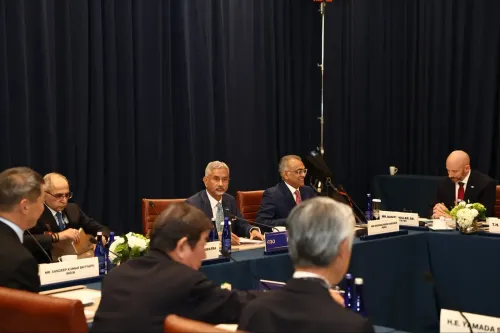
EAM S Jaishankar addressed Raisina Tokyo 2026 on 18 November 2026 , on the sidelines of the fourth India-Japan 2+2 Dialogue in Tokyo .
He identified five global forces reshaping the world order: systemic shocks, weaponisation of economic tools, rising risk-taking, de-risking/diversification, and the premium on trusted partnerships.
Jaishankar called on Japan to update its understanding of India's transformation since 2014 , citing advances in infrastructure, skilling, digital, space, and defence.
He highlighted priority cooperation areas: advanced manufacturing, semiconductors, critical minerals, ICT, clean energy , and pharmaceuticals .
Both nations are Quad members and G4 partners; Jaishankar noted he had attended a Quad leaders meeting in Manila the previous evening.
He framed expanding India-Japan ties as essential to building a stable, multipolar Indo-Pacific and a multipolar world.
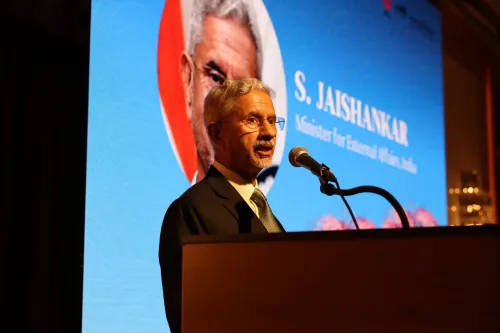
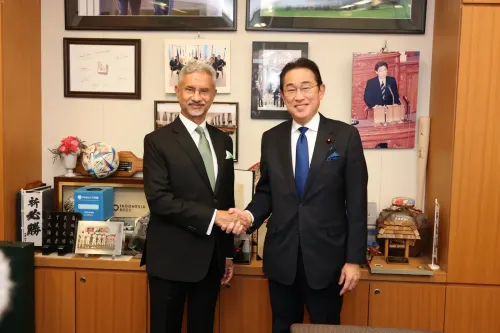
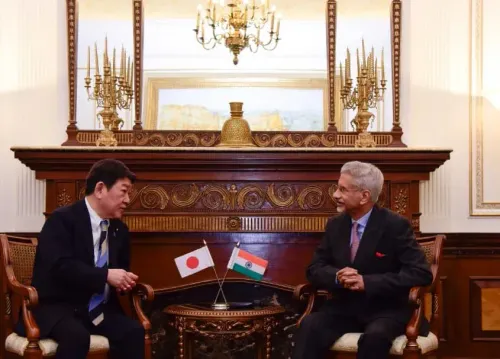
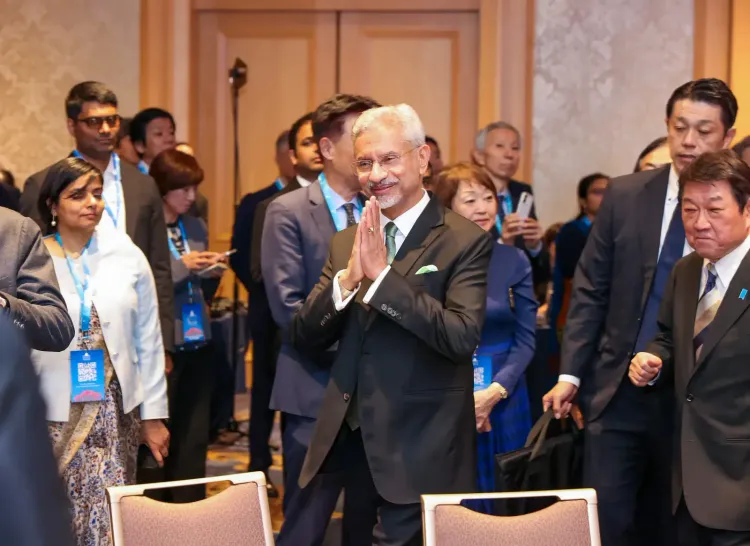
External Affairs Minister S Jaishankar on 18 November 2026 called on India and Japan to firmly secure their own national interests while championing freedom of choice, growth, and stability across the Indo-Pacific. Speaking at the inauguration of Raisina Tokyo 2026 in Tokyo — an event held on the sidelines of the fourth India-Japan 2+2 Dialogue — Jaishankar laid out a detailed strategic framework alongside Japanese Foreign Minister Toshimitsu Motegi.
Five Defining Features of Today's World
Jaishankar opened by identifying five structural forces reshaping the global order. The first, he said, is the series of shocks to the international system — from the Covid pandemic to two major ongoing conflicts, compounded by trade disruptions and economic volatility that have rattled decades of globalisation.
The second is what he described as the weaponisation of economic tools: 'Whether it is resources or energy, market access or technology, or indeed even finance, every aspect of global economic activity has been more and more openly weaponized by relevant players,' he said. Physical and virtual chokepoints, he added, have been drawn into strategic agendas, while the era of shared rules and norms is 'rapidly eroding.'
Third, Jaishankar flagged a rise in risk-taking behaviour — a 'mindset of extreme competition along with a temptation to translate leads into outcomes' — permeating multiple domains. Fourth, he pointed to de-risking and diversification as the logical response, with major economies prioritising reliability and supply-chain multiplicity over pure cost efficiency. 'The dangers of over-concentration are increasingly being felt,' he noted.
The fifth and 'final solution,' in his framing, is trusted partnerships. 'In such uncertain times, nations, as indeed enterprises, put a much greater value on trusted partners and shorter supply chains,' Jaishankar said.
India-Japan as Complementary Strategic Partners
Jaishankar argued that all five forces are 'very strongly imprinted' on the Indo-Pacific landscape, making the India-Japan relationship more consequential than ever. He described the two countries as natural complements: 'We have never had a clash of interests and indeed, only congenial relations throughout history. Public perceptions of each other's society have been consistently positive.'
He identified three catalysts for a new momentum in bilateral ties: the larger strategic context, strong political leadership — specifically citing Prime Ministers Modi and Takaichi — and a 'contemporary and informed understanding' of the opportunities the partnership can unlock, particularly around economic security.
What Japan Should Recognise About India
In a pointed message to Japanese policymakers and industry, Jaishankar urged Japan to update its view of India, noting the country's transformation since 2014. He highlighted India's infrastructure progress, domestic market scale, and improvements in human resource development — visible, he said, in education, skilling, innovation, startups, digital, space, drones, health, and defence.
He called for deeper collaboration in advanced manufacturing, semiconductors, critical minerals, ICT, clean energy, and pharmaceuticals, and for the development of joint frameworks in security and defence, backed by stronger people-to-people links.
Quad, G4, and the Multipolar Vision
Jaishankar also pointed to the breadth of India-Japan multilateral convergence, noting that both countries are members of the Quad — adding that he had just come from a leaders-level Quad meeting in Manila the previous evening. The two nations are also partners in the G4 initiative for United Nations reform and participate in the East Asia Summit platforms.
'By expanding India-Japan ties, we will not only serve to stabilise and secure the Indo-Pacific but add an important pillar to an increasingly multi-polar Asia and a multipolar world,' he said. The remarks signal that New Delhi views the India-Japan axis as a structural anchor for the broader regional order, not merely a bilateral economic arrangement.
Point of View
Suggesting New Delhi believes Tokyo's industry and policy establishment is still operating on an older mental model. With a Quad leaders meeting in Manila the same week and the 2+2 Dialogue as the frame, India is clearly positioning the Indo-Pacific as the centrepiece of its strategic identity — and Japan as its most critical like-minded partner in that architecture.
NationPress
18 Nov 2026
Frequently Asked Questions
What did EAM Jaishankar say at Raisina Tokyo 2026?
Jaishankar called on India and Japan to secure their national interests while promoting freedom of choice, growth, and stability in the Indo-Pacific. Speaking at the inauguration of Raisina Tokyo 2026 on 18 November 2026, he outlined five structural forces reshaping the global order and argued that trusted bilateral partnerships are the most effective response.
What is the India-Japan 2+2 Dialogue?
The India-Japan 2+2 Dialogue is a ministerial-level strategic forum involving both countries' foreign and defence ministers. The fourth edition was held in Tokyo in November 2026, covering security, defence, and strategic cooperation in the Indo-Pacific.
What areas of cooperation did Jaishankar highlight for India and Japan?
Jaishankar called for deeper collaboration in advanced manufacturing, semiconductors, critical minerals, ICT, clean energy, and pharmaceuticals. He also urged Japan to develop joint security and defence frameworks with India and to strengthen people-to-people links.
How does the Quad factor into India-Japan ties?
Both India and Japan are members of the Quad, alongside the United States and Australia. Jaishankar noted he had attended a Quad leaders-level meeting in Manila the evening before his Tokyo speech, underscoring the depth of the multilateral strategic convergence between the two nations.
Why did Jaishankar urge Japan to 'update its picture' of India?
Jaishankar argued that India has undergone a significant transformation since 2014 — in infrastructure, domestic market scale, education, skilling, digital capability, space, drones, and defence — and that Japanese policymakers and businesses should reassess India as a manufacturing and strategic partner based on this current reality, not an outdated one.