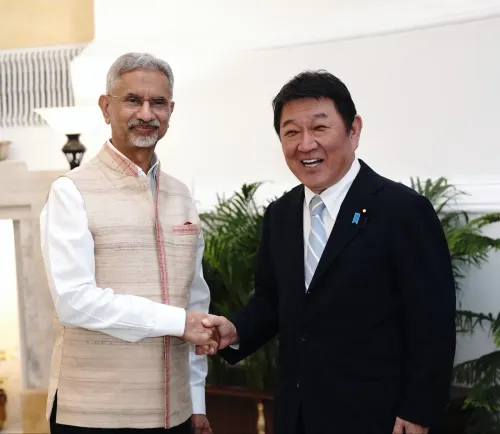
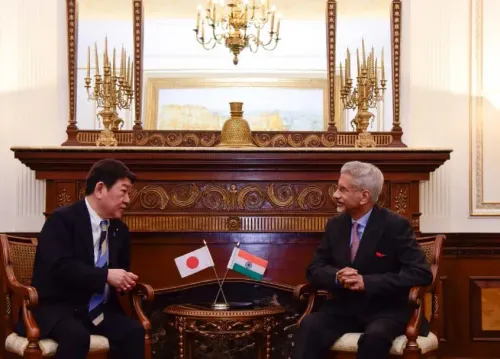
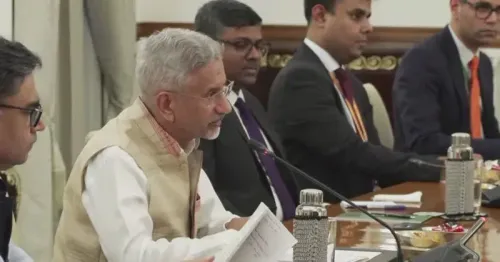
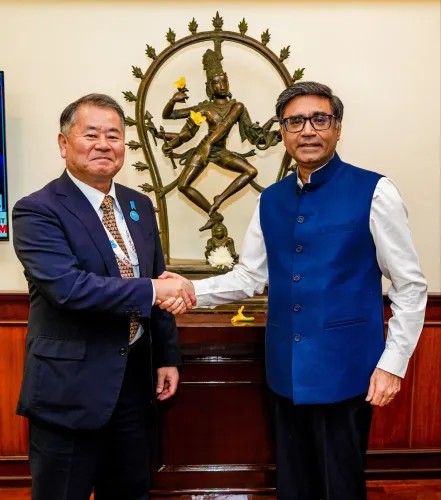
Jaishankar: Japanese firms setting up shop in India in semiconductors, advanced manufacturing
Synopsis
EAM Jaishankar's New York remarks reveal a qualitative shift in the India-Japan relationship — Japanese firms are no longer just trading with India, they are building production bases there, including in the high-stakes semiconductor sector. Paired with expanding defence exercises and Quad alignment, the partnership is quietly becoming one of India's most consequential strategic relationships.
Key Takeaways
Jaishankar said on 29 September in New York that Japanese companies are increasingly setting up operations in India .
Key sectors of Japanese interest include semiconductors , chemicals , and advanced manufacturing , with firms looking to leverage Indian talent and partnerships.
Jaishankar described the India-Japan economic relationship as 'more investment centric' than trade-driven, with supply chain diversification as the key driver.
Defence ties are also expanding, including a Japanese Air Force exercise held in India — described as significant by Japanese standards.
The Quad framework — with India , Japan , Australia , and the United States — was cited as a useful structure for broadening Japan's strategic partnerships.
Jaishankar flagged low numbers of Indian students in Japan and called for more people-to-people exchanges, noting rising demand for Japanese-language teaching in India.
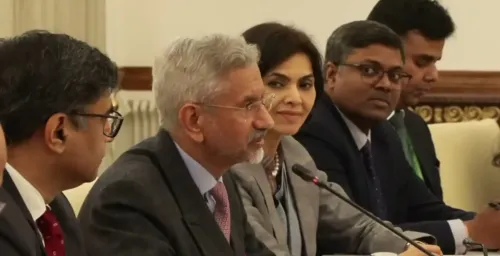
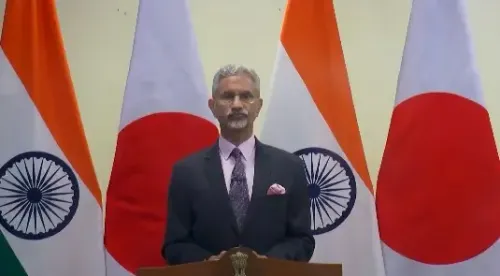
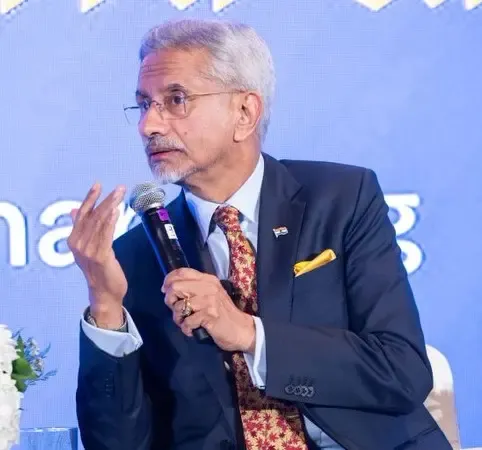
External Affairs Minister S. Jaishankar on 29 September said Japanese companies are increasingly looking to establish operations in India, spanning semiconductors, chemicals, and advanced manufacturing, as the India-Japan partnership deepens across both economic and security dimensions. Speaking at an event in New York, Jaishankar described the bilateral relationship as distinctly investment-driven rather than trade-led.
Investment Over Trade
'Ours with Japan is more investment centric,' Jaishankar said, underlining that the defining feature of the economic relationship was capital deployment, not just the exchange of goods. He noted that Japanese businesses were increasingly seeking to diversify their production bases, and India was emerging as a preferred destination in that calculus.
'I can see Japanese companies really setting up shop in India,' he said, pointing to operations being built around Indian talent and partnerships with Indian firms. The minister specifically identified semiconductors, chemicals, and other forms of advanced manufacturing as sectors attracting Japanese interest.
Defence and Security Ties Expanding
Beyond economics, Jaishankar said the defence and security relationship between the two countries was also gaining momentum. He described both nations as maritime powers with overlapping interests in the Indo-Pacific, and said their long history of strong bilateral relations provided a stable foundation for deeper security cooperation.
He pointed to an increase in joint exercises and shared military activities, noting that a Japanese Air Force exercise had recently taken place in India — though he was uncertain whether it occurred in late last year or early this year. He described such steps as significant by Japanese standards, given the country's traditionally cautious approach to overseas defence engagement.
Building a defence trade relationship with Japan was not straightforward, Jaishankar acknowledged, which made the expansion of such contacts all the more meaningful.
The Quad as a Cooperative Framework
Jaishankar cited the Quad — comprising India, Japan, Australia, and the United States — as a useful structural framework for advancing cooperation. He suggested that having an agreed multilateral architecture was particularly valuable for Japan as it broadened its strategic partnerships beyond traditional alliances.
This comes amid a broader reconfiguration of Indo-Pacific alignments, with all four Quad members stepping up coordination on supply chain resilience, maritime security, and critical technology.
People-to-People and Language Ties
Jaishankar also flagged the human dimension of the relationship. India wants more student exchanges and more Indian students studying in Japan, he said, while acknowledging that the current number remains low. He also noted a rising demand for Japanese-language instruction inside India — a cultural signal that public interest in the partnership is growing beyond government and corporate circles.
What This Means for India's Industrial Strategy
Japan has historically been a significant investor in Indian infrastructure and industry. The renewed push into semiconductors and advanced manufacturing aligns with India's broader ambition to position itself as a global production hub, particularly as companies worldwide seek to reduce dependence on single-country supply chains. Notably, this is not the first time Japanese firms have been cited as interested in Indian manufacturing — but the explicit mention of semiconductors signals a qualitative shift toward high-technology sectors that India has been actively courting.
With sectoral interest from Japan converging with India's own industrial policy priorities, the coming months will test whether boardroom intent translates into on-ground investment commitments.
Point of View
Not just procurement. The semiconductor mention is the headline buried inside the headline: Japan's chip-adjacent supply chain, already under pressure to diversify away from China, could find India a credible alternative if policy execution matches the rhetoric. What mainstream coverage tends to underplay is the defence dimension — a Japanese Air Force exercise on Indian soil is a quiet but consequential milestone for a country that has historically kept its military footprint tightly constrained. The Quad is doing real work here, normalising security cooperation that would have been diplomatically complex to negotiate bilaterally. The people-to-people gap — low student numbers, nascent language ties — remains the relationship's soft underbelly, and closing it will determine whether this partnership has genuine societal depth or stays an elite-level strategic arrangement.
NationPress
29 Sept 2026
Frequently Asked Questions
What did EAM Jaishankar say about Japanese companies investing in India?
Jaishankar said Japanese firms are increasingly setting up operations in India, particularly in semiconductors, chemicals, and advanced manufacturing. He described the India-Japan relationship as 'more investment centric' than trade-driven, with companies seeking to diversify their production bases.
Which sectors are Japanese companies targeting in India?
According to Jaishankar, Japanese firms are showing interest in semiconductors, chemicals, and other forms of advanced manufacturing. He said these companies are looking to utilise Indian talent and build partnerships with Indian firms.
How are India-Japan defence ties developing?
Jaishankar said defence and security cooperation is growing, with more joint exercises and shared activities. He cited a Japanese Air Force exercise held in India — which he described as significant by Japanese standards — as an example of the expanding military relationship.
What role does the Quad play in the India-Japan relationship?
Jaishankar described the Quad — comprising India, Japan, Australia, and the United States — as a useful cooperative framework. He said the agreed multilateral structure helps Japan broaden its strategic partnerships in the Indo-Pacific.
Why is Japan interested in diversifying production to India?
According to Jaishankar, Japanese businesses increasingly see value in having more than one source of production, driven by global supply chain diversification trends. India's talent pool and growing industrial base are cited as key attractions for Japanese investors.