Will a Government for 180 Million People be Established in Bangladesh?
Synopsis
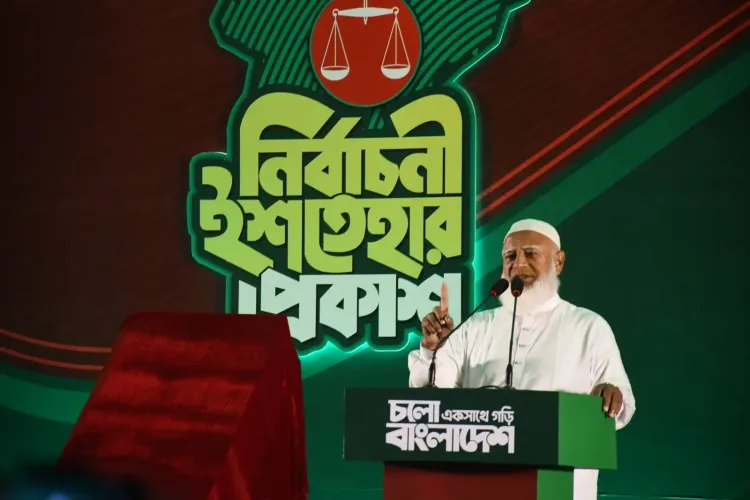
In a significant declaration, Jamaat-e-Islami Chief Shafiqur Rahman voiced his hopes for a government that represents the 180 million citizens of Bangladesh. Amidst allegations of voter inducement, he remains optimistic about fair elections. What does this mean for Bangladesh's political landscape?
Key Takeaways
Jamaat-e-Islami aims for a government representing the people.
Concerns around voter inducement have emerged.
Free and fair elections are emphasized as crucial.
Financial incentives offered to sway voters.
The political landscape may shift significantly post-elections.
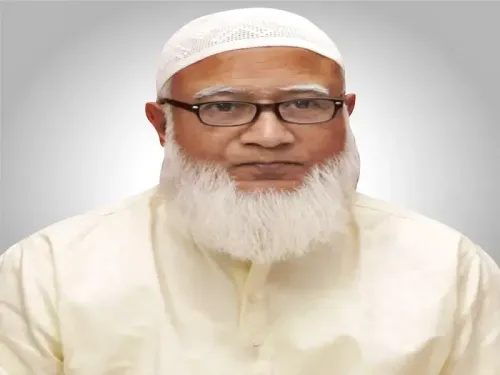
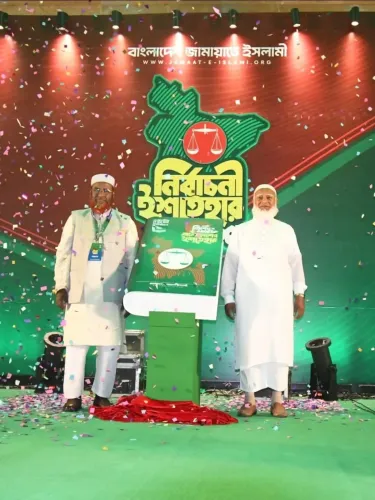
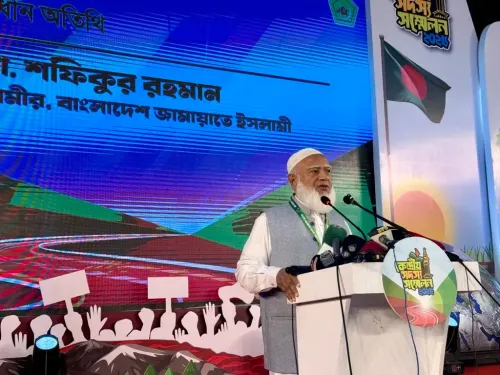
Dhaka, Feb 12 (NationPress) The Chief of the radical Islamist party Jamaat-e-Islami, Shafiqur Rahman, expressed his hope on Thursday that his party would gain power through the voters' mandate in the crucial national elections in Bangladesh, according to local media reports.
Speaking to reporters in Dhaka after casting his vote at the Monipur High School and College polling station, Rahman stated, “If the elections are conducted in a free and fair manner, we will accept the outcome. Others must also respect the people's verdict,” as quoted by Bangladesh’s prominent newspaper, The Daily Star.
“We pray for a peaceful, fair election devoid of violence and occupation. We aspire to create a government that belongs not to any individual, family, or party, but to the 180 million citizens of this nation. We are optimistic about establishing such a government,” he remarked.
However, Jamaat-e-Islami and its leader, Shafiqur Rahman, have faced allegations of leveraging religion and financial incentives to sway voters in their aim to form Bangladesh's inaugural Islamist-led government.
An NDTV report highlighted that the Jamaat coalition has circulated pamphlets nationwide, promising 15,000 Bangladeshi taka to voters who support the party.
The pamphlet claims that families who vote for the party will have their afterlife “free of sin” and will achieve “salvation from grave punishment.”
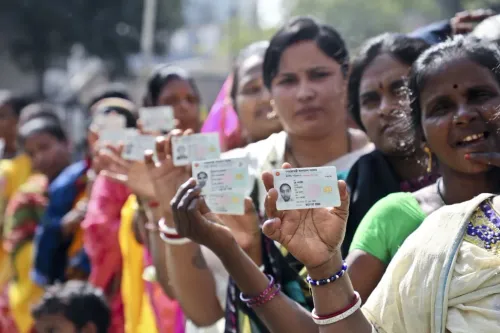
According to the document accessed by NDTV, voters were instructed to bring a camera phone to polling booths to photograph their stamped ballots as proof of voting for Shafiqur Rahman.
“You must ensure that all family members vote for the 'Dari Palla' (weighing scale) symbol. This commitment guarantees your afterlife will be free of sin and brings salvation from severe punishment. Arrive early on election day and bring a camera phone to take a photo after stamping your ballot as proof,” the document stated.
The party indicated that the promised 15,000 taka would be disbursed to voters through bKash or cash after the election results, with voters also being promised advanced payment via bKash.
Point of View
My perspective aligns with the principle of journalistic integrity, focusing on bringing unbiased coverage to the forefront. The situation surrounding Jamaat-e-Islami reflects the complex interplay of ideology, political strategy, and public sentiment in Bangladesh. It is crucial to report these developments factually and without bias.
NationPress
1 Oct 2026
Frequently Asked Questions
What is Jamaat-e-Islami's stance in the election?
Jamaat-e-Islami's Chief Shafiqur Rahman expresses optimism about forming a government that represents the 180 million people of Bangladesh, emphasizing the importance of free and fair elections.
What allegations have been made against Jamaat-e-Islami?
The party has faced accusations of using religious and financial incentives to attract voters, including distributing pamphlets promising monetary rewards.
What financial incentives are offered to voters?
Jamaat-e-Islami has reportedly promised 15,000 Bangladeshi taka to voters who support the party, with additional promises of advanced payments.
What role does the electoral process play in this context?
The electoral process is critical, as the party's success hinges on conducting free and fair elections, which Rahman stresses as vital for legitimacy.
How does this impact Bangladesh's political landscape?
The developments surrounding Jamaat-e-Islami could redefine political alliances and voter behavior in Bangladesh, shaping the future of the nation's governance.