Defence Secretary Rajesh Kumar Singh visits JMSDF Kure Base, meets Vice Admiral Matsumoto
Synopsis
India's Defence Secretary Rajesh Kumar Singh inspected Japan's JS Niyodo stealth frigate at JMSDF Kure Naval Base and co-chaired the 8th India-Japan Defence Policy Dialogue in Tokyo — laying the groundwork for a 2+2 ministerial meeting later this year and signalling a clear acceleration in bilateral maritime and defence-industrial cooperation.
Key Takeaways
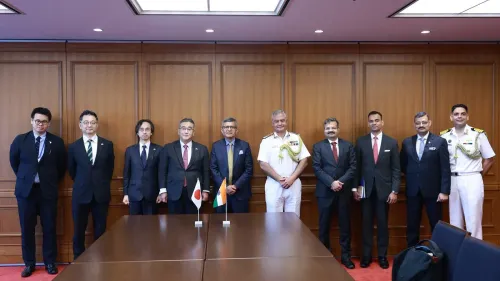
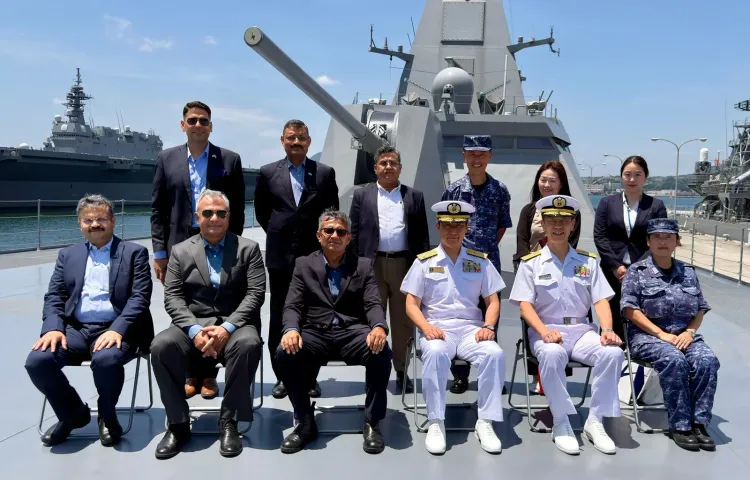
Defence Secretary Rajesh Kumar Singh visited JMSDF Kure Naval Base , Hiroshima on 14 July 2026 and inspected the JS Niyodo , the 7th Mogami-class stealth frigate.
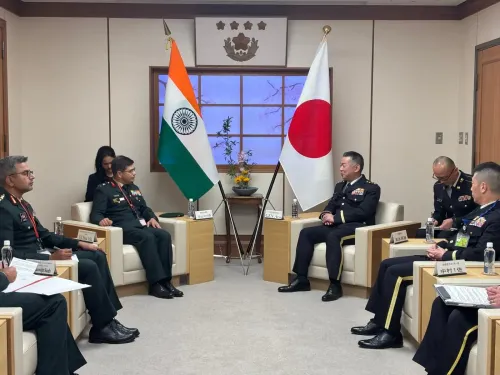
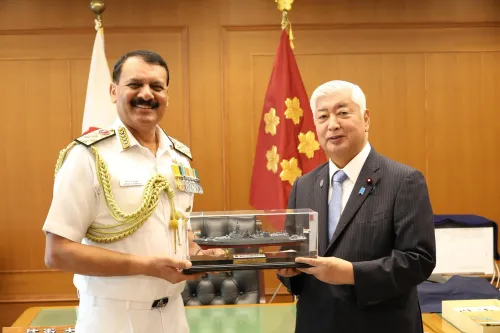
Singh met Vice Admiral Matsumoto Tamotsu , Commandant of the Kure District, reaffirming India-Japan maritime security ties.
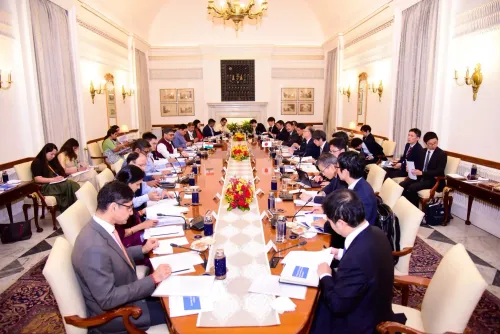
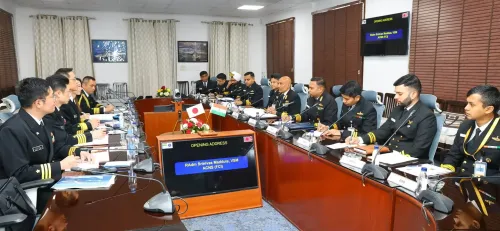
The 8th India-Japan Defence Policy Dialogue was co-chaired by Singh and Vice Minister Kano Koji in Tokyo on 13 July 2026 .
Discussions covered cyber security, space, defence industrial collaboration , and maritime technology cooperation.
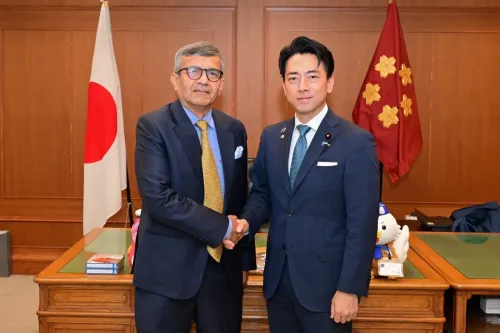
Singh called on Defence Minister Shinjiro Koizumi and extended an invitation for a visit to India.
Both sides discussed the forthcoming 2+2 Ministerial Dialogue , scheduled later in 2026.
Defence Secretary Rajesh Kumar Singh on Tuesday, 14 July 2026, visited the Japan Maritime Self-Defense Force (JMSDF) Kure Naval Base in Hiroshima, where he met Vice Admiral Matsumoto Tamotsu, Commandant of the Kure District, and inspected the JS Niyodo — the 7th Mogami-class stealth frigate of the JMSDF. The visit, part of Singh's broader official tour of Japan, underscored the deepening maritime security partnership between India and Japan.
Kure Naval Base Visit and JS Niyodo Inspection
Singh's tour of the Kure Naval Base included a close look at the JS Niyodo, one of Japan's most advanced stealth frigates in the Mogami class. The Mogami-class vessels represent the cutting edge of Japan's surface warfare capability, and the inspection signals India's interest in deepening maritime technology exchanges. According to the Ministry of Defence's Directorate of Public Relations, the visit 'reaffirmed the commitment of India-Japan to further strengthen maritime security cooperation and deepen defence ties.'
8th India-Japan Defence Policy Dialogue in Tokyo
A day earlier, on 13 July 2026, Singh co-chaired the 8th India-Japan Defence Policy Dialogue in Tokyo alongside Vice Minister of Defence for International Affairs Kano Koji. The dialogue reviewed the full spectrum of bilateral defence engagements — spanning military-to-military exchanges, joint headquarters cooperation, maritime cooperation, defence exercises, capacity building, and equipment and technology cooperation including maritime technology. Both sides expressed satisfaction at the growing convergence on regional and global security issues and agreed to continue close coordination in the Indo-Pacific.
The two nations reiterated their shared commitment to a 'free, open, inclusive and rules-based Indo-Pacific' founded on respect for international law. Discussions also covered emerging domains such as cyber security, space, defence industrial collaboration, and technological innovation.
Singh Calls on Japan's Defence Minister Koizumi
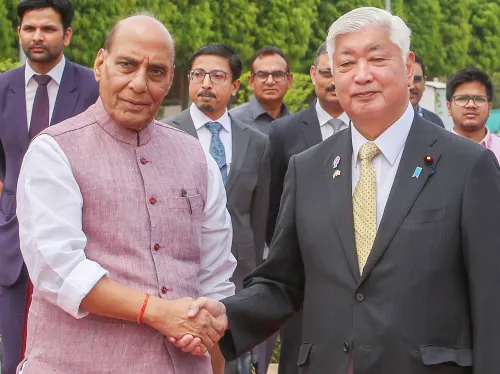
Singh also called on Japanese Minister of Defence Shinjiro Koizumi, conveying greetings from Defence Minister Rajnath Singh and extending a formal invitation for Koizumi to visit India at the earliest opportunity. The two sides acknowledged the growing momentum of the India-Japan Special Strategic and Global Partnership and built on the outcomes of Japanese Prime Minister Sanae Takaichi's recent visit to India. Wide-ranging discussions covered regional security, maritime cooperation, and defence industrial collaboration.
Tribute at Self-Defense Forces Memorial
Singh also laid a wreath at the Self-Defense Forces Memorial Stone in Tokyo, paying tribute to members of the Japan Self-Defense Forces (JSDF) who have made the supreme sacrifice in service of their nation — a gesture that underlined the mutual respect at the heart of the bilateral relationship.
What Comes Next
Both sides discussed probable outcomes for forthcoming ministerial visits, including the 2+2 Ministerial Dialogue scheduled later this year. The steady expansion of defence cooperation and the importance of maintaining regular high-level exchanges were stressed by both delegations. With the 2+2 on the horizon, the groundwork laid during this visit is expected to shape the next phase of India-Japan defence architecture in the Indo-Pacific.
Point of View
Culminating in an invitation for Koizumi to visit India, suggest New Delhi is deliberately accelerating the defence relationship ahead of the 2+2 this year. What mainstream coverage underplays is the defence-industrial dimension: with Japan having recently relaxed its arms export rules, the question of co-production or technology transfer — not just exercises — may soon define the next chapter of this partnership.
NationPress
14 Jul 2026
Frequently Asked Questions
Why did Defence Secretary Rajesh Kumar Singh visit Japan in July 2026?
Singh visited Japan to co-chair the 8th India-Japan Defence Policy Dialogue in Tokyo on 13 July 2026 and to strengthen bilateral defence ties. His visit also included an inspection of the JMSDF Kure Naval Base in Hiroshima and a call on Japanese Defence Minister Shinjiro Koizumi.
What is the JS Niyodo and why was it significant to visit?
JS Niyodo is the 7th frigate of Japan's Mogami class — among the most advanced stealth surface combatants in the JMSDF fleet. Singh's inspection of the vessel signals India's interest in Japan's maritime technology, an area both sides have flagged for deeper cooperation.
What was discussed at the 8th India-Japan Defence Policy Dialogue?
The dialogue covered the full spectrum of bilateral defence engagement, including military-to-military exchanges, maritime cooperation, defence exercises, cyber security, space, and defence industrial collaboration. Both sides also discussed the upcoming 2+2 Ministerial Dialogue scheduled for later in 2026.
What is the India-Japan Special Strategic and Global Partnership?
It is the highest tier of the bilateral relationship between India and Japan, encompassing political, economic, and defence dimensions. In the defence sphere, it provides the framework for joint exercises, equipment cooperation, and the annual Defence Policy Dialogue that Singh co-chaired in Tokyo.
What comes next in India-Japan defence relations?
Both sides are preparing for a 2+2 Ministerial Dialogue — involving the defence and foreign ministers of both countries — scheduled later in 2026. Singh also extended a formal invitation to Japanese Defence Minister Koizumi to visit India, which could further accelerate cooperation on maritime technology and defence industrial collaboration.