Japan passes SDF reserve law easing public employee dual service
Synopsis
Japan has cleared a significant legal barrier to SDF reserve readiness: public employees can now hold dual status as reserve personnel without repeated supervisor approvals, and keep their full civilian pay during call-ups. With only 70 per cent of reserve slots filled and the LDP pushing to revise all three key security documents this year, Tokyo is moving faster than at any point since its post-war pacifist settlement.
Key Takeaways
Japan's House of Councillors passed the SDF concurrent-service law on 11 June .
National and local public employees can now serve as SDF reserve personnel without seeking repeated supervisor approvals.
Employees called up for reserve training will receive full pay from their regular employers during the period.
Currently, about 70 per cent of SDF reserve positions are filled; the law aims to raise that rate.
The ruling Liberal Democratic Party (LDP) separately approved a draft to revise Japan's three key security documents within the year, calling for higher defence spending.
The measures have sparked widespread public concern in Japan over the country's evolving security posture.
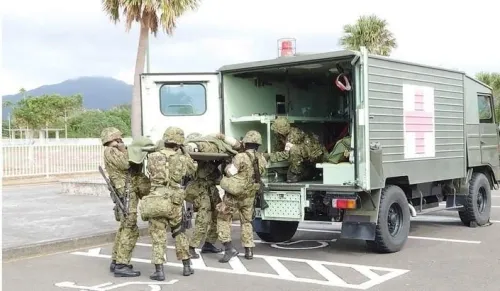
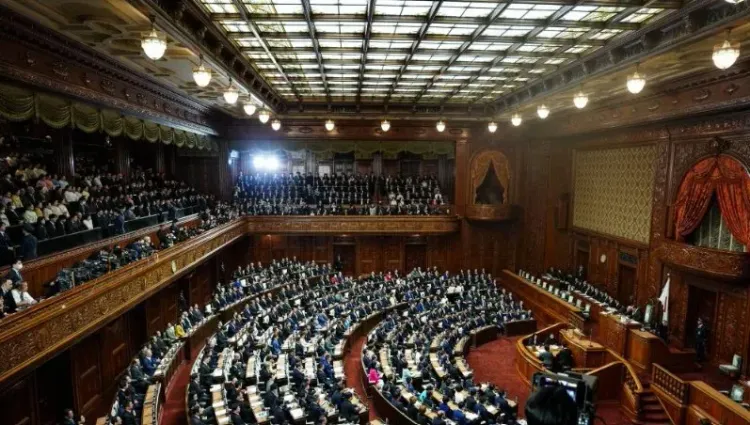
Japan's House of Councillors on Wednesday, 11 June passed legislation that allows national and local public employees to concurrently serve as Self-Defence Forces (SDF) reserve personnel, significantly lowering the barriers to their mobilisation during emergencies. The move is part of Tokyo's accelerating push to bolster its defence readiness amid regional security pressures.
What the New Law Provides
Under the Act on Special Provisions for Concurrent Employment of National and Local Public Employees to Ensure the Smooth Execution of Duties by Self-Defence Force Reserve Personnel and Others, public employees called up for SDF reserve training will continue to receive their full pay from their regular employers throughout the call-up period.
Additionally, once a public employee secures supervisor approval to become a reserve member, that approval covers all future training and related duties — eliminating the need for repeated authorisation each time they are called upon.
Current State of SDF Reserve Strength
SDF reserve personnel ordinarily remain in civilian roles and are obligated to attend training for a set number of days annually. As of now, approximately 70 per cent of available SDF reserve positions are filled, a shortfall that the new legislation directly seeks to address by making dual service more administratively accessible.
Broader Defence Policy Shift
The law is one of several legislative moves Japan has undertaken in recent months to strengthen what the government terms its 'defence capabilities.' On Tuesday, the ruling Liberal Democratic Party (LDP) approved a draft proposal to revise the country's three key security documents before the end of the year. That proposal calls for further increases in defence spending and explicitly urges raising the manning rate of SDF reserve personnel to prepare for contingencies.
Notably, these developments have prompted widespread public concern in Japan, where constitutional constraints on military expansion remain a sensitive political issue.
What Comes Next
With the LDP's security document revision on the legislative calendar and defence spending targets already elevated, analysts expect further structural changes to Japan's reserve and active-duty frameworks. The current reforms signal a sustained, multi-year effort to close capability gaps — particularly in reserve force readiness — rather than a one-off policy adjustment.
Point of View
It forms part of a deliberate effort to normalise a more muscular military posture — one that would have been politically unthinkable a decade ago. The 70 per cent reserve fill rate is a structural weakness Tokyo can no longer afford to paper over, yet the deeper question is whether administrative ease alone will attract enough civilian recruits, or whether the government will eventually need to revisit compensation and service terms more fundamentally. Public concern is real, and the LDP's ability to manage the constitutional optics of this shift will be as important as the legislation itself.
NationPress
26 Oct 2026
Frequently Asked Questions
What does Japan's new SDF reserve personnel law do?
The law allows national and local public employees to concurrently serve as Self-Defence Forces reserve personnel without needing repeated supervisor approval for each training session. It also guarantees that employees called up for reserve duties continue to receive their full pay from their regular employer during that period.
Why did Japan pass this legislation?
Japan passed the law to lower administrative barriers to SDF reserve service and improve the reserve force fill rate, which currently stands at about 70 per cent. It is part of a broader government effort to strengthen defence capabilities amid regional security concerns.
How does the new approval process work for public employees?
Under the new law, a public employee needs supervisor approval only once — when they initially become a reserve member. After that, they are not required to seek fresh approval each time they participate in training or undertake related reserve duties.
What other defence measures is Japan pursuing alongside this law?
The ruling Liberal Democratic Party approved a draft proposal on Tuesday to revise Japan's three key security documents before year-end. That proposal calls for further increases in defence spending and urges raising the SDF reserve manning rate to prepare for contingencies.
Has the legislation caused any public controversy in Japan?
Yes, the legislation and the broader defence build-up have sparked widespread public concern in Japan, where constitutional limits on military expansion remain a deeply sensitive political issue.