Japan WWII poison gas factory records unearthed, reveal chemical weapons ops
Synopsis
A Japanese historian has uncovered official wartime records from Japan's National Archives documenting the day-to-day operations of a WWII poison gas bomb factory — including worker injuries previously known only through survivor testimony. The find adds rare documentary weight to long-contested accounts of Japan's chemical weapons programme and the militarist state that drove it.
Key Takeaways
Historian Seiya Matsuno of Meiji Gakuin University uncovered the records at Japan's National Archives .
The key document covers fiscal 1941 operations at the Sone Manufacturing Plant , Kitakyushu City , Fukuoka Prefecture .
The plant filled artillery shells with toxic agents and assembled poison gas bombs, smoke shells, and incendiary bombs.
Records document workplace accidents and worker injuries — previously attested only through survivor testimony.
Matsuno's findings were published in the June 2026 issue of Japanese magazine Sekai .
Matsuno argues the records illustrate how Japan's militarist government subordinated society and human life to the war effort.
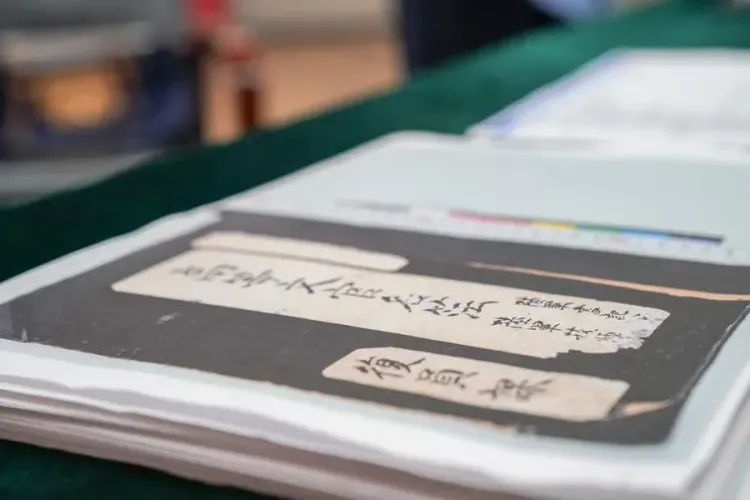
Newly discovered wartime documents have exposed the inner workings of a Japanese poison gas bomb factory during World War II, offering documentary evidence of chemical weapons production, worker injuries, and a militarist state that systematically subordinated society to its war machine. The records were uncovered at Japan's National Archives by historian Seiya Matsuno of the International Peace Research Institute of Meiji Gakuin University.
What the Documents Reveal
The central document, titled 'Compilation of Reports on the Implementation of Military Mobilisation,' is a production report covering fiscal 1941 operations at the Sone Manufacturing Plant of the Tokyo Second Army Arsenal. Matsuno analysed the material and published his findings in the June 2026 issue of the Japanese magazine Sekai.
The Sone plant, formerly located in Kitakyushu City in Fukuoka Prefecture, was responsible for filling artillery shells with toxic chemical agents and assembling poison gas bombs. The facility also manufactured smoke shells and incendiary bombs, according to the records.
Worker Accidents and Human Cost
The documents detail accidents that occurred during poison gas bomb production and the injuries suffered by workers on the factory floor. Until now, such incidents had been known almost exclusively through testimonies from former employees. These newly discovered records provide the first documentary corroboration of those survivor accounts, lending them fresh evidentiary weight.
Wartime Expansion and the Militarist System
According to Matsuno's research, the Sone plant expanded its workforce and boosted output during fiscal 1941 — a period when Japan was simultaneously prosecuting its war in China, preparing for a possible conflict with the Soviet Union, and planning military expansion into Southeast Asia. The records illustrate how production targets were driven by an escalating multi-front strategic calculus.
Matsuno emphasised that the Japanese military's deployment of chemical weapons in China and elsewhere violated international law. He further noted that the military conducted human experiments and committed other war crimes, which he described as reflecting the brutal character of Japan's wartime aggression. Under militarist rule, dissenting voices were systematically suppressed as the country became increasingly consumed by war fervour, he said.
Why This Matters for Historical Memory
Matsuno stressed that uncovering the realities of wartime history is essential to preventing similar tragedies from recurring. He argued that understanding how Japan became a country that inflicted serious harm on many Asian nations — and examining the conditions that enabled such developments — remains an important and unfinished task for contemporary Japanese society. The newly unearthed records add a rare layer of official documentation to a chapter of history that has often relied on oral testimony alone.
The findings come as debates over wartime accountability and historical memory continue to surface across East Asia, and as archival research increasingly challenges official narratives with primary-source evidence.
Point of View
Long dismissed or minimised in certain political quarters, now has official documentary backing. Japan's chemical weapons use in China remains a live diplomatic and historical fault line, and primary-source evidence of this scale makes denial harder to sustain. Matsuno's framing — that the militarist state subordinated all of society, including dissent, to the war machine — is a pointed intervention in Japan's ongoing domestic debate over how to teach and acknowledge its wartime conduct. The question is whether archival revelations translate into institutional reckoning, or remain confined to academic journals.
NationPress
24 Sept 2026
Frequently Asked Questions
What did the newly discovered Japanese wartime records reveal?
The records detail the operations of the Sone Manufacturing Plant in Kitakyushu City, which filled artillery shells with toxic agents and assembled poison gas bombs during fiscal 1941. They also document workplace accidents and worker injuries that had previously been known only through survivor testimony.
Who discovered the wartime documents and where?
Historian Seiya Matsuno of the International Peace Research Institute of Meiji Gakuin University uncovered the documents at Japan's National Archives. He published his analysis in the June 2026 issue of the Japanese magazine Sekai.
Why are these records historically significant?
They provide the first official documentary evidence corroborating survivor accounts of accidents and injuries at Japan's poison gas production facilities. Until now, such incidents were largely attested only through oral testimony, making this a rare primary-source find.
Did Japan's use of chemical weapons violate international law?
According to Matsuno, the Japanese military's use of chemical weapons in China and elsewhere violated international law. He also noted that the military conducted human experiments and committed other war crimes during the same period.
What broader message does Matsuno draw from these findings?
Matsuno argues that understanding how Japan became a country that inflicted serious harm on many Asian nations — and the conditions that made it possible — remains a vital task for contemporary Japanese society. He stressed that uncovering wartime realities is essential to preventing similar tragedies from recurring.