Joint River-Crossing Exercises Conducted by South Korea and US Amid North Korea's Missile Launch
Synopsis
South Korea and the US have conducted joint river-crossing drills in Yeoncheon, enhancing military interoperability amid North Korea's provocative missile launches. Key exercises like these showcase the strength of the allies' military cooperation.
Key Takeaways
Joint military drills enhance South Korea-US interoperability.
Drills held amid North Korea's missile provocations.
Utilization of advanced bridging equipment like the KM3.
Involvement of around 700 troops from both nations.
Part of the ongoing Freedom Shield exercise for regional security.
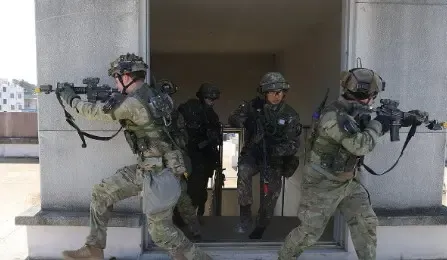
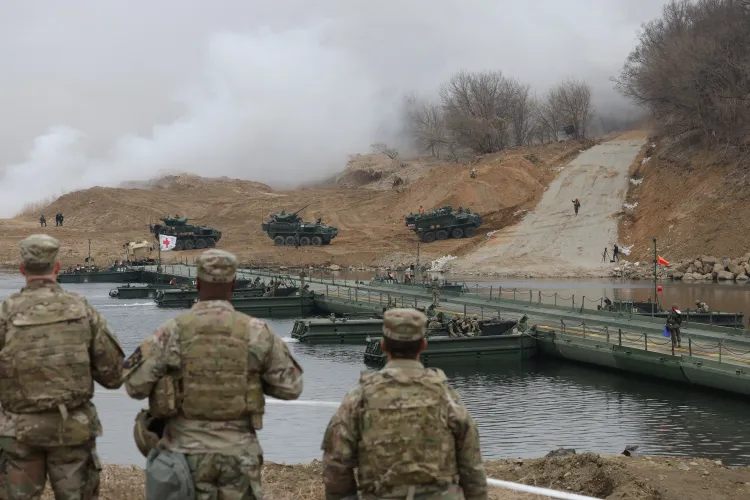
Seoul, March 14 (NationPress) In a display of military cooperation, the armed forces of South Korea and the United States conducted joint river-crossing exercises in Yeoncheon, a border county, on Saturday. This event is part of their annual spring training aimed at bolstering the interoperability of the allied forces.
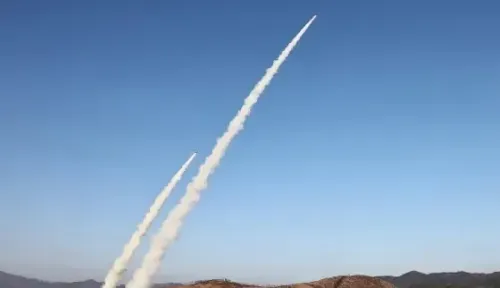
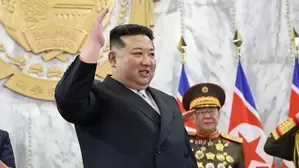
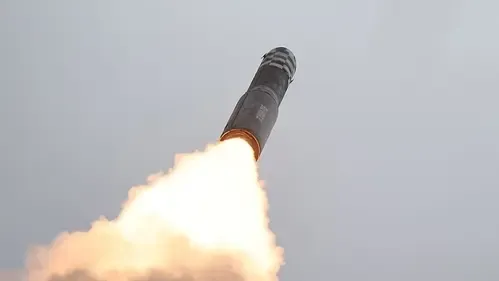
The drills coincided with North Korea's launch of approximately 10 ballistic missiles towards the East Sea earlier the same day, signaling a show of strength in response to the joint military operations of Seoul and Washington.
Taking place on the Imjin River, situated about 50 kilometers north of Seoul, the training involved around 200 pieces of equipment, including KM3 amphibious bridging vehicles and ribbon bridge systems, as reported by the armed services, according to Xinhua news agency.
This exercise is part of the Freedom Shield (FS) training, which began on Monday and will last for 11 days, focusing on enhancing the allies' collective defense capabilities.
Around 700 troops from South Korea's Capital Mechanised Infantry Division and 7th Engineer Brigade, alongside the US Stryker Brigade Combat Team from the 2nd Infantry Division, participated in the exercise.
This year marked the first time the Korean-made KM3 amphibious bridge and ferry system was integrated with the United States' Improved Ribbon Bridge (IRB) for a wet-gap crossing.
The KM3 serves as a floating bridge or ferry that can transport heavy combat vehicles and trucks, allowing for quicker troop movements over rivers and streams compared to existing ribbon floating bridge systems. It was introduced to the South Korean Army in 2024.
The drills commenced under a simulated attack scenario, where US forces executed an assault river crossing and secured the territory across the river.
The allied forces then assembled a bridge over the Imjin River, utilizing CH-47 Chinook transport helicopters to deliver sectional pontoon bridges that were later assembled by bridge erection boats on standby.
In total, 25 pontoon sections were connected to create a 180-meter-long bridge, facilitating the crossing of strikers and other equipment to advance in a simulated combat scenario, as noted by an official from the 2nd Infantry Division.
The Army has been conducting combined drills with US forces as part of the FS exercise from March 8 to 19 across various border cities including Pocheon, Paju, and Yeoncheon.
The drills were observed by US Forces Korea (USFK) Commander Gen. Xavier Brunson and Army Gen. Kim Sung-min, the deputy commander of the South Korea-U.S. Combined Forces Command, among other officials.
Standing before the bridge constructed by the allied forces, Brunson emphasized the significance of such joint training, stating that these drills are what set the allies apart.
"This represents the asymmetric advantage we possess across the Indo-Pacific. Our ability to train and prepare collectively across our formations is a remarkable asset. The demonstration you see here is envied worldwide, and we are privileged to conduct it here and now," he remarked.
Brunson also expressed gratitude to South Korean Defence Minister Ahn Gyu-back and Joint Chiefs of Staff Chairman Gen. Jin Yong-sung for facilitating this exceptional joint training.
The allies have maintained combat drills since last September to improve the interoperability of river-crossing equipment between their forces.
Point of View
This military exercise reflects the ongoing strategic partnership between South Korea and the US. Amid rising tensions with North Korea, such drills are essential for enhancing defense readiness and ensuring regional stability.
NationPress
11 Oct 2026
Frequently Asked Questions
What were the joint drills conducted by South Korea and the US?
The joint drills involved river-crossing exercises aimed at improving military interoperability between South Korean and US forces.
Why did the drills coincide with North Korea's missile launches?
The drills took place as a response to North Korea's missile launches, showcasing the allies' readiness and military strength.
What equipment was used in the river-crossing drills?
The exercises utilized around 200 pieces of equipment, including KM3 amphibious bridging vehicles and Improved Ribbon Bridges.
How many troops participated in the drills?
Approximately 700 troops from both South Korea and the US participated in the joint exercises.
What is the significance of the Freedom Shield exercise?
The Freedom Shield exercise aims to strengthen the combined defense posture of South Korea and the US amid regional security challenges.