Kenya releases first 20 Ebola contacts from quarantine after 21-day monitoring
Synopsis
Kenya has released its first 20 Ebola contacts from quarantine — a small but significant signal that the country's containment of its first-ever imported Ebola cluster is holding. With 98 more contacts due for phased discharge from 3 November and all seven remaining patients stable, the outbreak is contained for now, but the linked DRC epidemic — nearly 10,000 cases and counting — remains the backdrop that makes continued vigilance non-negotiable.
Key Takeaways
Kenya released the first 20 Ebola contacts from quarantine on 26 October after completing a 21-day symptom-free monitoring period.
The remaining 98 contacts will be discharged in four phases beginning 3 November , subject to individual health assessments.
Total confirmed cases in Kenya remain at nine , with two deaths — a case fatality rate of 22.2% ; the other seven patients are stable.
Genomic sequencing confirmed Kenya's cases are genetically linked to the Bundibugyo virus lineage originating in the DRC .
The DRC outbreak has reached 9,964 confirmed cases and 4,841 deaths across 66 health zones , with a case fatality rate of 48.6% .
WHO Director-General Tedros Adhanom Ghebreyesus condemned an attack that killed a nurse in Tshopo Province, DRC on Saturday.
Kenya's Ministry of Health on Monday, 26 October released the first 20 Ebola contacts from quarantine after they completed a mandatory 21-day surveillance period without developing any symptoms. The discharge marks the earliest sign that Kenya's containment response — triggered after the country confirmed its first imported Ebola case on 6 October — is producing measurable results.
Discharge Criteria and Official Statement
Patrick Amoth, Director-General for Health at Kenya's Ministry of Health, confirmed in an official statement that each of the 20 contacts had been 'thoroughly evaluated against strict discharge criteria.' He stressed that they posed no risk to the public. 'They do not pose any risk to their families, colleagues or neighbours, and we ask communities to welcome them back home warmly,' Amoth said.
Amoth described the development as 'a clear sign that early identification, quarantine and close monitoring are working,' underlining the government's confidence in its public health infrastructure.
Remaining Contacts and Phased Discharge Plan
The remaining 98 contacts are scheduled for discharge in four phases starting 3 November, subject to individual health assessments. Each individual will be evaluated before release, ensuring no one is discharged prematurely. This phased approach reflects WHO-endorsed protocols for managing Ebola exposure cohorts.
Case Count and Genomic Links to DRC Outbreak
The total number of confirmed Ebola cases in Kenya remained at nine, including two deaths, as of Monday — a case fatality rate of 22.2%. The remaining seven patients were reported to be stable and under the care of a multidisciplinary medical team.
Genomic sequencing of three of the nine positive samples confirmed a direct genetic link to the initial case and to the Bundibugyo virus lineage originating in the Democratic Republic of the Congo (DRC), according to Amoth. This finding is critical: it establishes that the Kenyan cluster is an imported spillover from the broader DRC outbreak rather than an independently emerging strain.
DRC Outbreak: Scale and Violence Against Health Workers
The DRC outbreak, which began in May, has reached alarming scale. Cumulative confirmed cases stood at 9,964 — including 4,841 deaths — as of Saturday, according to the country's health authorities, yielding a case fatality rate of 48.6%. The epidemic has spread across 66 health zones in eight of the country's 26 provinces.
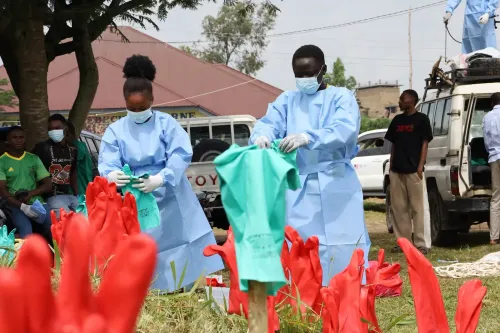
Compounding containment efforts, deadly attacks on health workers have continued. World Health Organisation (WHO) Director-General Tedros Adhanom Ghebreyesus on Monday condemned an attack that killed a nurse in the northeastern Tshopo Province on Saturday, calling the violence an additional obstacle to an already strained response.
Surveillance at Entry Points and Going Forward
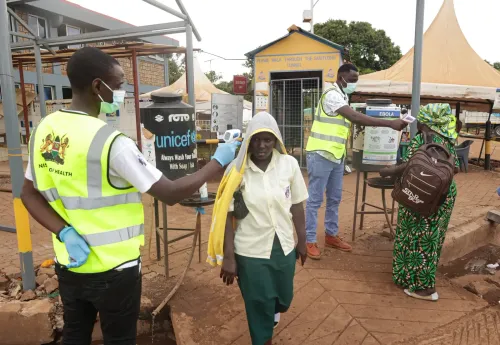
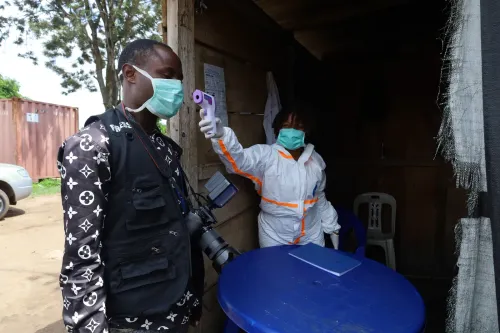
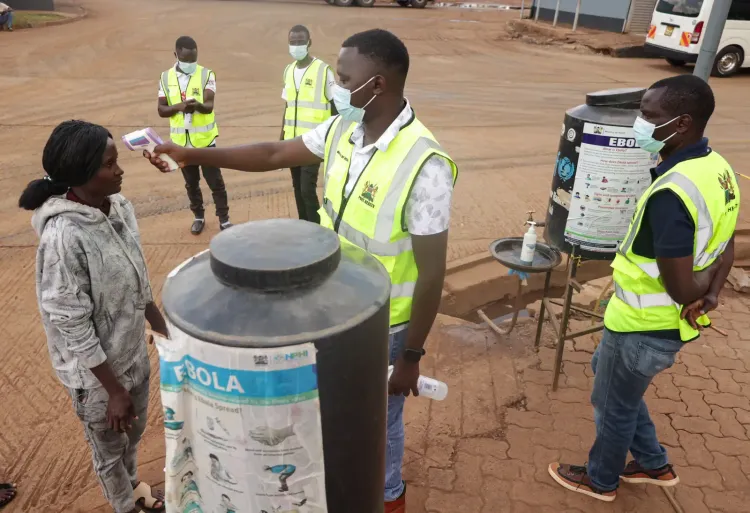
Strict surveillance and screening protocols remain in place at all entry points, health facilities, and community levels across Kenya, with every reported alert investigated promptly, according to Amoth. Contact tracing has been conducted extensively among all potentially exposed individuals since the first case was confirmed.
With the phased discharge of the remaining contacts beginning next week, and seven active patients still under care, Kenya's Ebola response enters a critical mid-phase — one where community trust and continued vigilance will determine whether the cluster remains contained.
Point of View
And that gap is not accidental — it reflects the difference between a well-resourced rapid-response system and an outbreak zone where health workers are being killed. The release of the first 20 contacts is reassuring, but the genomic link to the DRC's Bundibugyo lineage means Kenya's containment is only as durable as its border surveillance. With the DRC outbreak crossing 9,964 cases across 66 health zones, the risk of further importation has not diminished. The WHO's condemnation of the nurse's killing in Tshopo Province is diplomatically necessary but operationally insufficient — until violence against health workers in the DRC is addressed, the source outbreak will remain uncontrollable, and countries like Kenya will keep fighting fires at the margins.
NationPress
27 Oct 2026
Frequently Asked Questions
Why were 20 Ebola contacts released from quarantine in Kenya?
The 20 contacts were released because they completed the mandatory 21-day monitoring period without developing any Ebola symptoms and met all strict discharge criteria set by Kenya's Ministry of Health. Health Director-General Patrick Amoth confirmed they posed no risk to the public.
How many Ebola cases has Kenya confirmed and what is the death toll?
Kenya has confirmed nine Ebola cases in total, including two deaths, giving the country a case fatality rate of 22.2%. The remaining seven patients were reported to be stable and receiving care from a multidisciplinary medical team as of 26 October.
When will the remaining Ebola contacts in Kenya be released?
The remaining 98 contacts are scheduled for discharge in four phases beginning 3 November, subject to individual health assessments. Each person will be evaluated before being cleared to leave quarantine.
What is the source of Kenya's Ebola outbreak?
Genomic sequencing confirmed that Kenya's cases are genetically linked to the Bundibugyo virus lineage originating in the Democratic Republic of the Congo. Kenya confirmed its first imported Ebola case on 6 October, making it a spillover from the ongoing DRC epidemic.
How large is the DRC Ebola outbreak that Kenya's cases are linked to?
The DRC outbreak, ongoing since May, has recorded 9,964 confirmed cases and 4,841 deaths across 66 health zones in eight provinces, with a case fatality rate of 48.6%. Violent attacks on health workers, including the killing of a nurse in Tshopo Province on Saturday, continue to hamper containment efforts.