Kenya Ebola cases rise to seven as four new infections confirmed
Synopsis
Kenya's Ebola Bundibugyo outbreak has jumped from three to seven cases in a single day, with three of the four new patients being health workers who treated the first fatality. With 128 of 130 contacts traced and no evidence of community spread, containment is holding — but the infection of frontline health staff signals the virus reached hospital settings before full protocols were in place.
Key Takeaways
Kenya confirmed four new Ebola Bundibugyo cases on 17 October 2026 , raising the national total to seven .
The new patients include one close relative of the deceased first patient and three health workers who treated him.
All four new patients were detected early and are under supportive care at quarantine facilities .
128 of 130 contacts traced so far are in quarantine and being monitored through the 21-day incubation period .
No community transmission has been detected; no travel, trade, or gathering restrictions have been imposed.
Kenya's first Ebola case was an imported case reported on 6 October in a patient who had lived in the DRC for seven years.
Kenya's Ministry of Health on Saturday, 17 October 2026, confirmed four new cases of Ebola Bundibugyo virus disease, pushing the country's total case count to seven since the outbreak began. Health authorities said containment efforts were progressing, with no evidence of community transmission detected so far.
Who the new patients are
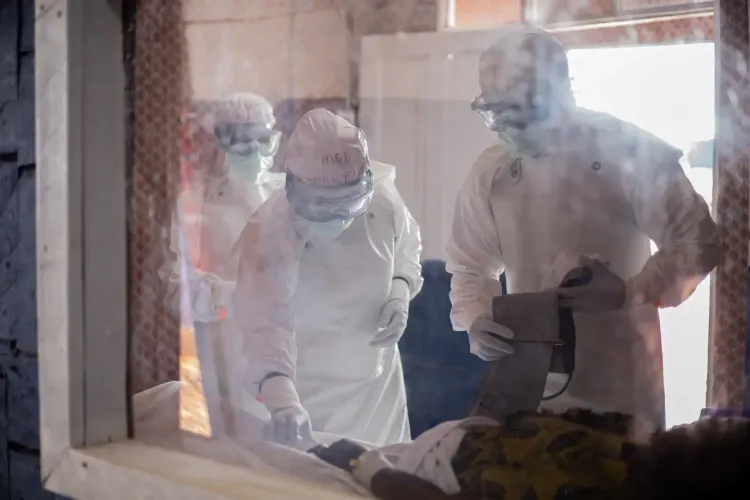
The four newly confirmed individuals include a close male relative of the first Ebola patient — who has since died — and three health workers who treated him during his hospitalisation. Patrick Amoth, Director-General for Health at Kenya's Ministry of Health, confirmed in an official statement issued in Nairobi that all four developed fever as their initial symptom and were immediately isolated.
'All four individuals developed fever as their first symptom and were immediately isolated, with specimens collected for testing,' Amoth said. He added that samples returned positive results at both the National Virology Reference Laboratory and the Kenya Medical Research Institute laboratory.
Current status of patients and containment
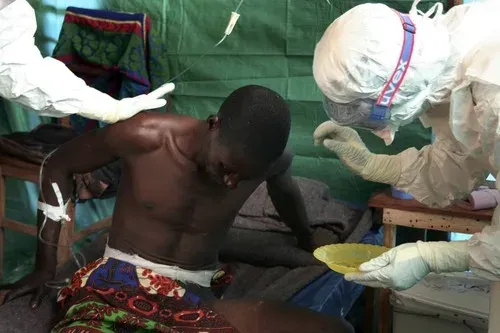
All four new patients are currently receiving supportive care from trained health personnel at quarantine facilities. Amoth described the risk of further transmission as low, noting that early detection at quarantine sites substantially reduces the probability of wider spread. 'The Ministry wishes to reassure Kenyans that the risk to the general public remains low, as there is no evidence of community transmission of the disease,' he said.
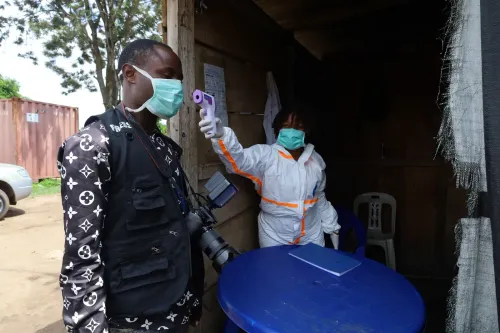
Of the 130 contacts identified as having potentially interacted with the first patient, 128 had been traced and placed under quarantine for monitoring through the 21-day incubation period, during which Ebola symptoms can emerge. All individuals in quarantine are also receiving mental health and psychosocial support, the ministry noted.
How the outbreak unfolded
Kenya reported its first imported case of Ebola Bundibugyo virus disease on 6 October in a man who had lived in the Democratic Republic of the Congo (DRC) for seven years. The patient died at a hospital in Nairobi while receiving treatment and was given a safe and dignified burial at a public cemetery to prevent further viral spread.
A second case — a 39-year-old man and close relative of the first patient — was confirmed on Wednesday. A third case, involving a 65-year-old woman who was a primary contact of both the first and second patients, was announced on Friday. The four cases confirmed Saturday mark the largest single-day jump in the outbreak to date.
No restrictions on movement or trade
Despite the rising case count, Kenyan authorities have not imposed restrictions on travel, trade, or public gatherings. The country, they emphasised, remains open for business. This is consistent with World Health Organization guidance that public health containment, rather than blanket movement bans, is the preferred response to localised Ebola clusters where community transmission has not been established.
Notably, Ebola Bundibugyo — first identified during a 2007 outbreak in Bundibugyo District, Uganda — has a case fatality rate typically lower than the more widely known Ebola Zaire strain, though it remains a serious and potentially fatal disease. The Kenya outbreak represents a rare instance of Ebola reaching East African territory outside its traditional Central African epicentres, underscoring the public health challenge posed by cross-border movement from DRC.
Health officials are expected to issue further updates as the 21-day monitoring window for the remaining contacts progresses.
Point of View
A pattern seen in multiple African outbreaks where index-case identification lagged. The official reassurance that risk remains low is defensible given the contact-tracing numbers, but 128 traced out of 130 means two contacts are still unaccounted for. Kenya's decision to keep borders and trade open aligns with international health guidance, yet it will face scrutiny if the case count continues climbing. The real test is whether the three infected health workers' own contact networks can be contained before the 21-day window closes.
NationPress
18 Oct 2026
Frequently Asked Questions
How many Ebola cases has Kenya confirmed so far?
Kenya has confirmed a total of seven Ebola Bundibugyo virus disease cases as of 17 October 2026. The country reported its first imported case on 6 October, with subsequent cases linked to contact with that initial patient.
Who are the newly confirmed Ebola patients in Kenya?
The four patients confirmed on 17 October include a close male relative of the first Ebola patient, who died, and three health workers who treated him in hospital. All four first developed fever and were immediately isolated for testing.
Is there community transmission of Ebola in Kenya?
No. Kenya's Ministry of Health has stated there is no evidence of community transmission as of 17 October 2026. Authorities say early detection and isolation at quarantine facilities have kept the risk to the general public low.
What is Ebola Bundibugyo virus disease?
Ebola Bundibugyo is one of several strains of Ebola virus disease, first identified during a 2007 outbreak in Bundibugyo District, Uganda. It generally has a lower case fatality rate than the more prevalent Ebola Zaire strain but remains a serious and potentially fatal illness.
Are there travel or trade restrictions in Kenya due to the Ebola outbreak?
No restrictions have been imposed on travel, trade, or public gatherings. Kenyan authorities have stated the country remains open for business, consistent with WHO guidance that targeted containment is preferable to blanket movement bans in localised clusters.