Kenya Ebola cases rise to three as contact tracing hits 97.7%
Synopsis
Kenya now has three confirmed Ebola Bundibugyo cases, yet its response is outpacing global benchmarks — 97.7% of contacts traced against a required 85%, with no community transmission detected. The absence of a licensed vaccine for this Ebola strain makes the containment race all the more critical.
Key Takeaways
Kenya has confirmed three Ebola Bundibugyo virus cases as of 17 October 2026 .
The third case is a 65-year-old woman already in quarantine since 6 October , detected early through daily monitoring.
127 of 130 identified contacts ( 97.7% ) have been traced and quarantined, exceeding the global 85% benchmark.
Kenya declared Ebola a formidable epidemic disease under the Public Health Act on 12 October .
No licensed vaccine or specific treatment exists for Bundibugyo Ebola; clinical trials are underway in the DRC .
Kenya is the fourth country to confirm cases in the current outbreak, following the DRC, Uganda, and France.
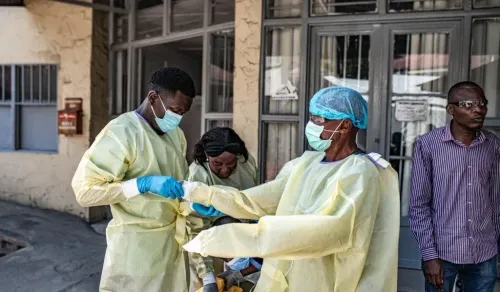
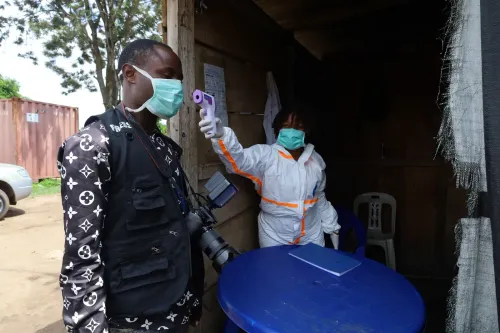
Kenya has ramped up its Ebola containment response after the confirmed case count climbed to three, with authorities intensifying contact tracing, quarantine protocols, airport and border screening, and infection prevention measures across the country. The escalation comes amid growing international attention on what has become a multi-country Ebola cluster rooted in the Democratic Republic of the Congo (DRC).
Third Case Confirmed: Who Is She
Patrick Amoth, Director-General for Health at Kenya's Ministry of Health, confirmed on 17 October 2026 that the third case involves a 65-year-old woman who is a close relative of the first and second confirmed patients. The woman had been placed in quarantine as early as 6 October and subsequently developed fever, sore throat, and malaise — early hallmarks of Bundibugyo Ebola virus disease.
'Having been in quarantine, she was diagnosed early and is currently receiving supportive care, improving her chances of recovery while limiting the risk of further spread of the disease,' Amoth said. Authorities said the early detection was a direct result of the quarantine protocols in place.
Contact Tracing Exceeds Global Benchmark
Kenya's contact tracing effort has so far located and quarantined 127 of the 130 identified contacts — a 97.7% success rate that surpasses the 85% global benchmark considered necessary to break the chain of transmission. Active efforts are continuing to locate the remaining three contacts.
Amoth said the overall risk in the country remained low, with no evidence of community transmission detected. All contacts in quarantine are being monitored daily to enable prompt detection and treatment of any new cases.
Kenya Declares Ebola a Formidable Epidemic Disease
On 12 October, the Kenyan government formally declared Ebola a formidable epidemic disease under the Public Health Act, introducing new regulations that mandate screening at major points of entry, medical assessment of suspected cases, isolation and referral protocols, and the designation of health facilities specifically responsible for Ebola case management. Decontamination procedures for affected premises have also been formalised.
Kenya notified the World Health Organisation (WHO) following its first confirmed case, in line with the International Health Regulations (2005).
WHO Commends Kenya's Swift Response
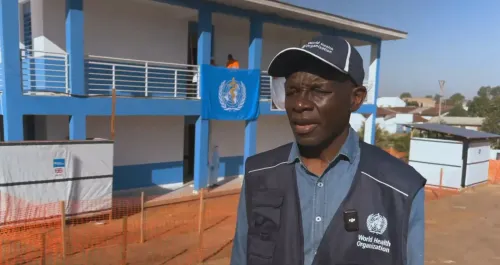
Neema Kimambo, WHO Representative to Kenya, praised the speed of the authorities' containment effort. 'The two new cases have been detected early because they were already in quarantine and were being checked every day,' she said. Kimambo commended the Ministry of Health, the Kenya National Public Health Institute, and national and county health teams, adding: 'We thank the health workers, response teams and families in quarantine for their commitment.'
Regional Context and Treatment Landscape
Kenya is the fourth country globally to confirm Ebola virus disease in the current outbreak, following the DRC, Uganda, and France. Most cases in Kenya and Uganda have been imported from the DRC, while France's case was travel-related and reported in June.
Notably, there is currently no licensed vaccine or specific treatment for Bundibugyo Ebola, though clinical trials are reportedly underway in the DRC, according to WHO. Early symptoms — including fever, fatigue, muscle or joint pain, headache, and sore throat — can resemble those of malaria and other common illnesses, complicating early identification in community settings.
Kenya's borders remain open, with no restrictions on travel, trade, or public gatherings. Health authorities have said that continued vigilance at points of entry and sustained quarantine compliance will be critical in the days ahead.
Point of View
The cluster pattern suggests controlled spread, but the three untraced contacts remain the weakest link. The DRC origin of most cases also points to a persistent regional reservoir that border screening alone cannot neutralise; the real risk is not Kenya's preparedness, but whether upstream transmission in the DRC can be brought under control.
NationPress
17 Oct 2026
Frequently Asked Questions
How many Ebola cases have been confirmed in Kenya?
Kenya has confirmed three Ebola Bundibugyo virus cases as of 17 October 2026. The third case is a 65-year-old woman who is a close relative of the first two patients and had been in quarantine since 6 October.
What is Bundibugyo Ebola virus disease?
Bundibugyo Ebola is one of the species of Ebola virus, with early symptoms that can resemble malaria, including fever, fatigue, muscle or joint pain, headache, and sore throat. According to WHO, there is currently no licensed vaccine or specific treatment for this strain, though clinical trials are underway in the DRC.
Has Kenya declared a public health emergency over Ebola?
On 12 October, Kenya declared Ebola a formidable epidemic disease under the Public Health Act, introducing regulations on screening at entry points, isolation, quarantine, and facility designation for case management. Borders remain open with no restrictions on travel or trade.
How effective has Kenya's contact tracing been?
Kenya has traced and quarantined 127 of 130 identified contacts — a 97.7% success rate — exceeding the global benchmark of 85% required to break the chain of transmission. Active efforts are ongoing to locate the remaining three contacts.
Which countries have confirmed Ebola cases in the current outbreak?
Kenya is the fourth country to confirm Ebola virus disease in the current context, following the DRC, Uganda, and France. Most cases in Kenya and Uganda have been imported from the DRC, while France's case was travel-related and reported in June.