Kim Jong-un congratulates Putin on Russia's 81st Victory Day, pledges deeper ties
Synopsis
Kim Jong-un's Victory Day message to Putin is more than a diplomatic courtesy — it is a public reaffirmation of an increasingly operational military alliance. With 15,000 North Korean troops reportedly deployed in Ukraine and a formal 2027–2031 military cooperation plan on the table, the DPRK-Russia partnership is fast becoming one of the defining strategic alignments of the current conflict.
Key Takeaways
Kim Jong-un sent a congratulatory message to Vladimir Putin on Russia's 81st Victory Day on 9 May 2025 .
Kim reaffirmed the DPRK's commitment to the "alliance-like comprehensive strategic partnership" established under the June 2024 treaty.
North Korea reportedly deployed around 15,000 combat troops to support Russia in Ukraine following the 2024 treaty.
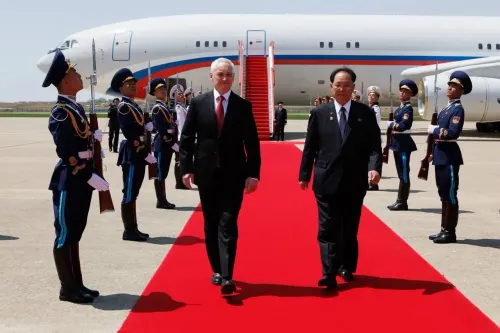
Russian Defence Minister Andrey Belousov met Kim in Pyongyang on 26 April 2025 , discussing long-term military cooperation.
Russia and North Korea are preparing to sign a Military Cooperation Plan for 2027–2031 later this year.
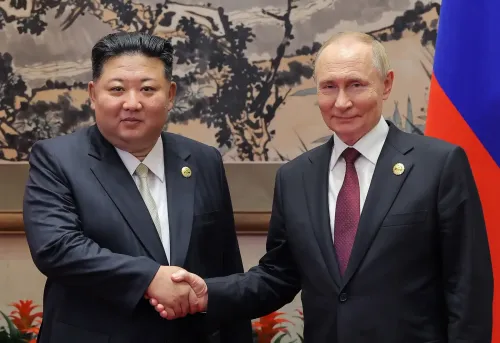
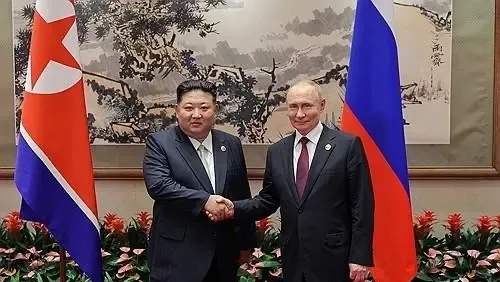
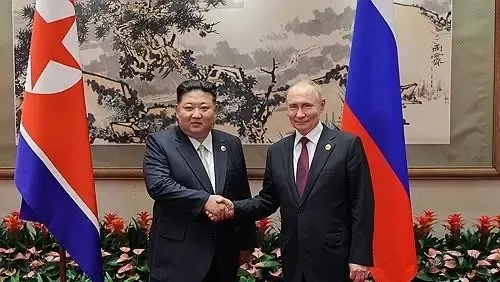
North Korean leader Kim Jong-un sent a congratulatory message to Russian President Vladimir Putin on the occasion of Russia's 81st Victory Day on 9 May 2025, reaffirming Pyongyang's commitment to deepening its alliance with Moscow, according to North Korea's state media outlet Korean Central News Agency (KCNA).
What Kim Said
Kim extended his "sincerest congratulations" to Putin and expressed satisfaction with what he described as the "brilliant history of independence, dignity, peace and prosperity" shared by the two nations. In his message, Kim stated: "Reaffirming the stand of the government of the Democratic People's Republic of Korea (DPRK) to give top priority to and steadily develop the alliance-like comprehensive strategic partnership between our two countries, I affirm once again that we will always faithfully fulfil the obligations under the inter-state treaty between the DPRK and Russia."
Background: The 2024 Strategic Partnership Treaty
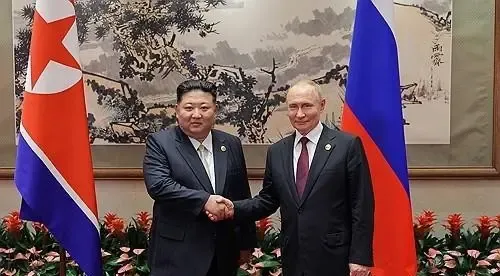
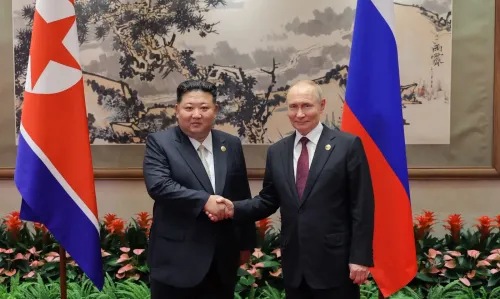
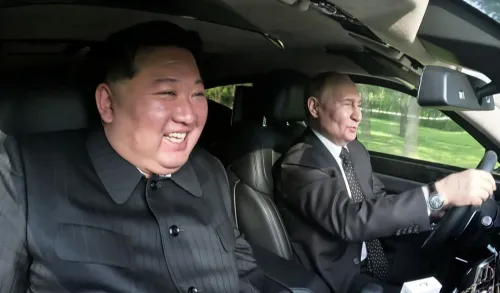
The message comes against the backdrop of a landmark "comprehensive strategic partnership" treaty signed by Kim and Putin in June 2024, which effectively revived the two countries' Cold War-era military alliance. Following that agreement, Pyongyang reportedly deployed around 15,000 combat troops to support Russia in its ongoing war against Ukraine, and bilateral cooperation has deepened across multiple fronts. This is the most significant military alignment between the two states since the Soviet era.
Russia-North Korea Military Cooperation Talks
The congratulatory message follows a high-level military meeting held on 26 April 2025, when Kim Jong-un and Russian Defence Minister Andrey Belousov held talks in Pyongyang. According to Russian state-owned news agency TASS, the two sides discussed the current state and future prospects of military cooperation. Belousov said: "We agreed with the DPRK Ministry of Defence to transition military cooperation to a sustainable, long-term basis. We are ready to sign a Russian-Korean Military Cooperation Plan for the period 2027–2031 this year."
Belousov also noted that Russian-Korean interstate relations "are at an unprecedentedly high level" and expressed appreciation for Kim's decision to invite a Russian military delegation to the opening of a museum and memorial complex in North Korea, calling it "a great honour and privilege."
What This Means Going Forward
The Victory Day message, combined with the recently held defence talks and the looming 2027–2031 military cooperation plan, signals that the Russia-North Korea axis is moving well beyond symbolic diplomacy. Notably, this deepening partnership has drawn sharp concern from South Korea, the United States, and NATO allies, who have accused Pyongyang of supplying artillery shells and missiles to Moscow in violation of United Nations sanctions. With a formal long-term military cooperation roadmap in the works, the bilateral relationship looks set to become an enduring structural feature of the conflict in Ukraine.
Point of View
Not a pleasantry. Kim's explicit invocation of treaty obligations — at a moment when Russian forces are actively engaged in Ukraine — underscores that Pyongyang views this alliance as a live military commitment, not a diplomatic artefact. What is being built here is a structured, long-term defence relationship with a formal cooperation calendar stretching to 2031. Western analysts have focused on troop deployments, but the more durable concern is technology transfer: what North Korea receives in return — satellite data, missile technology, submarine know-how — could materially alter the regional security balance in Northeast Asia in ways that outlast the Ukraine war itself.
NationPress
23 Sept 2026
Frequently Asked Questions
Why did Kim Jong-un send a message to Putin on Victory Day?
Kim Jong-un sent the message to mark Russia's 81st Victory Day on 9 May 2025, reaffirming the DPRK's commitment to its comprehensive strategic partnership with Russia. The gesture is consistent with the deepening military and diplomatic alliance formalised under their June 2024 treaty.
What is the DPRK-Russia comprehensive strategic partnership?
It is a treaty signed by Kim Jong-un and Vladimir Putin in June 2024 that effectively revived the two countries' Cold War-era military alliance. Under the pact, North Korea reportedly deployed around 15,000 combat troops to support Russia in its war against Ukraine.
What did Russia and North Korea agree during the April 2025 Pyongyang talks?
Russian Defence Minister Andrey Belousov and Kim Jong-un agreed to transition military cooperation to a "sustainable, long-term basis" during talks in Pyongyang on 26 April 2025. Russia indicated it was ready to sign a bilateral Military Cooperation Plan covering the period 2027 to 2031.
How does this affect the war in Ukraine?
North Korea's reported deployment of around 15,000 combat troops and alleged supply of artillery and missiles to Russia has drawn condemnation from South Korea, the United States, and NATO allies, who say it violates UN sanctions. The deepening alliance risks prolonging and intensifying the conflict.
What is Russia's assessment of its ties with North Korea?
Russian Defence Minister Belousov stated that Russian-Korean interstate relations are "at an unprecedentedly high level" and described the partnership as heading toward a structured, long-term military cooperation framework extending to 2031.