Kim Jong-un reaffirms North Korea-Russia alliance in Victory Day message to Putin
Synopsis
Kim Jong-un's Victory Day message to Putin is more than diplomatic courtesy — it is a public reaffirmation of a rapidly deepening military alliance that has already put 15,000 North Korean troops on European soil and is now headed toward a formal multi-year military cooperation plan through 2031.
Key Takeaways
Kim Jong-un sent a congratulatory message to Vladimir Putin on Russia's 81st Victory Day on 9 May 2025 , pledging to uphold the bilateral inter-state treaty.
The two countries signed a "comprehensive strategic partnership" treaty in June 2024 , reviving Cold War-era military ties.
North Korea has reportedly deployed around 15,000 combat troops to support Russia in its war against Ukraine since the treaty was signed.
Russian Defence Minister Andrey Belousov visited Pyongyang on 26 April 2025 and announced plans for a Russian-Korean Military Cooperation Plan for 2027–2031 .
Belousov described bilateral relations as being at an "unprecedentedly high level."
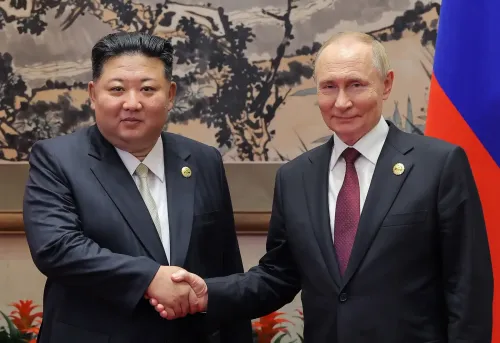
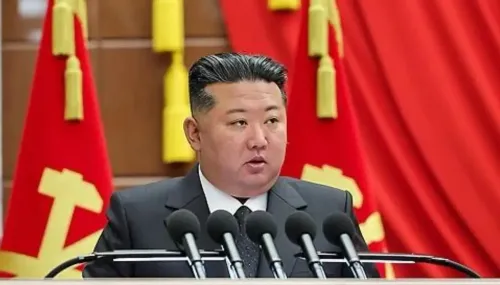
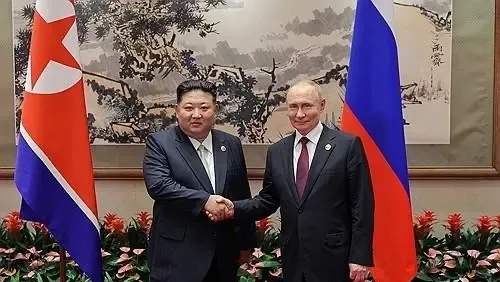
North Korean leader Kim Jong-un sent a congratulatory message to Russian President Vladimir Putin on the occasion of Russia's 81st Victory Day on 9 May 2025, reaffirming Pyongyang's commitment to deepening its alliance with Moscow. State media reported that Kim pledged to uphold the obligations of the bilateral inter-state treaty and give top priority to the two nations' strategic partnership.
What Kim Said
Kim extended his "sincerest congratulations" to Putin and expressed satisfaction with what he described as the "brilliant history of independence, dignity, peace and prosperity" shared by the two countries, according to North Korea's state media outlet, the Korean Central News Agency (KCNA).
"Reaffirming the stand of the government of the Democratic People's Republic of Korea (DPRK) to give top priority to and steadily develop the alliance-like comprehensive strategic partnership between our two countries, I affirm once again that we will always faithfully fulfil the obligations under the inter-state treaty between the DPRK and Russia," Kim said.
Background: The 2024 Strategic Partnership Treaty
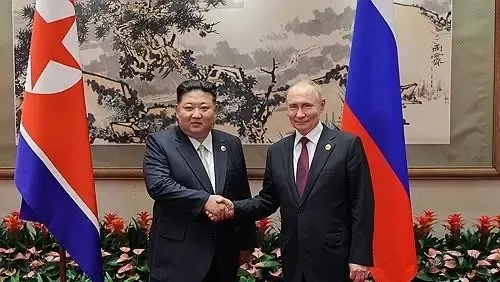
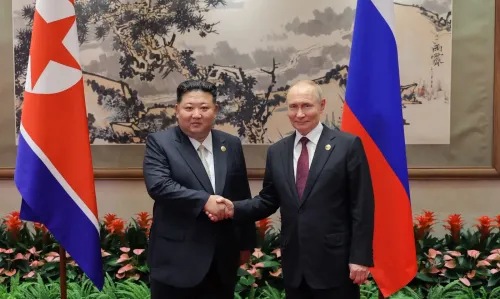
The message comes against the backdrop of a landmark agreement signed in June 2024, when Kim and Putin formalised a "comprehensive strategic partnership" treaty — effectively reviving the two countries' Cold War-era military alliance. Following the signing, Pyongyang reportedly deployed around 15,000 combat troops to support Russia in its ongoing war against Ukraine, marking one of the most significant expansions of North Korean military engagement in decades.
Belousov's Pyongyang Visit
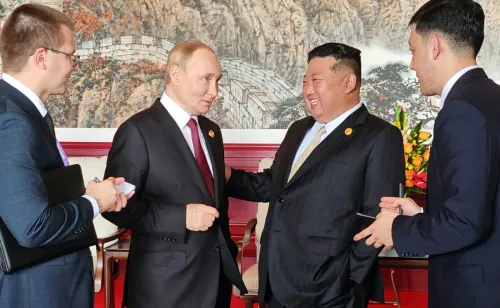
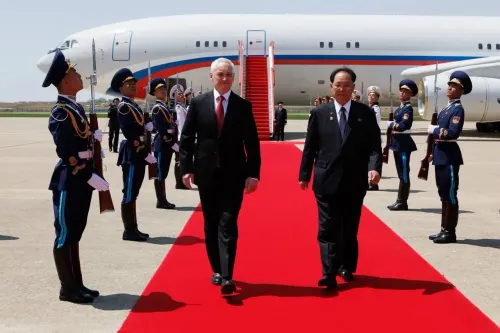
The Victory Day message follows a high-level military meeting held on 26 April 2025, when Russian Defence Minister Andrey Belousov travelled to Pyongyang for talks with Kim Jong-un. According to Russia's state-owned news agency TASS, the two sides discussed the current state and future prospects of military cooperation.
Belousov announced that the two sides had agreed to "transition military cooperation to a sustainable, long-term basis," adding that Russia is prepared to sign a Russian-Korean Military Cooperation Plan for the period 2027–2031 within the current year. He described Russian-Korean interstate relations as being at an "unprecedentedly high level" and praised North Korea's "traditionally warm welcome" extended to the Russian delegation.
Belousov also noted that Kim's invitation to a Russian military delegation for the opening of a museum and memorial complex was "a great honour and privilege."
What This Signals
The exchange of diplomatic messages and the accelerating pace of high-level contacts — including troop deployments, defence planning, and now a multi-year military cooperation roadmap — indicate that the Russia-North Korea relationship has moved well beyond symbolic alignment. This is the third major diplomatic or military milestone between the two nations since the June 2024 treaty, underscoring how rapidly the partnership is being institutionalised. As the Russia-Ukraine conflict continues, Pyongyang's role as a military supplier and strategic partner for Moscow is likely to draw further international scrutiny.
Point of View
Troop deployment, defence minister visit, multi-year cooperation plan — points to a relationship that is being deliberately institutionalised, not merely opportunistically exploited. What mainstream coverage often underplays is the long-term strategic calculus: Pyongyang gains economic lifelines and military technology access, while Moscow secures a compliant munitions supplier and a geopolitical counterweight to Western pressure. A formal military cooperation plan through 2031 means this alignment will outlast the Ukraine war itself, reshaping the security architecture of both Northeast Asia and Eastern Europe in ways that will be difficult to reverse.
NationPress
26 Sept 2026
Frequently Asked Questions
Why did Kim Jong-un send a Victory Day message to Putin?
Kim Jong-un sent the message to congratulate Putin on Russia's 81st Victory Day on 9 May 2025, using the occasion to publicly reaffirm North Korea's commitment to its comprehensive strategic partnership with Russia. The message is consistent with the deepening diplomatic and military ties between the two countries since their June 2024 treaty.
What is the North Korea-Russia comprehensive strategic partnership?
It is a bilateral treaty signed by Kim Jong-un and Vladimir Putin in June 2024 that effectively revived the two countries' Cold War-era military alliance. Under the partnership, North Korea has reportedly deployed around 15,000 combat troops to support Russia in its war against Ukraine and expanded cooperation across multiple fronts.
What did Russian Defence Minister Belousov discuss during his Pyongyang visit?
During his visit to Pyongyang on 26 April 2025, Andrey Belousov met with Kim Jong-un and discussed the current state and future prospects of military cooperation. He announced that Russia is ready to sign a Russian-Korean Military Cooperation Plan covering the period 2027 to 2031, placing bilateral military ties on a long-term, sustainable footing.
How many North Korean troops has Pyongyang deployed to support Russia?
According to reports, North Korea has deployed approximately 15,000 combat troops to support Russia in its war against Ukraine following the signing of the June 2024 strategic partnership treaty.
What is the significance of the planned 2027–2031 military cooperation plan?
The proposed Russian-Korean Military Cooperation Plan for 2027–2031 would formalise and extend bilateral military ties well beyond the current Ukraine conflict, signalling that the Russia-North Korea alliance is being structured as a long-term strategic arrangement rather than a short-term wartime accommodation.