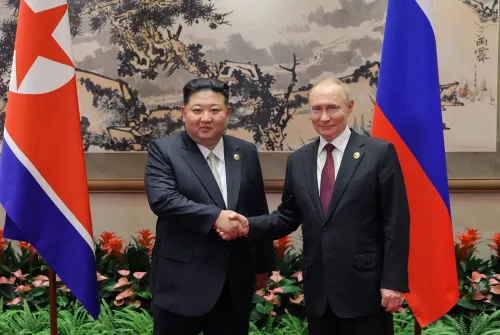
Kim Jong-un vows deeper Russia ties in reply to Putin amid military buildup
Synopsis
Kim Jong-un's letter to Putin is more than diplomatic courtesy — it is a public reaffirmation of an alliance that has already sent thousands of North Korean troops to Ukraine. Paired with the inauguration of a new Tumen River road bridge, the two capitals appear to be converting a wartime partnership into lasting structural ties that could reshape the security calculus across East Asia.
Key Takeaways
Kim Jong-un sent a letter to Vladimir Putin on 15 September 2026 vowing to 'expand and deepen' bilateral cooperation, according to KCNA .
Kim pledged 'unwavering support' for Russia's war against Ukraine and described the two nations as writing 'a new biography of the great history of alliance.' North Korea and Russia opened a new road bridge over the Tumen River , linking Rason (DPRK) and Khasan (Russia), with construction begun in April 2025 .
The bridge, named after Soviet officer Yakov Novichenko , is intended to support economic cooperation, tourism, and personnel movement.
The two countries are bound by a Comprehensive Strategic Partnership Treaty signed in June 2024 , which includes a mutual military-assistance clause.
Pyongyang has reportedly sent thousands of troops and conventional weapons to support Russia's war effort in Ukraine.
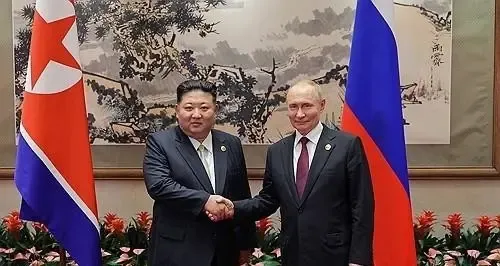
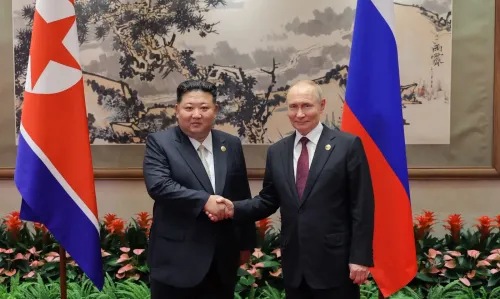
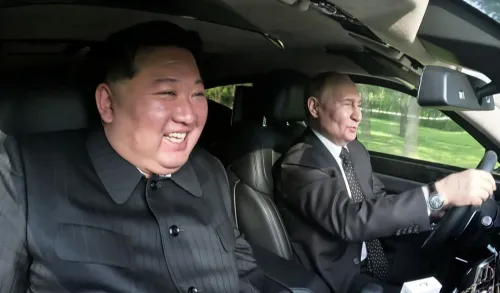
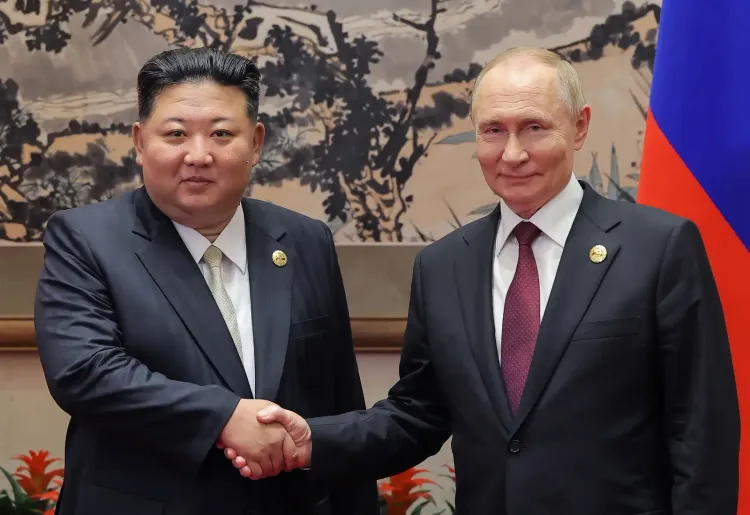
North Korean leader Kim Jong-un has pledged to expand and deepen 'joint work' with Moscow in a personal message to Russian President Vladimir Putin, state media reported on Tuesday, 15 September 2026. The letter, relayed by the Korean Central News Agency (KCNA), underscores the accelerating military and economic axis between the two countries.
What the Letter Said
Kim's message was a reply to Putin's congratulatory note marking North Korea's 78th founding anniversary on 9 September. In it, Kim expressed 'deep' gratitude and affirmed that Pyongyang's resolve to deepen ties with Russia remained 'firm without doubt.' The letter spoke of expanding cooperation 'comprehensively… based on the tradition of friendship, good neighbourliness and mutual aid and the firm relations of alliance between the two countries.'
Kim stopped short of specifying what 'joint work' entailed, but the framing — coming amid a documented flow of North Korean troops and conventional weapons to Russian forces fighting in Ukraine — strongly suggests continued military and economic collaboration. Kim also promised 'unwavering support' for Russia in its war against Ukraine, describing the two nations as continuously 'writing a new biography of the great history of alliance' in the face of an 'uneven historical storm.'
The Tumen River Bridge: New Infrastructure, New Symbolism
The diplomatic messaging was accompanied by a concrete milestone: North Korea and Russia formally opened a new road bridge over the Tumen River, connecting Rason in North Korea with Khasan in Russia. The opening ceremony was attended virtually by North Korean Premier Pak Thae-song and Russian Prime Minister Mikhail Mishustin.
Construction of the bridge began in April 2025, shortly before Putin's state visit to Pyongyang in June 2024. According to KCNA, the bridge will 'ensure the safe passage of various kinds of vehicles and personnel traffic' and serve as 'a guarantee for building up and reinforcing an important infrastructure for economic cooperation… revitalising multifaceted cooperation including human exchange, tourism and commodity circulation.'
The bridge was named after Yakov Novichenko, a Soviet Red Army officer credited with saving the life of North Korean founder Kim Il-sung in 1946 — a pointed historical symbol that frames the bilateral relationship as one of shared sacrifice. Premier Pak called it 'a new symbol' of friendship and said it adds 'a new dynamic movement to the overall bilateral cooperation.'
The Strategic Partnership That Underpins It All
The expanding ties rest on a formal treaty. North Korea and Russia signed the Comprehensive Strategic Partnership Treaty during Putin's June 2024 state visit to Pyongyang. The pact obligates both sides to provide military assistance 'without delay' if either comes under attack — language that Western capitals have described as a mutual defence commitment by another name.
Mishustin said bilateral relations had reached 'an unprecedentedly high level of comprehensive strategic partnership' and pledged that Russia would 'do its utmost for the multifaceted development of the bilateral relations.' Pyongyang has reportedly sent thousands of troops and large quantities of conventional weapons to support Moscow's war effort in Ukraine — a development that has drawn sharp condemnation from South Korea, the United States, and NATO allies.
What Comes Next
The combination of a public letter from Kim, the inauguration of cross-border infrastructure, and mutual pledges of 'unwavering' support signals that the Pyongyang-Moscow axis is moving from opportunistic alignment toward structural integration. Analysts will be watching for further troop deployments, arms transfers, and the pace at which the Tumen bridge is actually used for economic exchange — measures that will indicate whether rhetorical solidarity is translating into durable capability-sharing.
Point of View
And a treaty obligating mutual defence is in force. The Tumen bridge matters less as trade infrastructure — volumes are still minimal — and more as a physical emblem of permanence, designed to signal to Washington and Seoul that this partnership is structural, not transactional. The real question is whether the West's response, still largely confined to condemnation and sanctions, is calibrated to an alliance that has already moved well beyond rhetoric.
NationPress
15 Sept 2026
Frequently Asked Questions
What did Kim Jong-un say in his letter to Putin?
Kim Jong-un pledged to 'expand and deepen' joint work with Russia 'comprehensively' and promised 'unwavering support' for Russia in its war against Ukraine. The letter, reported by KCNA, was a reply to Putin's congratulatory message on North Korea's 78th founding anniversary on 9 September.
What is the new Tumen River bridge between North Korea and Russia?
The bridge is a new road crossing over the Tumen River connecting Rason in North Korea and Khasan in Russia, inaugurated in September 2026 after construction began in April 2025. It is intended to facilitate vehicle traffic, personnel movement, tourism, and economic cooperation between the two countries.
What is the North Korea-Russia Comprehensive Strategic Partnership Treaty?
The treaty was signed during Putin's state visit to Pyongyang in June 2024 and commits both sides to provide military assistance 'without delay' if either comes under armed attack. It forms the legal basis for the deepening military and economic relationship between the two countries.
Has North Korea sent troops to help Russia in Ukraine?
According to multiple reports, Pyongyang has dispatched thousands of troops and conventional weapons to support Russia's war effort in Ukraine, a move condemned by South Korea, the United States, and NATO allies. North Korea has not publicly confirmed the scale of its military contribution.
Why was the new Tumen River bridge named after Yakov Novichenko?
Yakov Novichenko was a Soviet Red Army officer credited with saving the life of North Korean founder Kim Il-sung in 1946. Naming the bridge after him is a deliberate historical reference designed to frame the Russia-North Korea alliance as one rooted in shared sacrifice and long-standing solidarity.