Russia-North Korea Tumen River bridge nears completion, shielding transfers from satellites
Synopsis
A $100 million bridge over the Tumen River — ten times the value of Russia-North Korea annual trade — is nearly ready. The road link's real edge is concealment: trucks evade satellite detection far better than rail wagons. With 14,000 North Korean troops already deployed in Kursk and 30,000 more reportedly incoming, the bridge's strategic purpose is hard to miss.
Key Takeaways
Russia and North Korea are completing a two-lane, 1-km bridge over the Tumen River between Khasan and Tumangang .
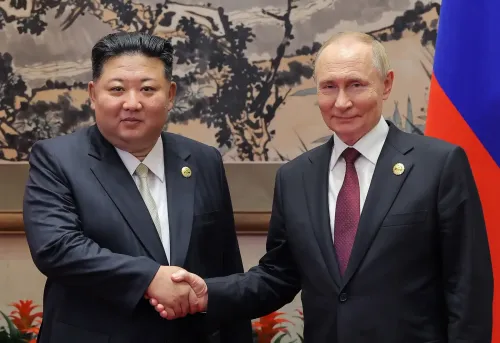
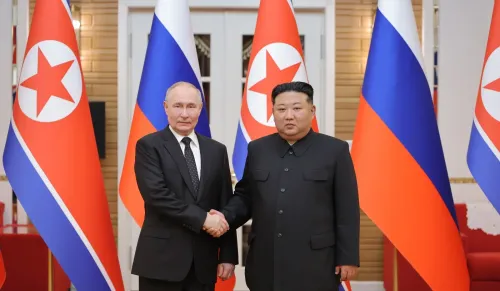
The project stems from the Putin–Kim Jong-un strategic partnership signed in June 2024 ; inauguration was delayed beyond the original June 2025 target.
The bridge cost $100 million — nearly three times the $34 million bilateral trade figure for 2024.
Road transport offers a key surveillance advantage: trucks are harder to identify in satellite imagery than railway wagons, which can reveal cargo.
North Korea reportedly sent 14,000 soldiers to Russia's Kursk region; around 2,000 are said to have died.
President Zelensky says another 30,000 may follow.
Cross-border tourism is capped at 10,000 escorted visitors per year , with the destination 500 km from the crossing.
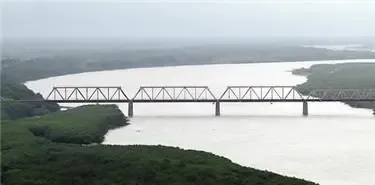
Russia and North Korea are in the final stages of constructing the first direct road link between the two countries — a two-lane bridge, approximately one kilometre long and seven metres wide, spanning the Tumen River between the border localities of Khasan on the Russian side and Tumangang on the North Korean side. The structure runs parallel to an already operational railway connection and, according to reports, is not yet complete on the Russian side.
Origins of the Project
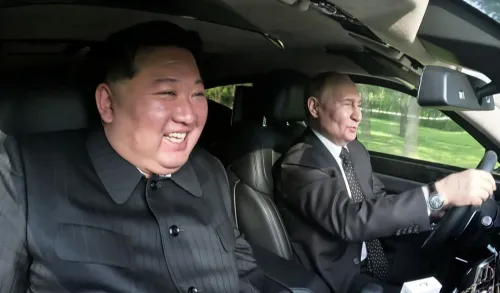
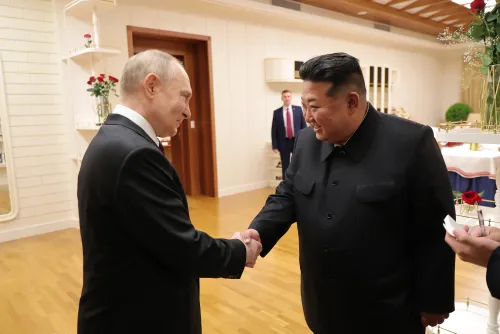
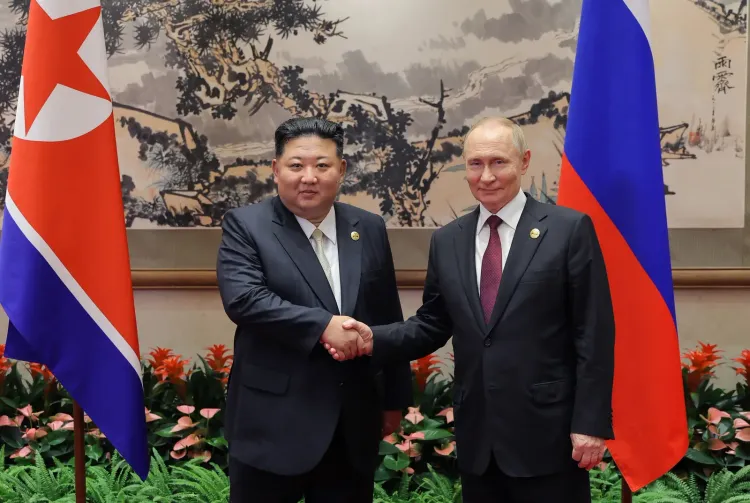
The bridge is a direct outcome of the strategic partnership agreement signed by Russian President Vladimir Putin and North Korean Supreme Leader Kim Jong-un in June 2024. The project was originally slated for inauguration in June 2025 but has faced delays. The $100 million cost of the infrastructure stands in sharp contrast to the bilateral trade exchange of just $34 million recorded in 2024, raising questions about the bridge's primary purpose.
Why Road Over Rail — The Satellite Surveillance Angle
Analysts note a strategically significant advantage that road transport holds over rail in this context: concealment. North Korea's road network is considerably more extensive than its railway system, making comprehensive surveillance far more difficult. Trucks are visually indistinguishable from one another in satellite imagery, whereas railway wagons can reveal much of their cargo when photographed from orbit.
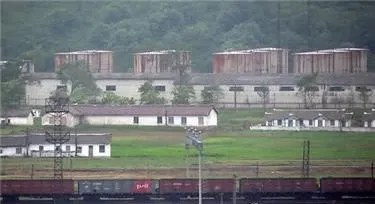
Loading and unloading operations on roads can be conducted at any point along a route and completed more rapidly, reducing the window of exposure to satellite passes. By contrast, the two countries' railway networks operate on different track gauges, requiring trains to be physically modified before crossing the border — adding both time and logistical complexity. The road bridge, reportedly, sidesteps all of these constraints.
Military Cooperation in the Background
The bridge's construction coincides with what analysts describe as deepening military cooperation between Moscow and Pyongyang. North Korea reportedly dispatched 14,000 soldiers to fight alongside Russian forces in the Kursk region following Ukraine's incursion there in August 2024. According to reports, approximately 2,000 of those troops are said to have fallen on the front.
Ukrainian President Volodymyr Zelensky has announced that Pyongyang intends to send an additional 30,000 troops to support Russian operations. The bridge, if completed, would provide a faster and less-monitored corridor for the movement of North Korean soldiers and engineers into Russia, and Russian high-technology military components into North Korea.
Tourism and Cross-Border Movement
Cross-border civilian movement remains tightly restricted. Tourism between the two countries is limited to escorted tours accommodating no more than 10,000 people per year as of 2025, with the final destination located approximately 500 kilometres from the crossing point. The limited civilian use further underscores that the bridge's strategic rationale extends well beyond trade or tourism.
What Comes Next
Completion of the Russian side of the bridge remains pending. Once operational, the crossing is expected to substantially alter the logistics of Russia-North Korea exchanges — both in volume and in the ability of outside observers to track what moves across the border. Western governments and intelligence agencies are likely to scrutinise the bridge's operational patterns closely once it opens.
Point of View
And the new road link removes it entirely. The bridge, once open, will make the Russia–North Korea military corridor significantly harder to monitor from orbit — and that, more than trade or tourism, appears to be the point.
NationPress
27 Oct 2026
Frequently Asked Questions
What is the Russia-North Korea Tumen River bridge?
It is a two-lane road bridge, approximately one kilometre long and seven metres wide, being built over the Tumen River between Khasan in Russia and Tumangang in North Korea. It will serve as the first direct road link between the two countries, running alongside an existing railway connection.
Why does the bridge matter for satellite surveillance?
Road transport is significantly harder to monitor via satellite than rail. Trucks appear identical in satellite images, whereas railway wagons can reveal cargo. Loading and unloading can also happen anywhere along a road route and more quickly, reducing exposure to satellite passes — an advantage that analysts say is central to the bridge's strategic value.
How much did the bridge cost, and how does that compare to bilateral trade?
The bridge reportedly cost $100 million, against a Russia-North Korea bilateral trade exchange of just $34 million in 2024 — making the infrastructure investment nearly three times the annual trade volume, which analysts say points to a primarily strategic rather than commercial rationale.
How many North Korean troops have been sent to Russia?
North Korea reportedly dispatched 14,000 soldiers to fight alongside Russian forces in the Kursk region following Ukraine's cross-border incursion in August 2024. Around 2,000 of those troops are said to have died on the front, according to reports. Ukrainian President Volodymyr Zelensky has stated that Pyongyang intends to send an additional 30,000 troops.
When will the bridge be completed and open?
The bridge was originally scheduled for inauguration in June 2025 but has not yet been completed, with the Russian side of the construction still pending as of late July 2025. No revised opening date has been officially announced.