Kim Jong-un Meets Russia's Defence Chief in Historic Pyongyang Talks
Synopsis
Russian Defence Minister Andrey Belousov met Kim Jong-un in Pyongyang, announcing a landmark Russia-North Korea Military Cooperation Plan for 2027–2031. With 15,000 North Korean troops already fighting in Ukraine and a memorial museum now honouring fallen DPRK soldiers on North Korean soil, this alliance is being formally institutionalised.
Key Takeaways
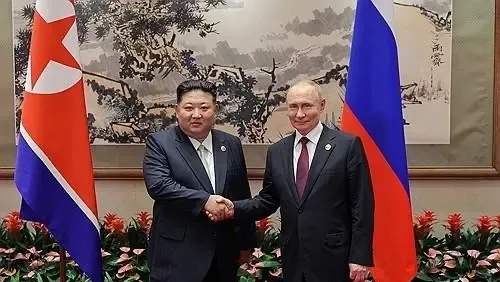
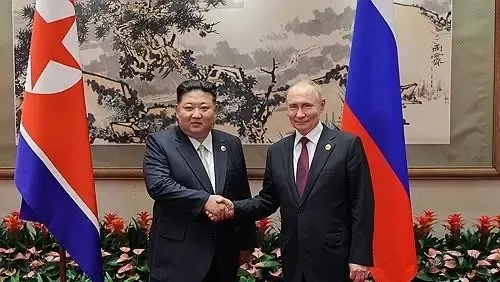
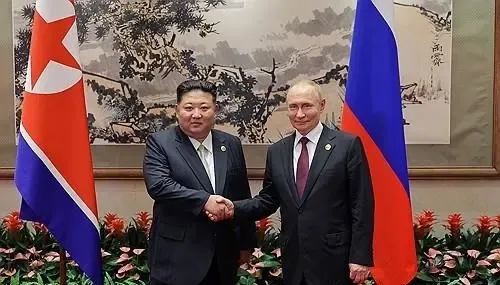
Russian Defence Minister Andrey Belousov met North Korean leader Kim Jong-un in Pyongyang on Sunday, April 26, 2025 , for high-level military talks.
Both sides agreed to sign a formal Russia-North Korea Military Cooperation Plan for 2027–2031 , marking one of the most structured bilateral defence commitments between the two nations.
North Korea has deployed approximately 15,000 combat troops to support Russia in its war against Ukraine , following a strategic partnership treaty signed in June 2024 .
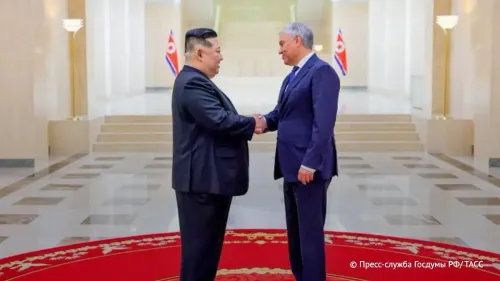
A memorial museum honouring soldiers killed in the Ukraine war was inaugurated in Pyongyang , attended by Russian State Duma Speaker Vyacheslav Volodin .
Belousov described Russian-Korean interstate relations as being at an unprecedentedly high level , signalling the alliance has moved beyond informal cooperation.
The visit coincides with the first anniversary of Russia's declaration that it recaptured the Kursk region from Ukrainian forces, a battle in which North Korean troops played a documented role.
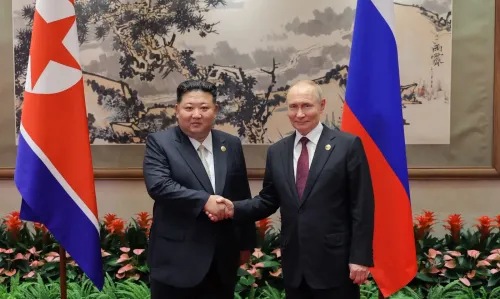
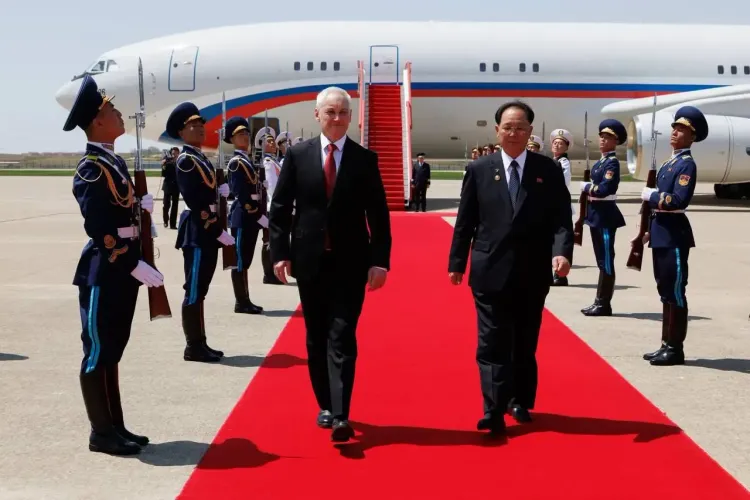
Pyongyang, April 27 (NationPress) — North Korean Supreme Leader Kim Jong-un held high-level military talks with Russian Defence Minister Andrey Belousov in Pyongyang on Sunday, April 26, signalling a deepening strategic alliance between the two nations. The discussions centred on expanding and formalising military cooperation, with both sides agreeing to transition their defence partnership to a long-term, structured framework. Russian state media agency TASS confirmed the meeting.
Russia-North Korea Military Cooperation Plan 2027–2031
Defence Minister Belousov announced a landmark agreement during the talks, stating that both sides agreed to transition military cooperation to a sustainable, long-term basis and are ready to sign a Russian-Korean Military Cooperation Plan for the period 2027–2031 this year. This multi-year roadmap marks one of the most structured bilateral defence commitments between Moscow and Pyongyang in recent history.
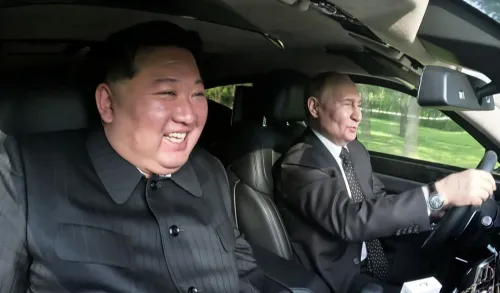
Belousov further described Russian-Korean interstate relations as being at an unprecedentedly high level, underscoring how rapidly ties have strengthened since the signing of a strategic partnership treaty in June 2024 between Kim Jong-un and Russian President Vladimir Putin.
North Korean Troops in Russia's War — The Military Backdrop
The Pyongyang meeting comes against the backdrop of North Korea deploying approximately 15,000 combat troops to support Russia in its ongoing war against Ukraine. This deployment, widely condemned by Western nations, represents one of the most significant foreign troop contributions to the Russia-Ukraine conflict. On April 26, 2024 — exactly one year before this meeting — Russia declared it had recaptured the Kursk region from Ukrainian forces, with North Korean soldiers playing a documented operational role in that offensive.
This timeline is not coincidental. The anniversary of the Kursk recapture, combined with a high-profile Russian delegation visiting Pyongyang, sends a deliberate geopolitical signal to both Ukraine and its NATO allies.
Memorial Museum and the Symbolic Weight of the Visit
Russian State Duma Speaker Vyacheslav Volodin also visited Pyongyang as part of the Russian delegation to attend the opening ceremony of a memorial museum honouring soldiers killed fighting for Russia in the war against Ukraine. The construction and inauguration of such a memorial on North Korean soil is deeply symbolic — it institutionalises North Korea's role as a wartime partner of Russia and elevates fallen DPRK soldiers to the status of martyrs in service of a shared cause.
Belousov expressed that Kim Jong-un's personal decision to invite the Russian military delegation to this event was a great honour and privilege for the Russian Ministry of Defence. Kim also met with Volodin, during which Putin's personal greetings were conveyed, along with congratulations on Kim's re-election as Chairman of the State Affairs Directorate.
Strategic Implications — What This Alliance Means for Asia and the World
The formalisation of a Russia-North Korea military cooperation plan stretching to 2031 is a significant escalation in the bilateral relationship. Analysts note that this partnership serves multiple strategic interests: Russia gains manpower and ammunition supplies, while North Korea reportedly receives advanced military technology, satellite data, and economic relief from crippling international sanctions.
This comes amid growing concern in South Korea, Japan, and the United States about the transfer of sensitive military technologies to Pyongyang. Seoul has previously warned that Russian technical assistance could accelerate North Korea's ballistic missile and nuclear weapons programmes — a direct threat to regional stability in Northeast Asia.
Notably, this deepening axis also challenges the global sanctions regime against North Korea, as Russia's veto power in the UN Security Council has effectively neutralised multilateral enforcement mechanisms since 2022.
What Comes Next
With both sides signalling that 2025 will be an active year for bilateral engagement across a wide range of areas, further high-level visits, arms cooperation agreements, and possibly joint military exercises cannot be ruled out. The formal signing of the 2027–2031 Military Cooperation Plan is expected later this year, which would cement the Russia-North Korea defence partnership as one of the most consequential geopolitical alignments of the decade. Global observers, particularly in Washington, Brussels, and Seoul, will be watching closely for any signs of technology transfers or expanded DPRK troop deployments.
Point of View
Russia is quietly locking in a decade-long military partnership with a nuclear-armed state, effectively converting North Korean manpower into geopolitical leverage. The memorial museum inaugurated on North Korean soil — honouring soldiers killed in Russia's war — normalises the DPRK's role as a co-belligerent in a way that no diplomatic communique could. India, which maintains ties with both Russia and the broader international community, must watch this axis carefully as its implications for Asian security and the global non-proliferation regime grow increasingly serious.
NationPress
19 Sept 2026
Frequently Asked Questions
Why did Russia's Defence Minister visit Pyongyang?
Russian Defence Minister Andrey Belousov visited Pyongyang to hold military talks with North Korean leader Kim Jong-un and attend the opening of a memorial museum honouring soldiers killed fighting for Russia in Ukraine. The visit aimed to formalise and expand the Russia-North Korea military partnership.
What is the Russia-North Korea Military Cooperation Plan 2027–2031?
It is a proposed long-term bilateral defence agreement between Russia and North Korea, announced by Defence Minister Belousov during his Pyongyang visit on April 26, 2025. The plan is expected to be formally signed later in 2025 and will structure military cooperation between the two countries through 2031.
How many North Korean troops are fighting in Russia's war against Ukraine?
Approximately 15,000 North Korean combat troops have been deployed to support Russia in its war against Ukraine, following a strategic partnership treaty signed by Kim Jong-un and Vladimir Putin in June 2024. North Korean soldiers reportedly played a role in Russia's recapture of the Kursk region in April 2024.
What did Russia's Duma Speaker Volodin do in Pyongyang?
Vyacheslav Volodin, Speaker of Russia's State Duma, attended the opening of a memorial museum in Pyongyang honouring soldiers killed fighting for Russia in Ukraine. He also met Kim Jong-un and conveyed President Putin's personal greetings and congratulations on Kim's re-election as Chairman of the State Affairs Directorate.
What does the Russia-North Korea alliance mean for global security?
The deepening Russia-North Korea military alliance raises serious concerns about the transfer of advanced military technology to Pyongyang, potentially accelerating its nuclear and ballistic missile programmes. It also undermines the international sanctions regime against North Korea, as Russia's UN Security Council veto blocks multilateral enforcement.