Putin tells Kim Russia-North Korea ties span 'all sectors' amid Kursk deployment
Synopsis
Putin’s Liberation Day greeting to Kim Jong Un wasn’t ceremonial — it was a public endorsement of a military alliance now operating on a battlefield. With North Korean troops reportedly fighting in Kursk and a comprehensive strategic partnership formally in place, the Russia-DPRK axis has moved from diplomatic rhetoric to active military coordination, reshaping the security calculus across Europe and the Indo-Pacific.
Key Takeaways
Vladimir Putin sent a Liberation Day message to Kim Jong Un on 15 August , declaring Russia and the DPRK are “actively cooperating in all sectors.” The two nations’ ties have been elevated to a comprehensive strategic partnership .
Putin publicly thanked North Korea for deploying Korean People’s Army (KPA) soldiers to the Kursk region .
North Korean Foreign Minister Choe Son-hui visited Russia at the invitation of Sergei Lavrov — her first trip since October .
The deepening alliance has drawn sharp criticism from the US , South Korea , and Japan , who cite potential violations of UN Security Council resolutions.
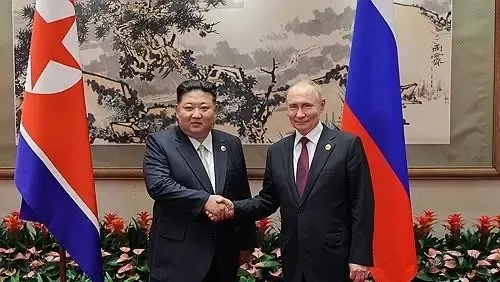
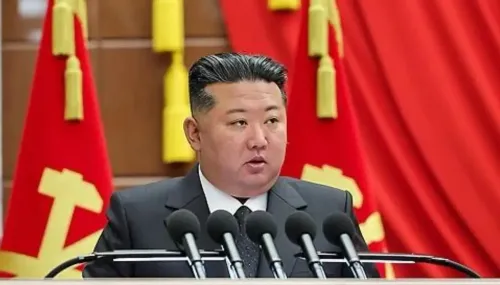
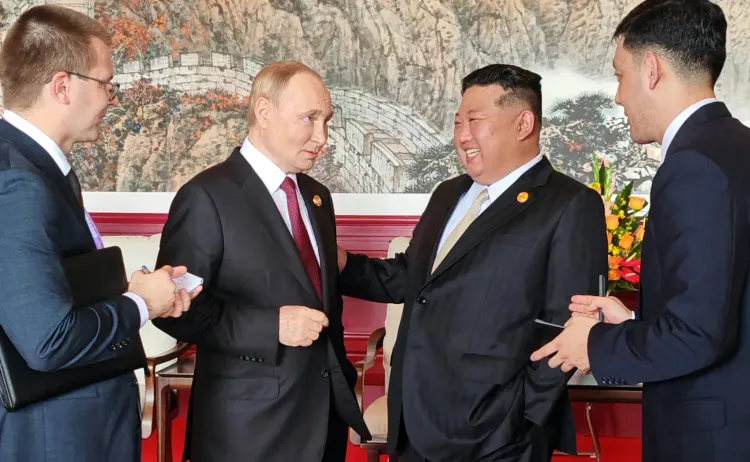
Russian President Vladimir Putin has declared that Russia and the Democratic People's Republic of Korea (DPRK) are “actively cooperating in all sectors while making concerted efforts to ensure regional security and stability,” according to the official Korean Central News Agency (KCNA). The statement came in a message of greetings Putin sent to Kim Jong Un, president of the State Affairs of the DPRK, on the occasion of the Korean Liberation Day on 15 August.
A Partnership Elevated to Strategic Level
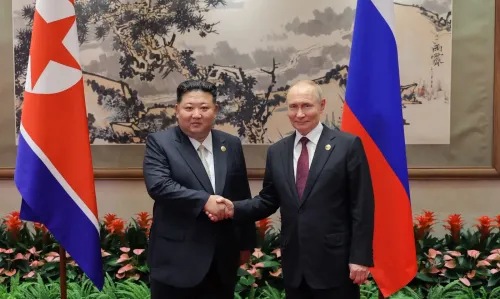
Putin’s message described bilateral ties as having been raised to a comprehensive strategic partnership, with both nations set to “conduct constructive joint undertakings on the pressing bilateral and international issues.” The phrasing signals a formal deepening of a relationship that has drawn sustained scrutiny from Western governments and regional powers alike.
The DPRK observes Liberation Day annually on 15 August, marking the end of Japan’s colonial rule over the Korean Peninsula in 1945 — a date that carries deep symbolic weight in both Koreas.
North Korean Troops in the Kursk Region
The diplomatic messaging follows a significant military development. Last month, Putin publicly thanked North Korean authorities for their decision to send soldiers from the Korean People’s Army (KPA) to participate in what Russia describes as the “liberation of the Kursk region.” The Kursk region has been the site of active cross-border military activity in the ongoing conflict with Ukraine.
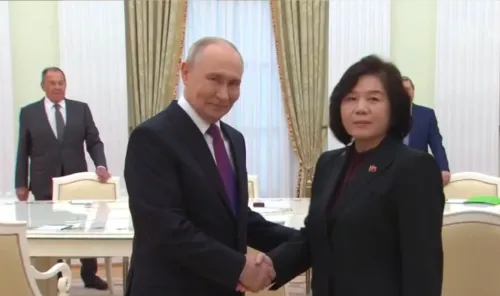
During a separate meeting with North Korean Foreign Minister Choe Son-hui, Putin reiterated his gratitude, saying: “I would like to once again express my gratitude for the support of our special military operation and for the decision to send soldiers from the Korean People’s Army to participate in the liberation of the Kursk region.”
Choe Son-hui’s Visit to Russia
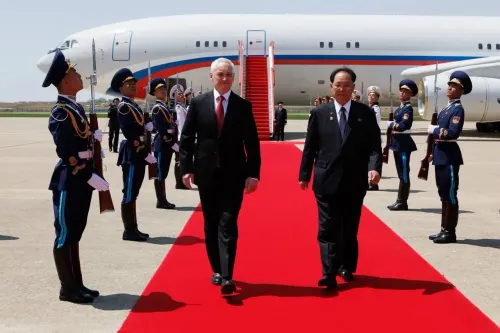
Foreign Minister Choe Son-hui travelled to Russia at the invitation of her Russian counterpart, Sergei Lavrov, according to the KCNA, which did not disclose further details about the purpose of the visit or her itinerary. The trip marked Choe’s first visit to Russia since October, when she had visited Moscow on a working visit and also attended a global security forum in Belarus.
Wider Implications for Regional Security
The Russia-DPRK alignment has alarmed the United States, South Korea, and Japan, who have repeatedly called for international scrutiny of what they describe as arms transfers and military cooperation that violate United Nations Security Council resolutions. Moscow and Pyongyang have not publicly acknowledged the transfer of weapons, though Western intelligence assessments have pointed to artillery shells and ballistic missiles flowing from North Korea to Russia.
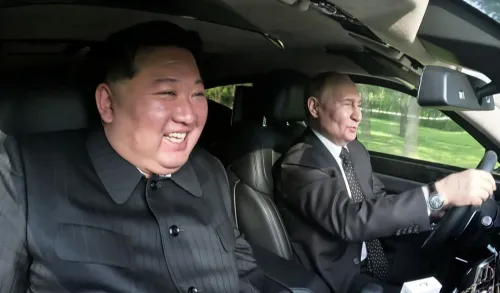
This is the latest in a series of high-level diplomatic exchanges between the two capitals since Putin’s landmark visit to Pyongyang in June 2024, which itself produced a mutual defence pact — the most significant security agreement between the two countries in decades. As the conflict in Ukraine continues, the depth and pace of this partnership will remain a critical variable in global security calculations.
Point of View
A threshold moment that mainstream coverage has underweighted. What is missing from the official messaging on both sides is any acknowledgement of the UN Security Council constraints that both countries are bound by — constraints that the troop deployment and reported arms flows appear to test directly. The Russia-DPRK axis is no longer a future risk; it is a present operational reality, and its trajectory will depend heavily on how long the Kursk front remains contested.
NationPress
29 Sept 2026
Frequently Asked Questions
What did Putin say about Russia-North Korea relations on Liberation Day?
Putin declared in a message to Kim Jong Un that Russia and the DPRK are “actively cooperating in all sectors” and making joint efforts to ensure regional security and stability. He also described bilateral ties as having been elevated to a comprehensive strategic partnership.
Why did Putin thank North Korea recently?
Putin thanked North Korean authorities for their decision to send Korean People’s Army soldiers to participate in what Russia calls the liberation of the Kursk region. He reiterated this gratitude during a meeting with North Korean Foreign Minister Choe Son-hui.
Who is Choe Son-hui and why did she visit Russia?
Choe Son-hui is North Korea’s Foreign Minister. She travelled to Russia at the invitation of Russian Foreign Minister Sergei Lavrov, though the KCNA did not disclose the purpose or itinerary of the visit. It was her first trip to Russia since October.
What is the significance of Russia-North Korea’s comprehensive strategic partnership?
The comprehensive strategic partnership, formalised following Putin’s visit to Pyongyang in June 2024, represents the deepest security alignment between the two countries in decades. It reportedly includes a mutual defence pact and has been accompanied by reported arms transfers and troop deployments that Western governments say violate UN Security Council resolutions.
How have other countries responded to the Russia-DPRK military cooperation?
The United States, South Korea, and Japan have repeatedly raised concerns, calling for international scrutiny and asserting that reported arms transfers and the KPA troop deployment violate UN Security Council resolutions. Russia and North Korea have not publicly confirmed weapons transfers.