Kim Jong-un China trip possible but unconfirmed: S Korea's Lee
Synopsis
Seoul says a Kim Jong-un trip to China is possible but not confirmed. President Lee Jae Myung went further, saying a Kim-Xi summit would be ‘great’ for South Korea. He is betting on Beijing as a path to calm while Pyongyang refuses to talk to Seoul directly.
Key Takeaways
South Korean President Lee Jae Myung said on 29 November 2026 that Kim Jong-un's China visit is possible but not yet confirmed.
Speculation suggests Kim may meet Chinese President Xi Jinping early next month.
South Korea's spy agency is reportedly closely monitoring a potential visit.
Lee said Seoul has little room to act because North Korea refuses dialogue with the South, but said a Kim-Xi summit would be welcome.
Lee reaffirmed his push to regain wartime OPCON of South Korean troops from the United States ‘at an early date without fail’.
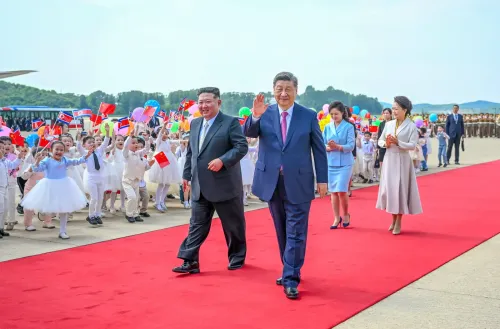
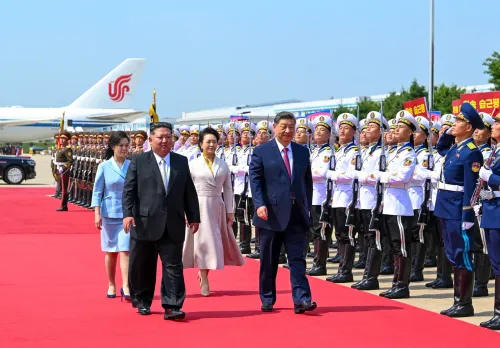
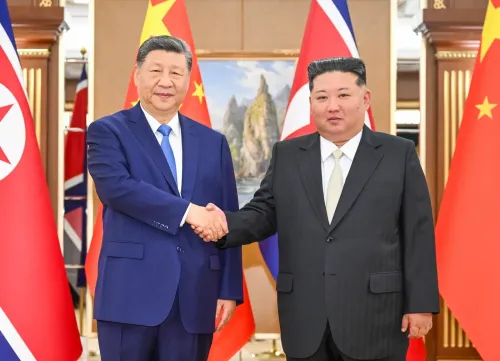
South Korean President Lee Jae Myung said on Sunday, 29 November 2026, that a visit by North Korean leader Kim Jong-un to China is possible but has not yet been confirmed. Speaking to reporters at Cheong Wa Dae in Seoul, Lee said his government would prepare for either outcome. His remarks come amid speculation that Kim may travel to China early next month for a summit with Chinese President Xi Jinping.
What President Lee Said
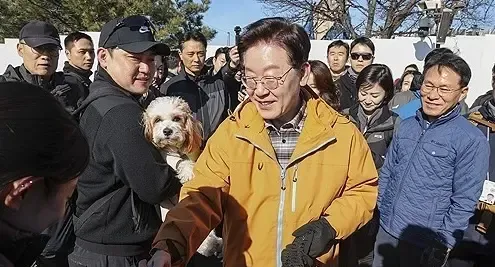
Lee spoke after walking with reporters along a trail on Mount Bugak, which overlooks the presidential office. Referring to intelligence available to his office, he said: “There is a possibility, but it has not yet been determined.”
He said the government will prepare both for a scenario in which Kim visits China and one in which he does not. Lee added that there is no need to be on edge, and that Seoul will assess the situation thoroughly and make the necessary preparations.
According to South Korean media reports, the country's spy agency has said it is closely monitoring developments around a potential Kim visit to China.
Seoul's Limited Room to Act
Lee acknowledged that South Korea has little room to step in, because North Korea maintains a policy of not engaging in dialogue with the South. He said Seoul would still do its utmost to create conditions that would prevent further hostility from Pyongyang.
The President said multiple variables make it difficult to predict whether the leaders of North Korea and China will hold a summit in the near future.
“For us, it would be great if (a summit) takes place, in which case we can play whatever role we can. But it is difficult to predict,” Lee told reporters separately. He added that easing inter-Korean tensions and confrontation would be important under any circumstances.
Notably, Lee welcomed a possible Pyongyang-Beijing summit rather than treating it as a threat. That approach suggests Seoul sees China as a possible channel for de-escalation while direct inter-Korean contact remains frozen.
Push to Regain Wartime OPCON
During the same interaction, Lee reaffirmed his administration's commitment to regaining wartime operational control (OPCON) of South Korean troops from the United States.
“I think OPCON should be returned at an early date without fail,” Lee said, adding that the government is working toward that goal.
“We are in a situation where we do not need to entrust our military sovereignty to a foreign country and rely on it,” he said. “We should make it happen, and if it doesn't, we should find ways to make it happen.”
The OPCON transfer has long been a sensitive issue in the South Korea-US alliance. Lee's renewed push comes as Seoul weighs a more fluid security environment on the Korean Peninsula.
Why It Matters
A Kim-Xi summit would affect security calculations in Seoul, Washington and Tokyo, and potentially for wider Asian diplomacy, including India's engagement with the region. China remains North Korea's most important economic and diplomatic partner, so any top-level meeting is closely watched for signals on sanctions, nuclear policy and regional alignments.
Watchers will now track whether Beijing or Pyongyang confirms a visit in the coming days, and how Seoul positions itself if a summit goes ahead early next month.
Point of View
Which makes the timing of the OPCON push as much a statement of sovereignty as a defence policy.
NationPress
29 Nov 2026
Frequently Asked Questions
Is Kim Jong-un visiting China?
A visit is possible but has not been confirmed, according to South Korean President Lee Jae Myung on 29 November 2026. Speculation suggests Kim may travel to China early next month for a summit with Xi Jinping.
What did Lee Jae Myung say about a Kim-Xi summit?
Lee said it would be great for South Korea if a summit takes place, adding that Seoul could then play whatever role it can. He also said such a summit is difficult to predict because of multiple variables.
Why can't South Korea intervene directly?
North Korea maintains a policy of not engaging in dialogue with the South, which leaves Seoul little room to step in. Lee said his government would still try to create conditions that prevent further hostility from Pyongyang.
What is wartime OPCON and why does Lee want it back?
Wartime operational control (OPCON) is command authority over South Korean troops during war, which currently rests with the United States. Lee said it should be returned at an early date without fail, arguing that South Korea need not entrust its military sovereignty to a foreign country.