Laos ramps up flood preparedness for 2026 rainy season
Synopsis
Laos has approved its 2026 flood response plan and is tightening hydropower oversight, urban drainage, and waste management — all before the rainy season peaks. Prime Minister Siphandone's World Environment Day warning that climate change is an 'urgent challenge already affecting Laos' signals this is no routine drill, but a government grappling with compounding disaster risk.
Key Takeaways
The National Water Resources Committee (NWRC) approved Laos' 2026 flood response plan at its meeting on 11 June 2026 .
Key preparations include dissemination of regulations to hydropower operators , standardisation of flood procedures, and appointment of local dam-site coordinators .
A Vientiane meeting addressed urban challenges including flooding, waste disposal, wastewater treatment, and drainage infrastructure.
Prime Minister Sonexay Siphandone warned on 5 June 2026 that Laos faces urgent climate risks including storms, floods, droughts, and forest fires.
The Lao Ministry of Agriculture and Environment ran a cleanup campaign across 9 districts in Vientiane for World Environment Day.
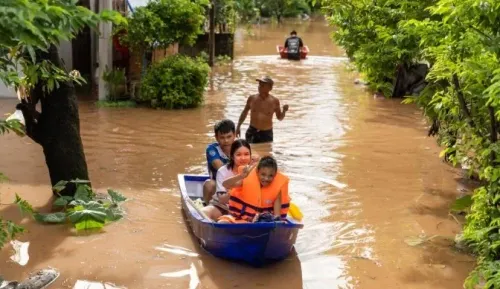
Laos is intensifying its flood management efforts and urban environmental measures ahead of the 2026 rainy season, with government agencies mobilising across multiple fronts to reduce disaster risk and protect communities nationwide.
National Flood Response Plan Approved
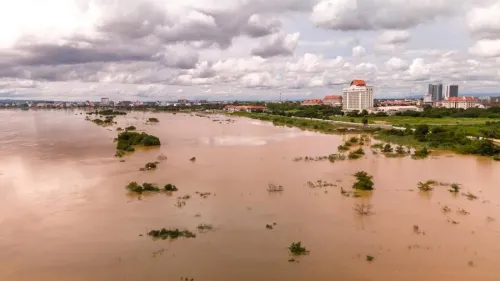
The National Water Resources Committee (NWRC) convened a meeting on 11 June 2026 to review and formally approve the country's 2026 flood response plan, while assessing the readiness of relevant agencies in managing water resources, reservoirs, and flood risks. Officials reported progress on several key fronts, including the dissemination of regulations to hydropower operators, standardisation of flood management procedures, and the appointment of local coordinators at dam sites.
A nationwide review of hydropower projects was also completed as part of the preparedness push. Discussions covered weather and hydrological forecasts, flood modelling for the Mekong River and its tributaries, reservoir operations, irrigation systems, and urban flood mitigation measures, as well as proposed improvements to water-related legislation.
Urban Flooding and Waste Management in Focus
A separate meeting held in Vientiane on Tuesday brought together officials to exchange experiences and address ongoing challenges in urban management — particularly flooding, waste disposal, wastewater treatment, and drainage infrastructure. Participants identified key difficulties and proposed joint solutions to strengthen garbage management, improve drainage systems, and enhance urban planning.
The discussions underscored the need for closer coordination between central and local authorities to ensure more effective urban governance. This comes amid growing concern that rapid urbanisation in Laos has outpaced the development of critical drainage and waste management infrastructure.
PM Siphandone Flags Climate Urgency
On 5 June 2026, coinciding with the 53rd anniversary of World Environment Day and the 27th anniversary of Laos' National Environment Day, Lao Prime Minister Sonexay Siphandone issued a pointed message on climate vulnerability. He emphasised that climate change is 'not a distant issue but an urgent challenge already affecting many countries, including Laos.'
Siphandone noted that the country remains highly exposed to natural disasters — storms, floods, droughts, and forest fires — which significantly impact socio-economic development, infrastructure, agriculture, food security, and livelihoods. He called for stronger cross-sector cooperation to protect forests, promote reforestation, improve energy efficiency, reduce fossil fuel dependence, and expand clean and renewable energy.
Cleanup Campaign Across Vientiane
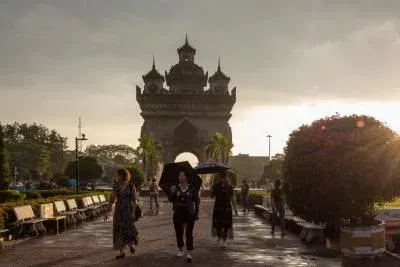
As part of the World Environment Day observance, the Lao Ministry of Agriculture and Environment organised a cleanup campaign across nine districts in Vientiane, promoting collective responsibility for urban waste management and environmental protection. The initiative aimed to foster a cleaner, greener, and more orderly capital city.
What Comes Next
With the rainy season approaching, the effectiveness of Laos' flood response will hinge on coordinated implementation between hydropower operators, local dam-site coordinators, and urban planners. The government's reaffirmed commitment to international climate frameworks signals continued engagement with regional partners on disaster risk reduction.
Point of View
Hydropower coordination, urban drainage reviews — but the country's recurring vulnerability to floods and droughts points to a deeper gap between policy adoption and on-the-ground implementation. The Prime Minister's climate warning is notable for its candour, but Laos remains heavily dependent on hydropower infrastructure that itself creates downstream flood risk when mismanaged. The real test will be whether the newly appointed dam-site coordinators and inter-agency frameworks hold under actual rainy-season pressure, not just in pre-season meetings.
NationPress
16 Sept 2026
Frequently Asked Questions
What is Laos' 2026 flood response plan?
It is a national preparedness framework approved by the National Water Resources Committee (NWRC) at its 11 June 2026 meeting, covering hydropower operator regulations, flood management procedures, dam-site coordination, and urban flood mitigation across the country.
Why is Laos particularly vulnerable to floods?
Laos is geographically exposed to monsoon-driven flooding along the Mekong River and its tributaries, and Prime Minister Siphandone has acknowledged that climate change is intensifying natural disasters including storms, floods, droughts, and forest fires, with significant impacts on agriculture, infrastructure, and livelihoods.
What urban challenges is Vientiane addressing ahead of the rainy season?
Officials in Vientiane are tackling flooding, waste disposal, wastewater treatment, and drainage system deficiencies. A dedicated meeting proposed joint solutions to improve drainage infrastructure, garbage management, and coordination between central and local authorities.
What did PM Siphandone say on World Environment Day 2026?
Prime Minister Sonexay Siphandone, marking the 53rd World Environment Day on 5 June 2026, stated that climate change is 'not a distant issue but an urgent challenge already affecting many countries, including Laos.' He called for stronger cooperation on forest protection, reforestation, energy efficiency, and renewable energy expansion.
What role do hydropower operators play in Laos' flood management?
Hydropower operators are required to follow standardised flood management procedures and newly disseminated regulations. Local coordinators have been appointed at dam sites, and a nationwide review of hydropower projects was completed as part of the 2026 rainy season preparedness effort.