Lee reiterates $75,000 reward for reporting CSAT cheating amid AI fears
Synopsis
South Korea's president has put a price — $75,000 per case — on exposing CSAT cheaters, after a string of AI-assisted exam fraud scandals rocked the country's most consequential exam season. With a LEET top-scorer found dead under a cloud of cheating allegations, the government is treating exam integrity as a national crisis.
Key Takeaways
President Lee Jae Myung confirmed a reward of 100 million won ($75,000) per reported case of cheating on the CSAT (Suneung) held this week.
The reward is paid per case — a whistleblower reporting multiple cheats in one go could receive more than 100 million won in total.
Cheaters who self-report and name accomplices will receive a reduced punishment and still qualify for the full reward .
The move follows the certified tax accountant exam top scorer's admission of cheating with AI and digital devices .
A 32-year-old man who allegedly cheated with AI on the LEET was found dead at a Seoul motel on the day of this year's CSAT.
The CSAT is viewed as a major life determinant in South Korea , where university admission heavily shapes career trajectories.
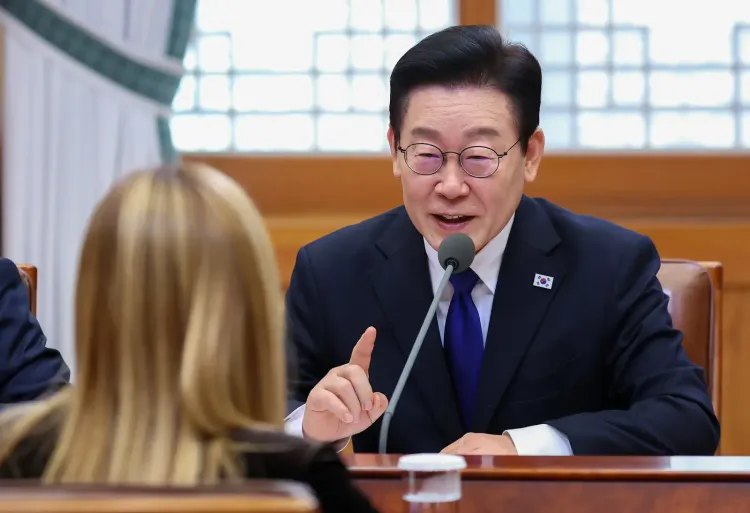
South Korean President Lee Jae Myung on Saturday, 21 November 2026, reiterated that the government will pay 100 million won (approximately $75,000) per reported case to anyone who exposes cheating on this week's College Scholastic Ability Test (CSAT), commonly known as the Suneung. Lee described exam misconduct as 'a crime as serious as corruption by public officials,' signalling zero tolerance as South Korea grapples with mounting concerns over artificial intelligence-assisted cheating in high-stakes national examinations.
What the Reward Covers
Speaking on social media, Lee clarified that the 100 million won reward is offered per case, meaning a single whistleblower reporting multiple cheating instances in one go could receive a combined payout exceeding that figure. Additionally, a cheater who voluntarily turns themselves in and also names accomplices will be eligible for a reduced punishment while still receiving the full reward amount for reporting — an incentive structure designed to encourage confessions and unravel organised cheating networks.
The AI Cheating Crisis Behind the Announcement
The reward programme is one of several anti-cheating measures rolled out in response to a growing crisis over AI use during national exams. The alarm was first raised when the top scorer of this year's certified tax accountant exam admitted to cheating using artificial intelligence and digital devices. Concern escalated further when a 32-year-old man who had achieved a perfect score on the Legal Education Eligibility Test (LEET) was alleged to have used AI to cheat. The man was later found dead at a motel in Seoul on the day of the CSAT, after failing to appear for a live examination session he had reportedly promised to attend in order to clear his name.
Why the Suneung Matters So Much
The CSAT is the culmination of years of intensive preparation for hundreds of thousands of South Korean students. University admission in South Korea is widely regarded as a pivotal determinant of lifetime career prospects, making the exam one of the most consequential single-day events in the country's academic calendar. Any perception that the system can be gamed — especially with AI — risks undermining public confidence in an institution built on the promise of a meritocratic level playing field.
Lee's Warning to Cheaters
'We will track cheaters down to the very end and strictly punish exam cheating that steals the lifelong efforts of hundreds of thousands of test-takers,' Lee said. The statement underscores the government's intent to treat AI-assisted exam fraud not as a technical loophole but as a criminal offence warranting prosecution. This is the latest in a series of escalating government responses as regulators race to keep pace with AI tools increasingly accessible to exam-takers.
What Comes Next
Authorities are expected to scrutinise this year's CSAT results closely before they are released, with investigations into suspected cheating already under way. The government's willingness to offer rewards at this scale signals that conventional invigilation methods are under strain, and that a broader policy framework on AI use in examinations may be necessary in the months ahead.
Point of View
And cash incentives are now filling the gap that invigilation cannot. The death of the LEET high-scorer — still unresolved — adds a deeply troubling human dimension to what is otherwise framed as a policy problem. Lee's framing of exam cheating as equivalent to corruption by public officials is politically shrewd, equating it with the kind of institutional betrayal that South Korean voters viscerally resent. But the deeper question — whether the country's exam-centric university admission system itself concentrates too much pressure on a single day — is conspicuously absent from the government's response.
NationPress
21 Nov 2026
Frequently Asked Questions
How much is the reward for reporting CSAT cheating in South Korea?
The South Korean government is offering 100 million won (approximately $75,000) per reported case of cheating on the CSAT. A whistleblower who reports multiple cases at once could receive a total payout exceeding that amount.
What is the CSAT or Suneung?
The College Scholastic Ability Test (CSAT), known as the Suneung, is South Korea's national college entrance examination. It is widely regarded as a pivotal life event because university admission in South Korea strongly influences long-term career prospects.
Why is AI cheating a concern in South Korean national exams?
Concerns escalated after the top scorer of this year's certified tax accountant exam admitted to cheating using artificial intelligence and digital devices. Separately, a man who achieved a perfect score on the LEET was alleged to have used AI, heightening fears about AI-assisted fraud in high-stakes examinations.
What happened to the LEET top scorer accused of AI cheating?
A 32-year-old man who earned a perfect score on the Legal Education Eligibility Test (LEET) was alleged to have used AI to cheat. He was found dead at a motel in Seoul on the day of the CSAT, after failing to appear for a live exam session he had promised to attend to prove his innocence.
Will cheaters who confess still face punishment?
Yes, but the government has offered an incentive: cheaters who voluntarily turn themselves in and also report their accomplices will receive a reduced punishment while still being paid the full 100 million won reward for reporting. The measure is designed to encourage self-reporting and dismantle organised cheating networks.