Lashkar-e-Taiba infrastructure repurposed for Afghanistan ops, MEMRI report warns
Synopsis
A MEMRI report alleges that Lashkar-e-Taiba's physical infrastructure in Pakistan's Dir district is being repurposed to coordinate militant activity targeting Afghanistan — with named LeT figures reportedly in contact with an ISKP commander in Khyber Pakhtunkhwa. It is the sharpest documented signal yet that as Pakistan's conventional leverage over the Taliban collapses, elements within its security establishment are activating proxy networks in a new direction.
Key Takeaways
A MEMRI report alleges that Lashkar-e-Taiba (LeT) infrastructure, including the Maaz bin Jabal LeT Markaz in Dir , is being repurposed for militant coordination targeting Afghanistan .
Mohammad Rana Ashfaq , linked to Jamaat-ud-Dawa and LeT , is allegedly in contact with Abdullah Afridi , a local ISKP commander in Khyber Pakhtunkhwa .
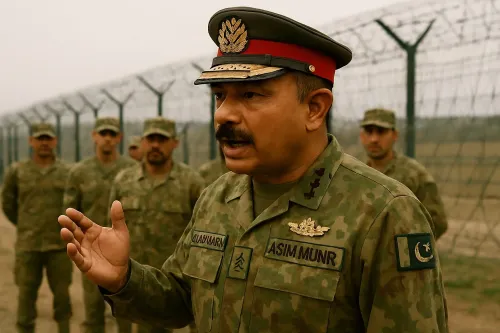
Pakistan's Defence Minister Khawaja Muhammad Asif signalled a shift toward direct confrontation with the Taliban by February 2026 .
Pakistan and the Taliban have traded accusations: Islamabad blames Kabul for sheltering the TTP ; Kabul accuses Pakistan of harbouring ISKP elements.
The Wakhan Corridor and Badakhshan have emerged as a strategic flashpoint, with Afghanistan pursuing direct China linkages that could bypass Pakistani territory.
Infrastructure historically linked to Lashkar-e-Taiba (LeT) and Jamaat-ud-Dawa is reportedly being repurposed to facilitate militant activity targeting Afghanistan, according to a detailed assessment by the US-based Middle East Media Research Institute (MEMRI). The report, published in August 2026, maps a significant shift in Pakistan's covert regional strategy as its conventional leverage over the Taliban continues to erode.
Pakistan's Fractured Afghan Calculus
For years, Pakistan cultivated the political and military ecosystem from which the Taliban emerged, expecting the group's return to power in Kabul to serve Islamabad's interests — suppressing the Tehreek-e-Taliban Pakistan (TTP), securing the Durand Line, and preserving Afghan dependence on Pakistani transit and security networks. Those expectations have been comprehensively disappointed. The Taliban have resisted Pakistani pressure and have instead pursued alternative diplomatic and economic partnerships, according to the MEMRI report.
The collapse of this strategic calculus has, according to the report, triggered a sharp escalation in Pakistan's official posture. By February 2026, Pakistani Defence Minister Khawaja Muhammad Asif was openly signalling a shift toward direct confrontation with Kabul.
Coercion as Policy: Cross-Border Strikes and Proxy Networks
'Islamabad's response has progressively shifted towards coercion. Cross-border strikes, prolonged border closures, transit restrictions, economic pressure and renewed engagement with Afghan political opponents have accompanied growing military confrontation,' the MEMRI report stated.
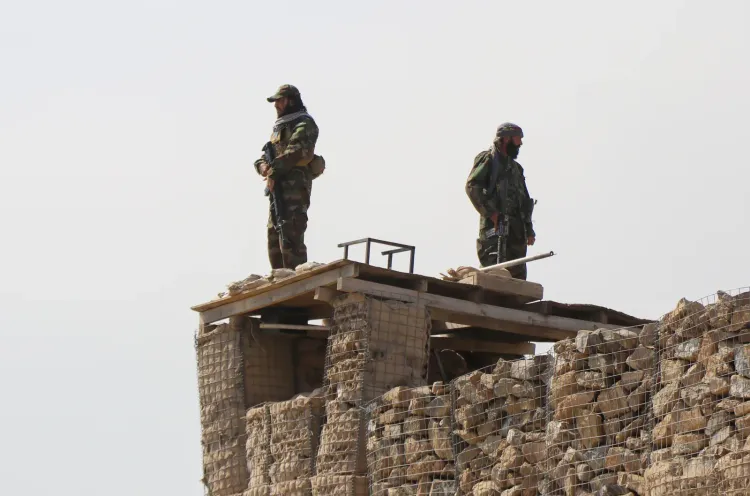
Pakistan maintains that its military operations are necessary because the Taliban have failed to prevent the TTP from using Afghan territory as a base. Kabul, however, denies providing sanctuary to the group and has counter-accused Pakistan of harbouring elements of the Islamic State Khorasan Province (ISKP).
Citing analysts, the report assessed that Pakistan has reverted to a familiar instrument of regional statecraft — selectively using, tolerating, and facilitating terrorist proxies to exert political pressure. As conventional leverage has diminished, elements within the Pakistani security establishment have reportedly tolerated or facilitated ISKP networks in the border regions of Khyber Pakhtunkhwa and Balochistan provinces.
LeT Infrastructure Allegedly Repurposed
The report's most pointed allegation concerns figures linked to Jamaat-ud-Dawa and Lashkar-e-Taiba establishing contacts with ISKP-affiliated individuals in Khyber Pakhtunkhwa. Specifically, it alleges that Mohammad Rana Ashfaq, associated with both Jamaat-ud-Dawa and LeT, has assumed an expanded operational role in the province and has been in contact with Abdullah Afridi, a local ISKP commander in Khyber Pakhtunkhwa.
The report further alleges that the Maaz bin Jabal LeT Markaz in Dir has provided space for training or operational coordination between LeT and ISKP cadres, with activities directed toward Afghanistan. 'These developments suggest that LeT infrastructure is now being repurposed to facilitate activity toward Afghanistan,' the report concluded.
The Wakhan Corridor and the China Factor
The MEMRI assessment also highlights the growing strategic significance of Badakhshan province and the Wakhan Corridor as a parallel theatre of competition. Badakhshan borders China, Tajikistan, and Pakistan, while the narrow Wakhan Corridor offers Afghanistan its only direct frontier with China's Xinjiang region.
For Kabul, the Wakhan Corridor represents a potentially transformative strategic asset — the possibility of direct trade, infrastructure, and mineral linkages with China that bypass Pakistani territory entirely. Expanding Afghan connectivity to China, growing mineral exploration, and alternative transit routes are, according to the report, already undermining Pakistan's long-standing economic and geopolitical influence over both Kabul and Beijing. Badakhshan and the Wakhan Corridor have consequently become a key arena in this wider struggle for regional influence.
What Comes Next
Taliban authorities are increasingly asserting that ISKP's operational infrastructure has shifted across the border into Pakistani territory — a direct inversion of Islamabad's own narrative. With both sides escalating accusations and Pakistan reportedly activating proxy networks, the Afghanistan-Pakistan borderlands are emerging as one of South Asia's most volatile fault lines. Analysts will be watching whether international pressure — particularly from Washington and Beijing — can constrain further escalation.
Point of View
If accurate, marks a qualitative shift in Pakistan's proxy calculus — from using militant networks against India to redirecting them toward Afghanistan. This is not without precedent, but the alleged convergence of LeT and ISKP infrastructure is particularly significant given ISKP's track record of attacking Pakistani state targets. Islamabad may be playing with a fire it cannot control. Meanwhile, the Wakhan Corridor dimension is underreported: Afghanistan's potential to route trade and minerals through China without touching Pakistani soil is a structural threat to Pakistan's regional leverage that no amount of cross-border pressure resolves.
NationPress
7 Oct 2026
Frequently Asked Questions
What does the MEMRI report allege about Lashkar-e-Taiba in Afghanistan?
The MEMRI report alleges that infrastructure linked to Lashkar-e-Taiba (LeT), specifically the Maaz bin Jabal LeT Markaz in Dir, is being used for training or operational coordination between LeT and ISKP cadres directed toward Afghanistan. It also alleges that a named LeT-linked figure, Mohammad Rana Ashfaq, has established contact with a local ISKP commander in Khyber Pakhtunkhwa.
Why has Pakistan's relationship with the Taliban deteriorated?
Pakistan had expected the Taliban's return to power to suppress the TTP, secure the Durand Line, and keep Kabul dependent on Pakistani transit and security support. Instead, the Taliban have resisted Pakistani pressure and pursued independent diplomatic and economic partnerships. By February 2026, Pakistani Defence Minister Khawaja Muhammad Asif was openly signalling a shift toward direct confrontation.
What accusations have Pakistan and the Taliban traded?
Pakistan maintains that its cross-border military operations are necessary because the Taliban have failed to prevent the TTP from using Afghan territory. The Taliban-led Kabul government denies sheltering the TTP and has counter-accused Pakistan of harbouring Islamic State Khorasan Province (ISKP) elements.
Why is the Wakhan Corridor strategically significant?
The Wakhan Corridor is Afghanistan's only direct land frontier with China's Xinjiang region. It offers Kabul the possibility of developing trade, infrastructure, and mineral links with China without transiting Pakistani territory — a development that would significantly undermine Pakistan's long-standing economic and geopolitical leverage over both Afghanistan and its relationship with Beijing.
What is ISKP and why does its alleged Pakistan connection matter?
The Islamic State Khorasan Province (ISKP) is the Afghan-Pakistan regional affiliate of the Islamic State, responsible for major attacks across the region. Allegations that Pakistani security establishment elements have tolerated or facilitated ISKP networks in Khyber Pakhtunkhwa and Balochistan are significant because ISKP has itself attacked Pakistani state targets, raising the risk that such proxy facilitation could backfire.