El Niño a 'wrecking ball' for global economy, UN warns Asia to brace
Synopsis
The UN has declared this El Niño a 'wrecking ball' — potentially the most intense in four decades — that will not just devastate crops and displace millions across Asia, Africa, and Latin America, but ripple outward as economic shocks to the entire global economy. With a two-week action window flagged, India's emerging role in regional disaster preparedness has drawn specific attention.
Key Takeaways
UN Under-Secretary-General Tom Fletcher called El Niño a 'wrecking ball' at a Geneva news conference on Wednesday, 21 October 2026 .
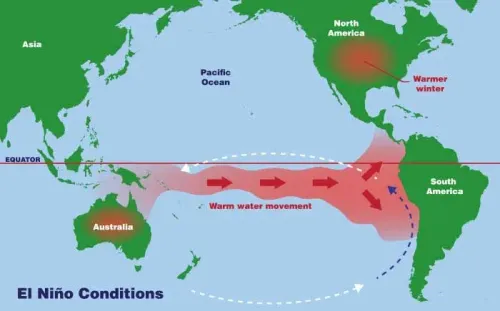
The event will drive extreme heat, droughts, and floods across Latin America , Eastern and Southern Africa , and Asia and the Pacific .
WMO chief Celeste Saulo warned the El Niño could be 'unprecedented in strength' — literally off the monitoring charts used over the past four decades .
Fletcher described the next two weeks as a 'critical window' to act and said he is asking countries with disaster response capacity to go on immediate standby .
India has sponsored early warning and disaster risk reduction projects in seven Pacific Island countries and operates HADR programmes in the Indo-Pacific under the Quad framework.
The UN warned the crisis will 'create economic shocks for the global economy and drive further conflict, displacement, migration.'
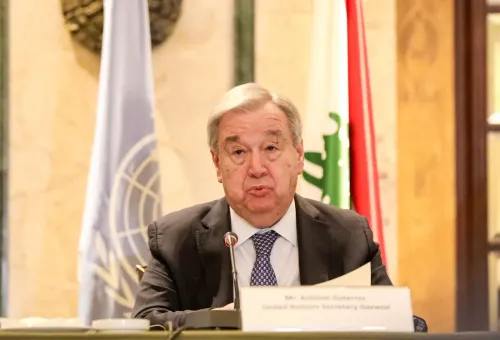
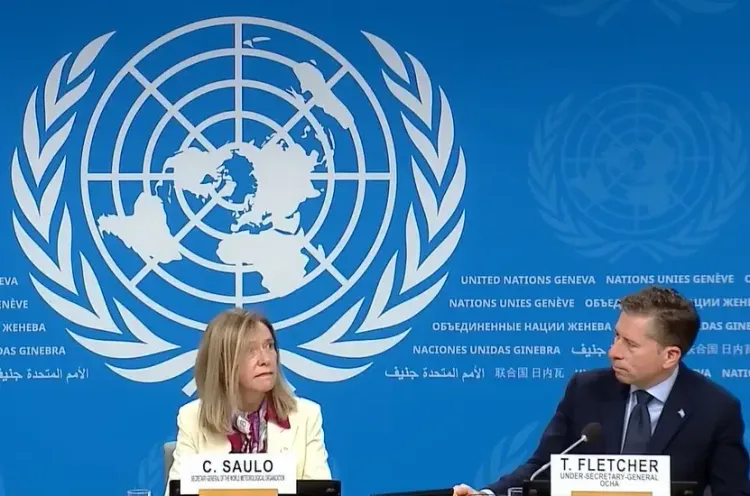
UN Under-Secretary-General Tom Fletcher on Wednesday issued a stark warning at a news conference in Geneva, describing the current El Niño as a 'wrecking ball' that will deliver 'economic shocks for the global economy' and batter Asia, Latin America, Eastern and Southern Africa, and the broader Global South with extreme heat, droughts, and floods. Fletcher, whose portfolio covers humanitarian and emergency relief, called the next two weeks a 'critical window to act' before irreversible damage sets in.
Fletcher's Warning: Scope and Scale
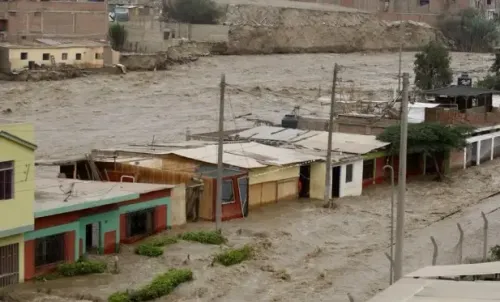
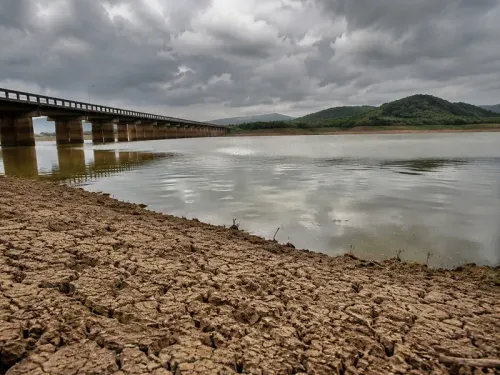
'This El Niño is a behemoth. It is a wrecking ball. It will tear through Latin America, Eastern and Southern Africa, Asia and the Pacific with extreme heat, droughts and floods,' Fletcher said. He stressed that the consequences will not be contained to the countries in the immediate path of the weather event. 'It will create economic shocks for the global economy and drive further conflict, displacement, migration,' he added.
Fletcher announced he is writing to countries with existing disaster response capacity — part of the UN's coordinated emergency network — asking them to place that capacity on immediate standby. He also called for a 'much wider global mobilisation of solidarity, expertise and action' spanning governments, civil society, academia, and businesses.
WMO Chief Warns of Unprecedented Intensity
World Meteorological Organisation (WMO) head Celeste Saulo, who also spoke at the Geneva briefing, said the El Niño could be 'unprecedented in strength, literally off the monitoring charts' used over the past four decades. While the phenomenon is expected to peak towards the end of this year, Saulo cautioned that 'its impacts will be felt long after that.'
For Southeast Asia, Saulo warned of warmer conditions and rainfall deficits that would heighten the risk of heat exposure and place pressure on agriculture and water supplies. She also flagged increasing wildfire and smoke hazard risks already emerging across the region. A WMO bulletin from last week indicated that normal to above-normal maximum and minimum temperatures are likely over most of the southern part of South Asia through the rest of the year. Notably, neither Fletcher nor Saulo provided country-specific impact projections at the briefing.
India's Role in Regional Disaster Preparedness
India has assumed a growing international role in weather disaster forecasting and post-disaster relief coordination. New Delhi's India–UN Development Partnership Fund has sponsored projects for early warning systems and disaster risk reduction across seven Pacific Island countries.
Additionally, India, alongside fellow Quad members — the US, Japan, and Australia — operates Humanitarian Assistance and Disaster Relief (HADR) programmes specifically designed for the Indo-Pacific region, which faces some of the most acute El Niño-related exposure.
The Stakes: Economic and Humanitarian
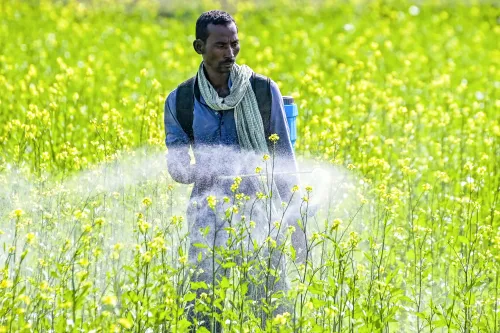
The UN's framing of El Niño as an economic threat — not merely a weather event — underscores the cascading second-order effects that climate disruptions now carry. Crop failures driven by droughts can trigger food price inflation globally; flooding displaces populations and disrupts supply chains; extreme heat suppresses agricultural and industrial productivity. This comes amid an already fragile global economic outlook, with several major economies contending with elevated debt and sluggish growth.
'It would be an extraordinary failure to see this crisis coming, to hear the predictions from the experts, and yet still squander the opportunity to protect people in its path,' Fletcher said, framing the window for prevention as narrow and rapidly closing. As the El Niño moves toward its peak, the adequacy — and speed — of the global response will determine how much of the projected damage can be averted.
Point of View
Not just a humanitarian one. What mainstream coverage often misses is the second-order danger: food inflation from crop failures in South Asia and Africa feeding into already-stretched household budgets globally. India's proactive positioning — through the Quad HADR framework and its Pacific Island early-warning investments — is both a genuine contribution and a soft-power play in a region where China's influence is growing. The real accountability question is whether the 'two-week window' rhetoric translates into pre-positioned resources, or whether it becomes another instance of warnings heeded in press releases but not in warehouses.
NationPress
22 Oct 2026
Frequently Asked Questions
Why is the UN calling El Niño a 'wrecking ball' for the global economy?
UN Under-Secretary-General Tom Fletcher used the term to convey the scale of economic disruption the current El Niño is expected to cause — including supply chain shocks, food price inflation, forced displacement, and conflict — beyond its direct meteorological impacts. The UN warned that damage will not stay confined to countries in the immediate path of the weather event.
Which regions are most at risk from this El Niño?
Latin America, Eastern and Southern Africa, and Asia and the Pacific face the highest direct exposure, according to the UN. Southeast Asia in particular faces warmer conditions, rainfall deficits, heat stress on agriculture and water supplies, and heightened wildfire risk. South Asia is expected to see above-normal temperatures through the rest of the year.
How intense is this El Niño compared to past events?
WMO chief Celeste Saulo said it could be 'unprecedented in strength, literally off the monitoring charts' used over the past four decades. She added that while the event is expected to peak toward the end of this year, its impacts will persist well beyond the peak.
What is India doing to prepare for El Niño-related disasters?
India has sponsored early warning system and disaster risk reduction projects in seven Pacific Island countries through the India–UN Development Partnership Fund. Along with fellow Quad members — the US, Japan, and Australia — India also runs Humanitarian Assistance and Disaster Relief (HADR) programmes for the Indo-Pacific region.
What is the UN asking countries to do right now?
Fletcher said he is writing to countries with existing disaster response capacity — part of the UN's coordinated emergency network — to place that capacity on immediate standby. He also called for a broad global mobilisation involving governments, civil society, academics, and businesses, describing the next two weeks as the 'critical window to act.'.