New Zealand PM Luxon: Khalistan issue won't derail India-NZ ties
Synopsis
New Zealand PM Christopher Luxon has drawn a firm line: the Khalistan issue will not be allowed to derail India-NZ ties, and intimidation will be met with police action. The remarks, made after Modi's landmark Auckland visit that yielded an FTA and multiple MoUs, signal Wellington's intent to insulate a growing strategic partnership from fringe disruptions.
Key Takeaways
New Zealand PM Christopher Luxon said the Khalistan issue will not derail India-New Zealand ties and vowed strict action against intimidation and threats.
Indian-origin NZ MP Parmjeet Parmar called pro-Khalistan protesters 'a very small number' unrepresentative of the broader Sikh community.
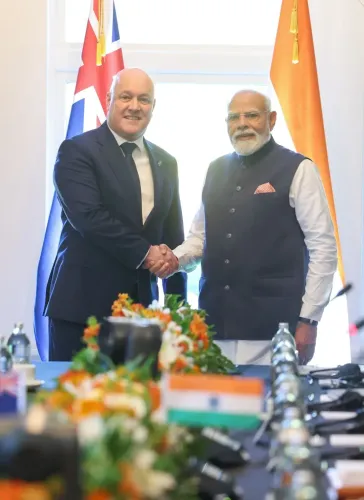
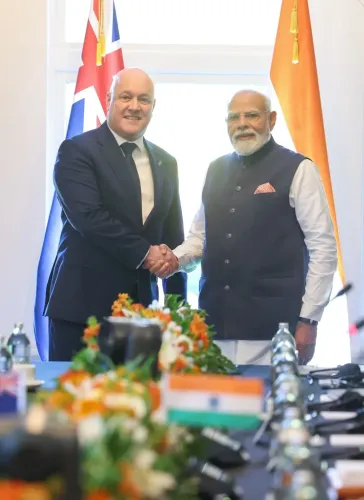
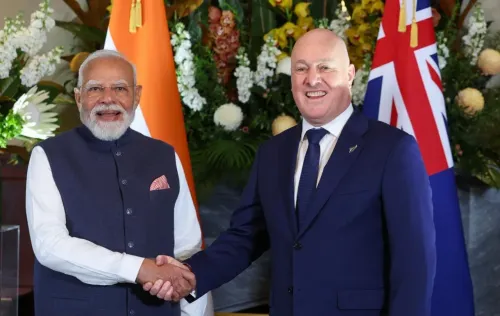
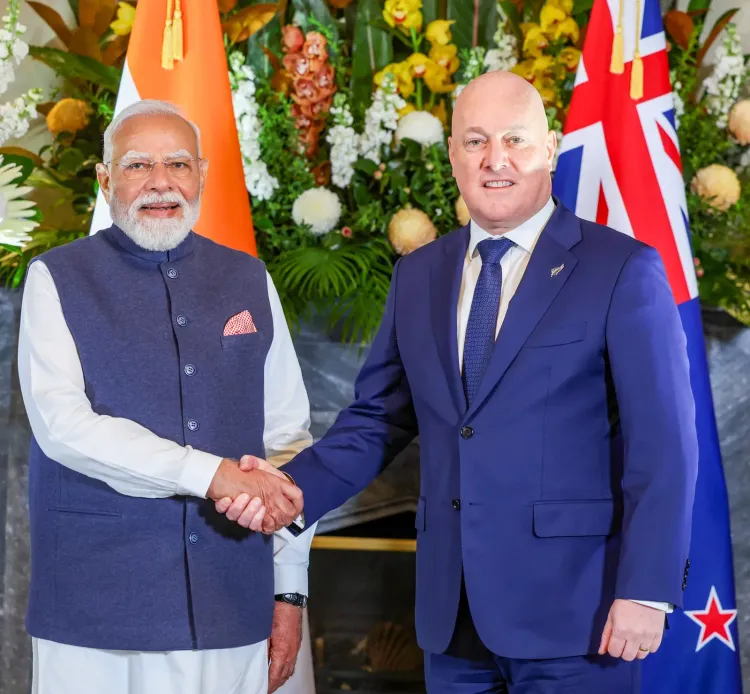
PM Narendra Modi visited New Zealand from 10–11 July , holding talks with Luxon at Government House, Auckland .
Both leaders signed MoUs covering defence, maritime security, sports, dairy, tourism, food technology, and ocean research.
Modi described the India-New Zealand FTA as a landmark for market access, investment, and talent mobility.
Approximately 10,000 members of the Indian diaspora attended the 'Kia Ora Modi' event, which Luxon also joined.
New Zealand Prime Minister Christopher Luxon has said that the Khalistan issue has caused 'a huge amount of pain, loss, and suffering' in India, but asserted it will not undermine the deepening partnership between the two countries, according to reports. His remarks follow Prime Minister Narendra Modi's official visit to New Zealand from 10–11 July, which concluded with a series of bilateral agreements and a high-profile diaspora event.
Luxon's Stance on Khalistan
Speaking in an interview, Luxon drew a clear line between protected free speech and criminal conduct. 'We won't tolerate intimidation or violence,' he said, warning that strict police action would follow any threats, intimidation, or criminal behaviour linked to Khalistan elements. His position, according to reports, reflects a growing acknowledgement that a vocal minority does not represent the broader Sikh community in New Zealand or globally.
Indian-origin New Zealand Member of Parliament Parmjeet Parmar reinforced this view, describing pro-Khalistan protesters as 'a very small number' that can be 'counted on your fingertips.' She said they do not represent the wider community, including the Sikh community in New Zealand.
Modi's New Zealand Visit: Key Outcomes
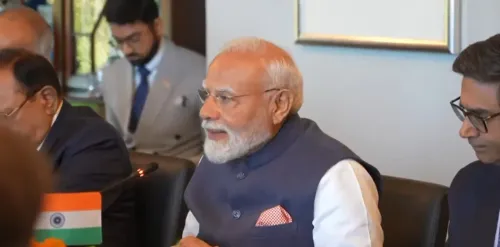
Prime Minister Modi held formal discussions with Luxon at Government House in Auckland, covering the full spectrum of bilateral relations — trade and investment, defence and security, agri-tech, sports, education, tourism, culture, and people-to-people ties. Following the talks, both leaders witnessed the exchange of several Memoranda of Understanding (MoUs) spanning defence and maritime security, hydrography, sports, disaster management, dairy, tourism, maritime heritage, culture, food technology, and ocean research.
Modi described the India-New Zealand Free Trade Agreement (FTA) as a landmark that would add depth and dynamism to bilateral economic ties, opening new avenues for market access, investment, services, technology, and talent mobility. Both leaders also engaged with a select group of CEOs and business leaders on the sidelines.
Diaspora Outreach and Bilateral Symbolism
A high-point of the visit was the 'Kia Ora Modi' event, where PM Modi addressed approximately 10,000 members of the Indian diaspora in New Zealand. PM Luxon joined the event in a notable gesture of solidarity. The two leaders also attended a gala luncheon themed 'India-New Zealand: A Winning Partnership', which drew personalities from politics, business, academia, technology, sports, and the arts.
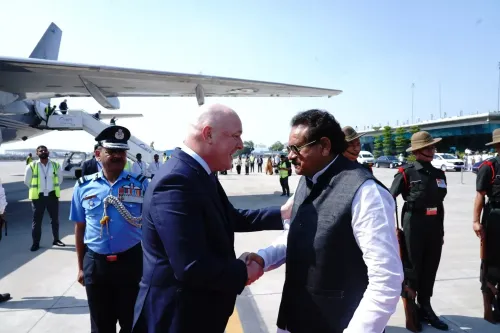
In a further personal gesture, Luxon personally saw off Modi at the airport as the Indian Prime Minister departed for New Delhi after concluding his visit.
What This Signals for Bilateral Relations
Luxon's remarks come at a moment when India and New Zealand are actively broadening their economic and strategic relationship. This is the context in which his comments on Khalistan carry weight — framing the issue not as a bilateral irritant but as a domestic law-and-order matter that New Zealand's government intends to handle firmly. Analysts note that this approach seeks to insulate the broader partnership from periodic disruptions caused by a fringe element, while respecting the democratic rights of New Zealand's Sikh community at large.
With the FTA framework in place and multiple MoUs signed, the two countries appear set to move the partnership into a more structured phase in the months ahead.
Point of View
Coming immediately after Modi's Auckland visit and a clutch of MoUs, is deliberate: Wellington wants the strategic and economic momentum to define the relationship, not the Khalistan controversy. What remains to be tested is whether the promised police action against intimidation translates into prosecutions, or stays at the level of reassuring language. India has heard similar assurances from Western partners before, and the credibility gap between words and enforcement has been a persistent frustration in New Delhi's foreign policy calculus.
NationPress
11 Oct 2026
Frequently Asked Questions
What did New Zealand PM Luxon say about the Khalistan issue?
Luxon said the Khalistan issue has caused 'a huge amount of pain, loss, and suffering' in India but asserted it will not derail the growing India-New Zealand partnership. He warned that strict police action will be taken against any intimidation, threats, or criminal behaviour linked to Khalistan elements, while affirming New Zealand's commitment to free speech.
What was the outcome of PM Modi's visit to New Zealand?
PM Modi visited New Zealand from 10–11 July and held talks with PM Luxon at Government House in Auckland. The two leaders signed multiple MoUs covering defence and maritime security, hydrography, sports, disaster management, dairy, tourism, maritime heritage, culture, food technology, and ocean research, and both welcomed the India-New Zealand Free Trade Agreement.
Who is Parmjeet Parmar and what did she say about Khalistan?
Parmjeet Parmar is an Indian-origin Member of Parliament in New Zealand. She said pro-Khalistan protesters are 'a very small number' that can be 'counted on your fingertips' and do not represent the wider community, including the Sikh community in New Zealand.
What is the India-New Zealand Free Trade Agreement?
The India-New Zealand Free Trade Agreement (FTA) is a bilateral trade pact described by PM Modi as a landmark that would deepen economic ties by opening new opportunities for market access, investment, services, technology, and talent mobility between the two countries.
What was the 'Kia Ora Modi' event?
The 'Kia Ora Modi' event was a diaspora gathering attended by approximately 10,000 members of the Indian community in New Zealand during PM Modi's visit in July 2025. PM Luxon also joined the event as a special gesture of goodwill.